
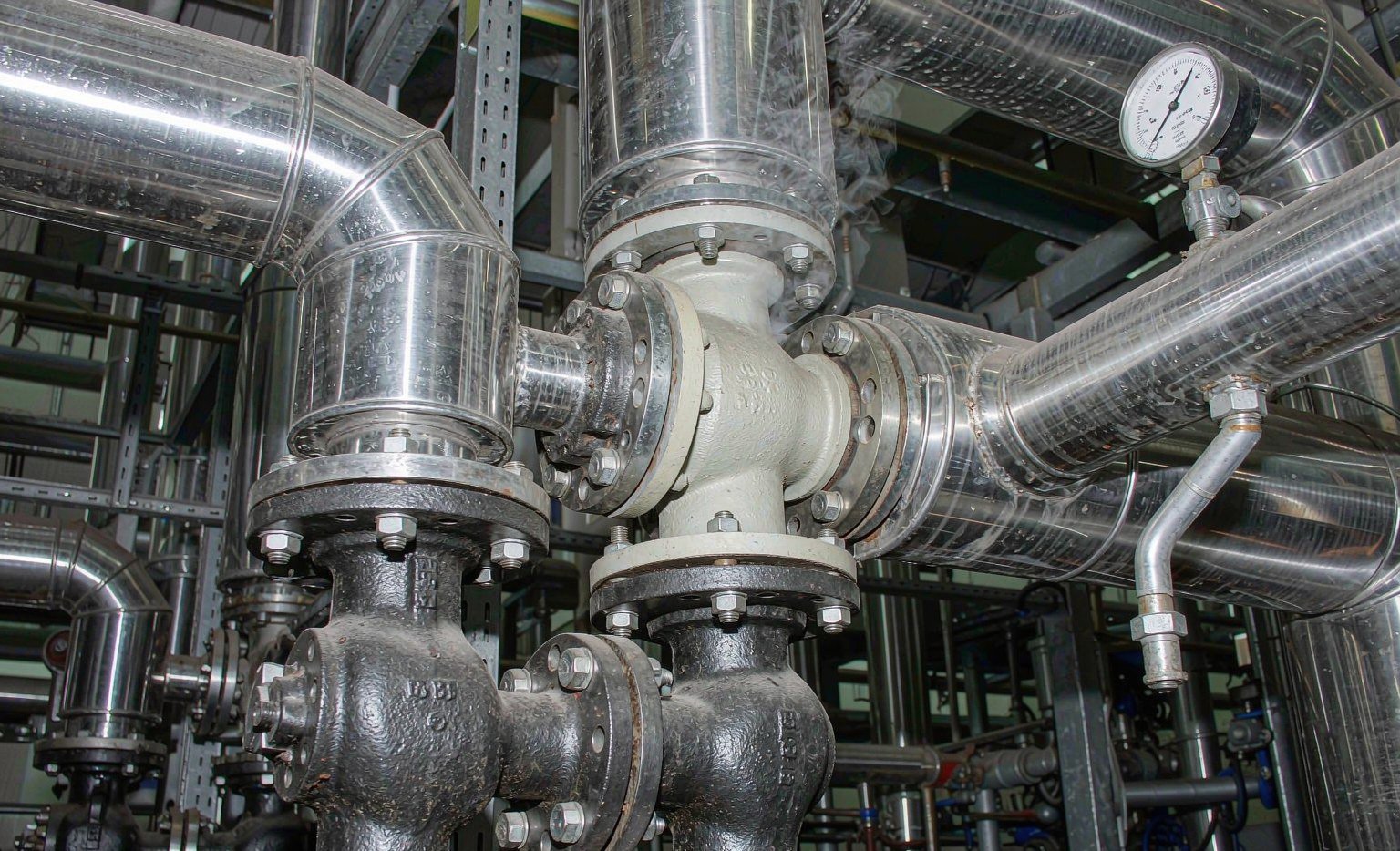
Most seal catalogs quote a dry-heat temperature and a list of chemicals. Saturated steam deserves neither number. An FKM O-ring rated to 200°C in air can crack within weeks on a 10 bar steam line, and an EPDM compound that looks identical on paper can outlast it by a factor of five. The difference is water vapor under pressure, and it changes the selection logic from the first paragraph of the datasheet.
This guide walks through the physics that make 180°C+ saturated steam different, the elastomer options that actually survive it, the non-elastomer fallbacks when rubber runs out, and the specific sealing points on a boiler system where each material belongs.
First, Know Your Steam: The Saturation Curve Sets the Envelope
Saturated steam has one property that simplifies everything else: temperature and pressure are locked together. Fix the pressure and you have fixed the temperature, with no freedom to choose. That single fact should drive the first step of any seal selection for boiler work.
Absolutely pressure, not gauge pressure, is what appears in the thermodynamic tables. A line at 10 bar absolute sits at about 180°C. The same line quoted as 9 bar(g) at sea level is the same condition, but RFQs that mix the two references can produce a 3°C disagreement between quotes — small, but enough to matter when a compound sits near its steam limit. State the reference in your specification.
| Pressure (bar, absolute) | Saturation temperature (°C) | Serviço típico |
|---|---|---|
| 2 | 120 | Low-pressure heating and laundry steam |
| 3 | 133 | Hot water and sanitation loops |
| 5 | 152 | Process steam, hospital sterilizers |
| 8 | 170 | Dryers, heating coils |
| 10 | 180 | Industrial boiler header lines |
| 15 | 198 | High-pressure process steam |
| 20 | 212 | Power station auxiliary steam |
| 25 | 224 | High-pressure plant, above most elastomer limits |
Read the table from the middle: 180°C corresponds to 10 bar absolute, and anything past 15 bar absolute pushes every common elastomer except steam-grade FFKM and FEPM out of continuous service. Full saturation property tables, including enthalpy and specific volume, are available from standard references such as the saturated steam properties tables at The Engineering ToolBox.
One more trap: superheat. A line rated 200°C at 10 bar is not saturated — it carries roughly 20°C of superheat. Superheated steam behaves more like hot dry gas than boiling water, and hydrolysis slows down because free water is absent. Some compounds tolerate a superheated line that they would fail on when saturated. Ask which one your system delivers before you buy.
Why Steam Is Harder Than Dry Heat at the Same Temperature
Three degradation mechanisms run at once inside an elastomer sitting on a hot steam line:
- Hydrolysis. Water molecules attack the polymer backbone and the crosslink sites. Cure chemistry decides how fast this happens: sulfur-cured compounds rely on carbon–sulfur and sulfur–sulfur bridges, which cleave rapidly above roughly 120°C. Peroxide cures form direct carbon–carbon bonds with much higher bond energy and hold up far longer.
- Swelling and plasticization. Vapor enters the free volume of the rubber and softens it. Part of this is reversible — the seal recovers after cooling — but lab measurements taken after cooldown miss it entirely, which is why bench data understates steam damage.
- Deformação permanente por compressão. As crosslinks break, the network loses its spring. The seal takes a permanent flattening, contact force drops, and leakage follows. This is the failure you actually see on the machine.
The practical gap between dry heat and steam is not subtle. Published lab data on 180°C saturated steam exposure show sulfur-cured EPDM suffering 78% compression set after 168 hours, against 22% for a peroxide-cured compound of the same base polymer. An elastomer that shows under 15% compression set in dry air at 200°C can fail outright within 72 hours in saturated steam at the same temperature. If a supplier quotes you a steam rating, ask whether it came from a steam autoclave test or from extrapolated dry-heat aging — the two answers differ by an order of magnitude.
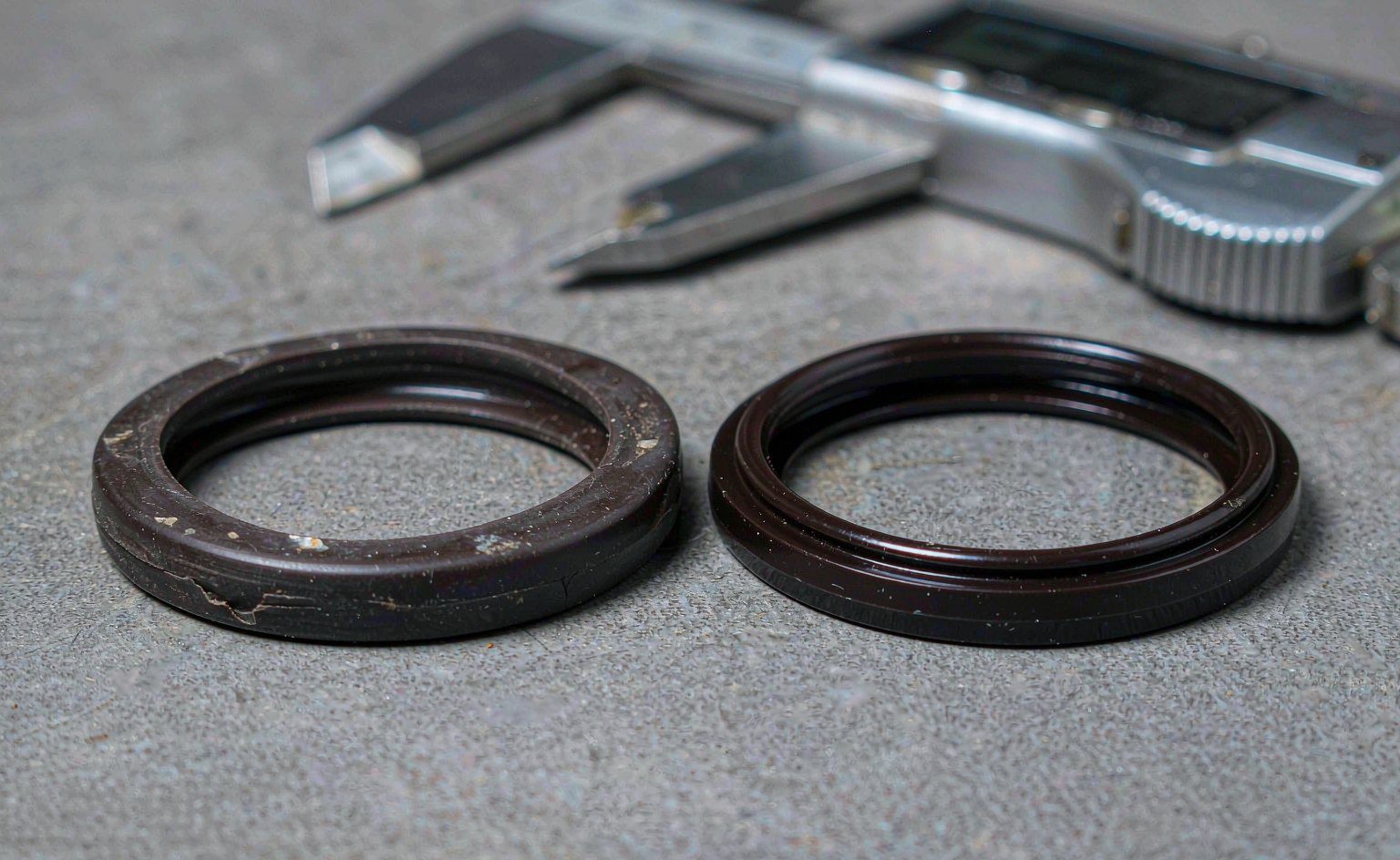
Compression set itself deserves its own reading if you are new to the term; we cover the mechanism and test methods in our article on what compression set is and why it kills seals.
Elastomer Options Compared: What Actually Survives Continuous Steam
| Material | Continuous saturated steam limit | Cure chemistry note | Watch-outs |
|---|---|---|---|
| EPDM, sulfur-cured | ~120°C | Weak sulfur crosslinks | High set in steam; cheapest option, shortest life |
| EPDM, peroxide-cured | ~150°C (specialized grades beyond, in controlled duty) | C–C crosslinks, hydrolysis-stable | Swells badly in mineral oil — pure steam or hot water only |
| FKM, standard bisphenol-cured | ≤120–130°C, intermittent contact only | Hydrolysis + dehydrofluorination in wet heat | The classic wrong choice for steam; fine in dry heat |
| HNBR | ~150°C in water/steam | Saturated backbone | Handles oil carryover; the pick for oil-contaminated condensate |
| VMQ (silicone) | Not recommended above ~120°C in steam | — | Parker’s O-Ring Handbook explicitly lists steam above 121°C as unsuitable |
| FEPM (Aflas / TFE-P) | ~200°C | Alternating structure resists dehydrofluorination | Costs more; good balance of steam + amine + oil tolerance |
| FFKM, standard grades | ~160°C | Many grades hydrolyze in wet heat | Chemical resistance does not equal steam resistance |
| FFKM, steam-grade (peroxide/ether cured) | ~260°C | Ether-linked networks | Premium price; specify the grade, not the family |
Three lessons hide in that table.
EPDM is the workhorse, and the cure system is the whole decision. For clean steam and hot water up to about 150°C, peroxide-cured EPDM is the default choice across the industry: hydrolysis-stable, low set, and priced far below fluoroelastomers. Its one hard limit is oil — EPDM swells severely in mineral oil, hydraulic fluid, and fuel, so a steam line with lubricator carryover will destroy it.
FKM is the classic mistake. Engineers reach for it because the dry-heat rating is high and the chemical table looks strong. In continuous saturated steam above roughly 120–130°C, standard bisphenol-cured FKM hydrolyzes, hardens, and cracks. Peroxide-cured high-fluorine grades do slightly better but still cannot sustain long exposure. If a steam valve seal keeps failing in an FKM compound, the compound is the problem.
FFKM families differ by grade, not by name. Standard perfluoroelastomers trade on chemical resistance, and many of them hydrolyze in steam above 160°C. Steam-grade FFKM compounds built on peroxide or ether cures hold service up to about 260°C. When you buy FFKM for boiler work, demand the steam test data for the specific compound. Our guide to seals above 200°C covers the full high-temperature material map in detail.
Material Selection by Temperature Band
Translate the table into bands and the selection becomes mechanical:
- Up to ~135°C. Peroxide-cured EPDM with margin. This covers most heating, sterilization, and laundry systems.
- 135–180°C. Still EPDM territory for pure steam, but margins shrink. At 10 bar absolute you are at the practical ceiling of the general-purpose compounds; premium peroxide grades and careful gland design carry the load. If any oil enters the system, move to HNBR or FEPM and accept the trade-offs.
- 180–250°C. Elastomer choices narrow to FEPM and steam-grade FFKM. FEPM buys most of the steam performance at a lower price than FFKM; FFKM steam grades buy the widest chemical window on top. This is also the band where non-elastomer options start winning on total cost — see the next section.
- Above ~250°C. No elastomer runs continuously in saturated steam at this level. The sealing job moves to PTFE-based spring-energized designs, flexible graphite, or metal. At 25 bar absolute (224°C) you are already designing the transition; past 30 bar, design it entirely in graphite and metal.
Two secondary checks that catch real failures: first, water treatment chemistry. Carried-over caustic and amines from boiler chemicals attack some compounds, and FEPM handles amines where FKM cannot. Second, thermal cycling. A boiler that cycles daily stresses seals harder than one that holds steady, because every cycle pushes condensate into the seal interface at full pressure. Derate accordingly.
Beyond Elastomers: PTFE, Graphite and Metal for the Hard Duty
Past the elastomer envelope, three material families take over:
Spring-energized PTFE seals. A PTFE or filled-PTFE jacket with a corrosion-resistant metal spring replaces rubber elasticity with spring force. PTFE does not hydrolyze, carries a continuous rating near 260°C, and shrugs off the chemicals that bother elastomers. The trade is stiffness: these seals need clean, good-finish hardware and correct gland design, because PTFE has no rubber-like conformity. They earn their keep on steam rotary unions, sootblower joints, and valve stems where cycling and chemistry kill rubber. Compare designs in our gama de vedantes energizados por mola; spring-energized specialists such as A Bal Seal document the same steam logic in their application notes.
Flexible graphite. Compressed exfoliated graphite sheet and graphite yarn packing handle saturated steam well past 300°C, are chemically inert to nearly everything boiler chemistry produces, and emit nothing. They have no elasticity of their own, so hardware must provide constant deflection — live-loading on valve stems, controlled gasket compression on flanges. Graphite is the standard filler in spiral-wound gaskets for steam flanges and the standard material for manhole and handhole door gaskets on power boilers.
Metal and composite gaskets. Spiral-wound (metal strip + graphite filler), double-jacketed, and corrugated metal designs cover the highest pressure-temperature corners. Their weakness is not temperature but recovery: after one heat-cool cycle, flange relaxation eats preload. Retorque discipline matters more than gasket brand.
PTFE-adjacent products also appear mid-range: PTFE sealing suppliers such as Marco Rubber document filled-PTFE grades used where both steam and chemical exposure coexist, and fully vedantes encapsulados — elastomer core, PTFE/FEP jacket — bridge the gap on steam lines with light chemical loads, as long as the core elastomer still survives the temperature.
Condensate Is the Silent Variable
The seal at a steam fitting rarely touches dry steam. It touches condensate — water that forms where steam meets the colder hardware surface, collects in low points, and reaches seal interfaces at full pressure. Condensate changes the duty in three ways that pure-steam selection tables ignore.
First, it is liquid contact, which accelerates extraction and hydrolysis beyond what vapor-only exposure produces. Second, it carries the water treatment chemistry: amines, oxygen scavengers, and boiler compounds concentrate in condensate pockets right where seals sit. Third, it enables water hammer — slugs of condensate driven by steam velocity that hit fittings with force far beyond line pressure. A flanged joint rated comfortably for 12 bar can see transient loads several times that when a slug arrives.
The practical consequences: trap and drain points near seal positions, bias gland designs so condensate cannot pool in the groove, and treat impact-loaded flange joints with conservative gasket ratings. On lines with aggressive water chemistry, FEPM and PTFE-based designs tolerate the amine chemistry that standard FKM cannot — one more reason the oil-and-steam mixture cases migrate to the fluoropolymers rather than staying with commodity rubber.
The Boiler Hardware Map: Where Each Seal Lives
Boiler systems concentrate different sealing problems at different points, and the right material changes with each one:
| Sealing point | Condições típicas | First-choice sealing | Notas |
|---|---|---|---|
| Manhole / handhole doors | Saturated steam at drum pressure, cyclic | Flexible graphite or corrugated metal + graphite | Retorque after first heat cycle; expect relaxation |
| Steam flange joints | Full line pressure and temperature | Spiral-wound with graphite filler | Controlled bolt torque, graphited studs help |
| Steam valve stems | Cyclic motion, full temperature | Graphite packing or PTFE V-rings, live-loaded | Live-loading keeps force as packing relaxes |
| Boiler feedwater pumps | Hot pressurized water, 100–180°C | EPDM (peroxide) elastomers on hot-water side | Oil-contaminated condensate → HNBR or FEPM |
| Rotary unions / sootblowers | Rotary motion in saturated steam | Spring-energized PTFE or graphite packing | Rubber lip seals fail fast here |
| Gauge glass / level fittings | Static, high temperature | Graphite or PTFE gaskets per fitting spec | Follow the gauge maker’s gasket spec exactly |
The feedwater pump row deserves emphasis because it is where the two failure worlds meet: hot water on one side, oil-contaminated condensate and lubrication on the other. EPDM rules the pure hot-water side and fails in the oil; HNBR and FEPM split the difference. Mixtures of steam and oil are exactly the case where no single standard compound is clean — this is where we most often supply custom compounds, and the customized products route exists for exactly that conversation.
Four Failure Patterns That Show Up Again and Again
Teardown analysis across steam plants produces the same short list of failure signatures. Learn to read them and most root causes become obvious:
1. Hardened, cracked FKM O-ring on a steam valve. The seal came from stock because it looked like the premium option. In continuous steam above 120°C the compound hydrolyzed, the surface went glassy, and a hairline crack opened along the contact band. The fix is compound replacement — peroxide-cured EPDM — not a harder gland. If you find this failure repeatedly on the same line, check the line temperature against the saturation table; someone upstream may have raised the pressure setpoint.
2. Flattened EPDM on a hot-water pump that runs fine for two years, then leaks in a week. This is compression set reaching its end point. The compound was correct, the temperature was correct, but the seal finally lost its stored force. Upgrading to a premium peroxide grade or adjusting the gland to lower squeeze-and-set stress buys back the interval. Track set by measurement, not by leak reports — the trend starts long before the drip.
3. Spiral-wound flange gasket that weeps after the first cycle. Gasket relaxation, almost every time. The bolted joint was torqued cold and never retorqued after the first heat-up. Graphite fillers and flange steel expand at different rates; the first thermal cycle seats the gasket and drops bolt preload by 10–30%. Retorque discipline converts this from a recurring leak into a non-event.
4. Shredded lip seal in a steam rotary union. Rubber lip seals look economical on rotary steam joints until the first hot run. Temperature plus rotary speed plus dry startup kills the lip in days. Spring-energized PTFE or graphite packing is the correct hardware class here; the supplier data from Trelleborg’s seal engineering resources covers the same rotary-steam logic in their application guides.
Notice what is absent from the list: catastrophic pressure failures. Saturated steam at 10–15 bar is not extreme by hydraulic standards. Steam kills seals through slow chemistry and lost force, not through pressure spikes — which means nearly every failure above was visible in advance, either as rising compression set, falling bolt load, or an aging surface you could feel with a fingernail.
Installation and Maintenance Details That Decide Seal Life
Material choice sets the ceiling; installation decides how much of it you get. Four details separate boilers that run between outages from boilers that drip:
- Torque discipline on flanges and doors. Cross-pattern tightening in stages, then a full retorque after the first heat-up and cool-down cycle. Graphite gaskets relax on the first cycle; the retorque is not optional.
- Gland fill and squeeze checked against real hardware, not catalog defaults. Steam seals run hot, and thermal expansion changes the effective squeeze. Design to 15–25% squeeze on O-rings with high-temperature gland fill limits in mind, and validate against actual groove measurements.
- Compression set audits at planned outages. Pull a sample seal each outage and measure set against the new part. A creeping trend tells you the compound is past its steam limit long before the leak appears. We keep our standard grades listed with the high and low temperature seal families for exactly this comparison.
- Storage and handling. High-temperature compounds are no tougher on the shelf than ordinary ones. Ozone, UV, and heat during storage age the uncycled seals before they ever see steam — follow normal elastomer storage rules and buy in quantities you consume within a sensible window. General rubber families and their care are summarized in our rubber seals category.
Spares Strategy and Sourcing Notes for Steam-Seal Buyers
Steam plants fail on the same small set of consumables repeatedly, which makes spares strategy unusually high-leverage. Three practical rules from our factory floor:
Standardize compounds, not just sizes. A boiler plant that stocks three EPDM compounds, two FKM grades, and an assortment of graphite sheet ends up installing whatever is at hand — including the FKM O-ring that looks premium and dies in the steam line. Cut the palette: one peroxide-cured EPDM compound for steam duty, one HNBR or FEPM grade for oil-contaminated points, graphite sheet and spiral-wound gaskets for flange work. Every seal in the bin should be correct for its worst-case position, so a well-meaning technician cannot install the wrong family.
Mark the duty on the bin, not the invoice. “EPDM 70, 32×3.5” tells the storeman nothing about where the seal is allowed to live. Label storage bins with the application — “steam ≤150°C”, “oil + condensate”, “NOT for steam” — and the mis-installation rate drops to near zero. Distributors serving multiple plants find this one change cuts their highest-frequency emergency orders.
Buy hot-side parts in matched sets. A valve rebuild that reuses last year’s graphite packing alongside new gaskets produces a joint with two different relaxation rates. Matched sets — gasket, packing, O-rings, and the retorque instruction on one sheet — cost pennies to assemble at sourcing time and remove a whole failure class. We build these sets through our seal kit lines for hydraulic customers, and the same kit logic ports directly to boiler maintenance planning. For buyers consolidating industrial consumables across vendors, catalogs from peers like Darcoid are useful for benchmarking what a standard high-temperature elastomer line should include before you commit to a supplier.
Action Checklist
- Write the steam condition as pressure (state absolute or gauge) + temperature + superheat margin before any RFQ.
- For ≤150°C clean steam: specify peroxide-cured EPDM, and demand the steam autoclave test data, not dry-heat ratings.
- Reject standard FKM for any continuous saturated steam service above 120°C — harden only if the duty is truly intermittent.
- Check for oil carryover. Any mineral oil contact → move from EPDM to HNBR or FEPM.
- Above 180°C: quote FEPM and steam-grade FFKM against spring-energized PTFE and graphite on total cost, not unit price.
- Above ~250°C: design in graphite and metal; use elastomers only for low-differential auxiliary points.
- Map every sealing point on the boiler — doors, flanges, valve stems, feed pumps, rotary unions — and assign a material per point, not one material for the plant.
- Schedule a retorque after the first heat cycle on every new gasket set.
- Pull and measure sample seals at each outage; track compression set trend by position and compound.
- Keep spare seals stored per standard elastomer rules — dark, cool, unstressed — even for high-temperature grades.
Seals for the Steam Side of the Plant
Steam duty splits the material map, and our range follows it: EPDM and FKM for the elastomer bands this article defines, FFKM where temperature and chemistry push past both, PTFE and filled PTFE for gaskets and seats, and graphite-based and metal-bearing constructions for the joints elastomers cannot hold. Gaskets, washers, O-rings, lip seals and machined PTFE parts can be quoted together as one outage package.
Two details decide whether a steam seal reaches the next shutdown: the superheat at the seal rather than at the drum, and the condensate chemistry during startup, when the fluid is at its most aggressive and the metal is still cold. We size the compound for the saturated condition, check compression set at the expected groove or flange temperature, and say where a retorque after the first heat cycle is mandatory rather than optional.
Send the boiler or steam-line data — pressure, temperature, condensate chemistry — with the joint or seal drawing to sales@bosssealing.com, and we will come back with a material per position and the spares list behind it. Quotes within a working day, engineering review free; the formulário de contacto chega aos mesmos engenheiros.