
Una raffineria con 4.000 valvole non perde prodotto attraverso la sede. Lo perde attraverso lo stelo: un albero da 12 mm che attraversa una camera a premistoppa, sigillato da una pila di anelli che nessuno guarda finché la sonda del tecnico LDAR non legge un valore superiore al limite. La guarnizione dello stelo della valvola è il singolo sigillo più regolamentato in un impianto di processo, e l'unico le cui prestazioni sono scritte nei permessi atmosferici come un numero che devi rispettare ogni trimestre.
Ciò rende la scelta della guarnizione una decisione di conformità tanto quanto una decisione ingegneristica. Il problema è che la documentazione che accompagna un'offerta di valvole utilizza quattro standard diversi che misurano quattro cose diverse, e un ordine di acquisto che indica solo “guarnizione a basse emissioni” non risolve nulla. Questo articolo separa gli standard, spiega cosa qualifica effettivamente ciascun test, e poi analizza gli stili di guarnizione, l'hardware del premistoppa e i dettagli di installazione che determinano se la valvola supera il test sul banco di prova e di nuovo al terzo anno.

Due numeri che non si convertono
Le prestazioni in materia di emissioni fuggitive vengono riportate in due unità, e confonderle è l'errore di specifica più comune che vediamo. Il percorso americano misura la concentrazione: un analizzatore portatile annusa il premistoppa e riporta parti per milione in volume del gas target, seguendo il Metodo EPA 21. Le definizioni di perdita statunitensi si attestano a 500 ppm per le valvole in servizio gas e vapore nell'ambito dei programmi NSPS, e più restrittive in alcune normative statali e classi di apparecchiature — gli standard per petrolio e gas nel 40 CFR Parte 60 Sottoparte OOOOa sono la versione a cui la maggior parte dei progetti di raffineria e midstream fa riferimento oggi.
Il percorso europeo misura la massa: il premistoppa è racchiuso e la perdita è espressa in milligrammi al secondo per metro di diametro dello stelo, di solito con elio come tracciante. L'elio è la molecola più piccola e il gas più difficile da trattenere, quindi un valore di perdita di massa con elio e una lettura di concentrazione di metano descrivono situazioni fisiche diverse. Un fornitore che risponde a un requisito sull'elio con un rapporto di sniffing del metano non ha risposto alla domanda, e un impianto che accetta la sostituzione lo scoprirà al primo test di verifica da parte di terzi.
Entrambi i percorsi condividono una debolezza che vale la pena comprendere prima di discutere i numeri. Una lettura di laboratorio viene effettuata su un banco di prova con uno stelo nuovo, carico del premistoppa controllato e gas pulito. La stessa guarnizione sul campo si trova su uno stelo che è stato azionato 30.000 volte, può essere rigato, ed è caricata da un tecnico di manutenzione con una chiave dinamometrica e una scadenza di turno. Questo divario è il motivo per cui gli impianti con programmi maturi specificano sia un prodotto sottoposto a test di tipo sia una procedura di installazione, e verificano la seconda con la stessa attenzione con cui leggono la prima.
Quale standard qualifica cosa
Cinque documenti dominano l'approvvigionamento, e ciascuno copre un oggetto diverso. Leggerli come alternative è la radice della maggior parte delle controversie.
| Documento | Cosa qualifica | Mezzo di prova | Regime di cicli | Accettazione |
|---|---|---|---|---|
| ISO 15848-1 | Il design della valvola (test di tipo) | Elio o metano | CO1 205 / CO2 1.500 / CO3 2.500 cicli meccanici, cicli termici intercalati | Classe di tenuta A, B o C a una classe di temperatura dichiarata |
| ISO 15848-2 | Valvole di produzione, unità o lotto | Elio | Breve test di routine a temperatura ambiente | Classe dichiarata raggiunta sulla valvola in spedizione |
| API 622 | Materiale di guarnizione, su un attrezzatura di prova — non una valvola | Metano, 97% min., 600 psig | 1.510 cicli meccanici, 5 termici fino a 260 °C | ≤100 ppmv a ogni lettura, nessuna regolazione del premistoppa |
| API 624 | Valvole a saracinesca e a globo a stelo ascendente con guarnizione in grafite | Metano | 310 cicli meccanici, 3 termici fino a 260 °C | ≤100 ppmv, nessuna regolazione della guarnizione consentita |
| API 641 | Valvole a quarto di giro, qualsiasi tecnologia di guarnizione | Metano | 610 cicli meccanici, 3 termici | ≤100 ppmv, nessuna regolazione della guarnizione consentita |
L'interblocco è importante commercialmente. API 624 richiede che la guarnizione all'interno della valvola testata abbia già un rapporto API 622, quindi la scheda 622 di un fornitore di guarnizioni è un prerequisito per la dichiarazione 624 di un produttore di valvole, mai un suo sostituto. Un'offerta che recita “guarnizione conforme API 622” ha qualificato un materiale su un banco di prova. Non dice nulla sul fatto che la valvola assemblata tenga, e nulla sulla geometria della camera, sulla finitura dello stelo o sull'hardware del premistoppa che determinano il risultato sul campo.
Due dettagli nel testo in piccolo separano un rapporto reale da una riga di scheda tecnica. Primo, l'edizione. La terza edizione di API 622, pubblicata nel 2018, ha eliminato il singolo serraggio del premistoppa che la seconda edizione consentiva a metà test e ha fissato il limite a 100 ppmv; un rapporto datato prima del 2018 è stato ottenuto con regole più facili. Secondo, la configurazione. Un rapporto copre il numero specifico di anelli, la sezione trasversale, la treccia e la dimensione dello stelo testati. Cambia la profondità della camera o il numero di anelli e la qualifica non descrive più il prodotto nella cassa.
Leggere una stringa di classe ISO 15848-1
ISO 15848-1 non produce un timbro di superamento. Produce una stringa di quattro campi, e ogni campo è una decisione separata che l'acquirente sta prendendo, che se ne renda conto o meno.
| Campo | Opzioni | A cosa ti impegna |
|---|---|---|
| Classe di tenuta | A ≤ 1×10⁻⁶ mg/(s·m); B ≤ 1×10⁻⁴; C ≤ 1×10⁻² | La velocità di perdita dimostrata dal progetto, misurata con elio per metro di diametro dello stelo |
| Classe di resistenza | CO1 205 cicli; CO2 1.500; CO3 2.500 (valvole di isolamento). Valvole di regolazione classificate CC1–CC3 | Quanti cicli meccanici ha superato la classe, con cicli termici intercalati |
| Classe di temperatura | Dichiarata come intervallo: -196 °C, -46 °C, -29 °C, ambiente, 200 °C, 400 °C | L'intervallo in cui il risultato è valido: una qualifica solo a temperatura ambiente non dice nulla su una linea a 250 °C |
| Classe SSA | SSA0 = nessuna regolazione della tenuta dello stelo consentita durante la prova | Che il risultato è stato ottenuto senza che un tecnico serrasse il premistoppa |
La Classe B è l'obiettivo operativo per l'isolamento degli idrocarburi e la classe di cui la maggior parte delle specifiche europee ha effettivamente bisogno. La Classe A è raggiungibile, ma quasi sempre tramite un coperchio a soffietto o un set di grafite stampato su uno stelo molto ben rifinito, e scrivere Classe A su un pacchetto di 400 valvole è di solito abitudine più che ingegneria. La Classe C è un'asticella bassa che raramente giustifica il costo della certificazione.
SSA0 merita un'attenzione separata. Un imballatore che regola il premistoppa a metà prova può trasformare un set che fallisce in uno che passa, e il certificato descrive poi una valvola che esiste solo sul banco di prova. Quando la stringa della classe omette SSA0, chiedete quali regolazioni sono state consentite. La risposta vi dice quanta parte del risultato sopravvivrà al primo ciclo termico in impianto.
Stili di imballaggio e dove ciascuno si ferma
La scelta dell'imballaggio è prima una decisione di temperatura e chimica, seconda una decisione di attrito e terza una decisione di classe di tenuta. L'ordine non è negoziabile: un set a basso attrito che si cuoce a 300 °C non è un set a basse emissioni entro martedì.

| Stile | Temperatura pratica | Dove eccelle | Classe ISO tipica | Attrito del premistoppa |
|---|---|---|---|---|
| Anelli di grafite flessibile stampati | Fino a circa 650 °C in ambiente non ossidante; inferiore in atmosfere ossidanti | Vapore, olio caldo, servizio con idrocarburi di raffineria | C senza carico dinamico, B con corretto carico dinamico | Alto |
| Grafite intrecciata con rinforzo metallico | Fino a circa 650 °C in ambiente non ossidante | Vapore ad alta temperatura, grandi diametri dello stelo | Da C a B a seconda del progetto del set | Alto |
| Set PTFE a chevron (anelli a V) | Da -50 a +200 °C, brevi escursioni superiori | Servizio chimico, valvole automatizzate che richiedono basso attrito | A o B su steli ben rifiniti | Il più basso |
| PTFE intrecciato con dispersione di grafite | Da -100 a +280 °C | Servizio chimico e di processo generale | B | Basso |
| Set ibridi PTFE e grafite | Da -50 a +400 °C a seconda della miscela | Servizio ciclico in cui incidono sia l'attrito sia la temperatura | B | Fluido |
| Coperchio a soffietto (senza imballaggio) | Determinata dal materiale del soffietto, non dall'imballaggio | Servizio tossico, letale, sotto vuoto in cui la Classe A è obbligatoria | A per costruzione | Basso, ma la fatica del soffietto determina la vita |
La grafite resta l'unica risposta realistica sopra i 300 °C, e porta con sé due comportamenti che plasmano il progetto del premistoppa. Non fonde né si rammollisce, quindi tiene la pressione fino al limite dell'hardware; e si consolida. Ogni ciclo termico toglie un po' di altezza alla pila di anelli, il carico del premistoppa cala e il percorso di perdita si apre. È esattamente il meccanismo che il carico dinamico esiste per contrastare. I produttori di imballaggi e di hardware per premistoppa come Chesterton pubblicano le curve carico-consolidamento per i loro progetti di set, e quelle curve sono l'input corretto per dimensionare una pila di molle.
I set PTFE a chevron si collocano all'estremo opposto. L'attrito è abbastanza basso perché un attuatore pneumatico possa posizionare una valvola di regolazione senza oscillazioni, la resistenza chimica copre la maggior parte dell'impianto di processo e la Classe A è raggiungibile perché i labbri si conformano a una buona finitura dello stelo invece di affidarsi allo schiacciamento radiale. I limiti sono lo scorrimento e la temperatura: sopra circa 200 °C il materiale si rilassa, il carico dei labbri cala e un set che ha superato la prova a 20 °C non la supererà a 180 °C. La nostra guida alle tenute sopra i 200 °C tratta le opzioni di materiale in maggior dettaglio, e la stessa fisica del consolidamento compare in qualsiasi parte in elastomero o polimero compresso, come abbiamo descritto nell'articolo su compression set.
Da dove provengono effettivamente le emissioni
Stem packing gets the attention, but a valve has three pressure-boundary sealing points that can leak to atmosphere, and a compliance program that only addresses the gland leaves two open.
The stem seal. The dominant source on rising-stem valves, because it is the only dynamic seal on the pressure boundary and the only one that gets stroked. On quarter-turn valves the stem seal sees rotation rather than translation, which changes the wear pattern and is why API 641 exists as a separate test.
The body-to-bonnet joint. A static gasket, usually spiral wound or ring-joint, and the one most often missed in a repack scope. It leaks for the boring reasons: insufficient bolt load, relaxation of the gasket after thermal cycling, or a flange face damaged during the last disassembly. A valve that passes a stem test and drips at the bonnet flange still fails a Method 21 survey, and the fix is a gasket and a torque procedure rather than a packing upgrade.
The seat. Not a fugitive emission at all. Seat leakage passes downstream into the process, is governed by API 598 or ISO 5208, and has nothing to do with the emissions class. Buyers conflate the two constantly, and a valve can pass a zero-bubble seat test while emitting steadily at the gland.
The practical consequence: a low-emission specification belongs on the whole pressure boundary, and a repack scope that replaces packing but reuses a compressed spiral-wound gasket has solved a third of the problem.
Gland Load, Consolidation and Live Loading
Packing seals because it is compressed radially against the stem and the box wall. The load comes from the gland follower, and the follower is only as good as the bolt torque applied to it — which is where most field failures originate, in both directions. Under-torque leaves the rings short of sealing stress; over-torque crushes the rings, raises friction, scores the stem and accelerates consolidation. Neither error shows up until the next survey.
Live loading replaces the fixed bolt load with a spring stack, normally Belleville washers, that maintains gland force as the packing stack loses height. The spring rate, preload and travel range have to be calculated against the specific packing set: enough preload to seal cold, enough travel to follow consolidation through the expected service interval, and not so much that the packing is over-compressed at installation. A live-loading stack bolted on without those numbers is decoration.
Where live loading earns its cost is on high-temperature service and on valves that cycle thermally rather than mechanically. A steam isolation valve that opens twice a week still sees the packing relax every time the line heats and cools. With a fixed gland, the load walks downward and the leak rate walks up; with a correctly sized spring stack, the load stays inside the window and the repack interval moves from a couple of years toward five or more. That arithmetic is usually enough to justify the hardware on its own, before emissions penalties enter the business case.
Friction is the second-order cost that shows up after a successful repack. A stack loaded to the top of its window adds stem friction, and on a 6-inch gate valve that can eat the actuator’s torque margin; on a control valve it can turn a stable loop into one that hunts. Measure breakout torque before and after the repack and record both numbers. Rising torque after a repack means the gland is over-loaded, and the fix is a load adjustment rather than another set of rings. The same friction logic explains why automated valves in chemical service so often run PTFE chevron sets: not because graphite cannot hold the pressure, but because the actuator was sized around a lower friction coefficient than graphite delivers.
Stem Finish, Box Geometry and the Details That Decide the Test
A packing set cannot outperform its stem. API 622 fixes the stem surface in the test fixture at 0.40 to 0.80 µm Ra, and that range is a useful target for real hardware: too rough and the asperities cut the packing and form leak paths, too smooth and the graphite or PTFE cannot key to the surface and tends to extrude along it.
Three geometry checks catch most of the problems before a valve is assembled. Stem straightness and ovality, because a bent stem loads one side of the packing and leaves the other short of stress. Box depth against ring stack height, because a stack that sits proud of the box cannot be loaded evenly and one that sits too deep leaves the follower bottomed out. Chamfer and radius at the box entry, because a sharp edge shaves rings during installation and the damage is invisible once the gland is closed.
Corrosion belongs on the same list. Pitting on a stem cuts its own leak path, and API 622 includes corrosion assessment for exactly this reason — 28 days at ambient under 30 MPa compressive stress, plus a high-temperature exposure at 149 °C and 45 bar, with the stem surface examined for pitting and adhesion afterward. A packing that is chemically aggressive to the stem will pass its emission test and fail in service, which is why the corrosion portion of the report is worth reading rather than skimming.
Installation Sequence for a Repack
Field performance tracks installation discipline more closely than it tracks brand. The sequence we recommend to plants running low-emission programs:
1. Cut rings square and to the measured box circumference — not to nominal stem diameter, and not with a diagonal cut that overlaps itself in the box.
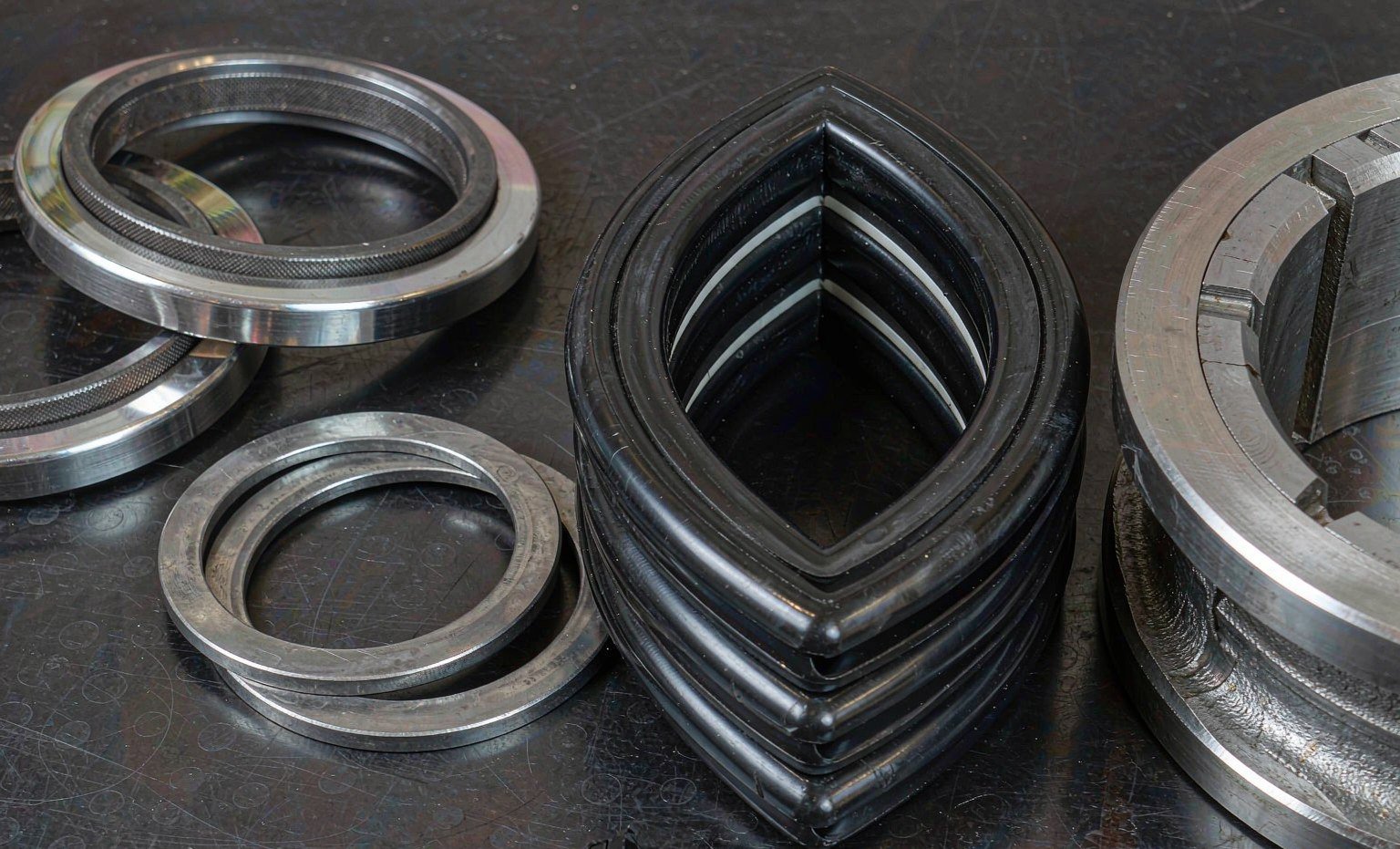
2. Stagger the joints. For graphite rings, offset each cut about 90° from the one below; for chevron sets, follow the manufacturer’s stacking order, which usually alternates a male and female ring and ends with a female adaptor. A stack with aligned joints is a straight leak path from the process to the gland nut.
3. Seat each ring individually with the correct size drift, then confirm the stack height before the follower goes on. Die-forming graphite with a drift and a soft mallet is standard practice; forcing a ring past a burr is how the packing gets a hidden tear.
4. Stroke the valve before final torque. Two or three full cycles settle the rings and redistribute load. Torquing once, cold, and walking away is the single most common installation shortcut we hear about, and it produces a gland that reads fine at commissioning and leaks after the first heat-up.
5. Re-torque to the packing supplier’s published load, not to feel. Convert the recommended gland stress into bolt torque for the actual stud size and lubricant, and record it. On a live-loaded valve, set the spring deflection to the specified dimension and record that too — the next technician has no way to reproduce a setting nobody wrote down.
What to Ask a Supplier For
Packing and valve seals are commodity items with a compliance overlay, and the paperwork separates serious suppliers from catalog resellers. For a low-emission package, ask for five things.
The full test report, not a summary line: edition, every leak reading across the test, stem size, ring count and configuration, and the gland load used. The valve-level certificate where the scope is a valve rather than a packing set, with the size, class and body material confirmed inside the coverage envelope. The material certificates for the packing and for any elastomer seals in the same scope — our guida alla selezione dei composti FKM explains why the grade letter on a certificate matters more than the polymer name. A stated installation procedure with torque values and stacking order. And a baseline for the bonnet gasket, which is a wear item in this scope whether or not it is on the order.
For plants mixing suppliers between the valve and the seals, the elastomer side of the boundary needs the same rigor: O-rings on bonnet joints and accessory connections are pressure-boundary seals too, and the size and tolerance discipline in ISO 3601 applies to them exactly as it does to a hydraulic ring. Distributors such as Eriks stock the surrounding items — sight glass seals, flange gaskets, instrument fittings — that a repack scope tends to expose once the valve is out of the line. Our gasket and back-up ring line covers the static joints that fail quietly between packing changes, and the same anti-extrusion logic governs the bonnet gasket as the stem seal.
Compliance Checklist for the Next Valve Package
Name the standard, the class and the temperature range — “ISO 15848-1 Class B, CO2, -29 to 200 °C, SSA0” is a specification; “low emission” is a wish.
Separate packing qualification from valve qualification in the ITP, and require the packing’s API 622 report to be edition 2018 or later with the tested configuration stated.
Specify the stem finish and box geometry independently of the packing brand, including the 0.40–0.80 µm Ra target and the stem straightness limit.
Require live loading with calculated spring data on any service that cycles thermally, and ask for the preload and travel figures rather than the hardware alone.
Include the bonnet gasket and all boundary elastomers in the scope, with material certificates and a replacement interval.
Inserire la procedura di installazione nella confezione — ordine di impilamento, sfalsamento dei giunti, fase di serraggio prima dell'applicazione della coppia e tabella delle coppie convertita per i prigionieri effettivi.
Assistere a un test di produzione per lotto secondo ISO 15848-2 anziché accettare il collaudo di tipo come evidenza per la spedizione.
Nessuno di questi passaggi è costoso singolarmente. Insieme fanno passare una valvola da un certificato superato in laboratorio a un premistoppa che dopo tre anni di cicli termici legge ancora sotto i 100 ppm — che è l'unico risultato che interessa davvero all'autorizzazione.