
Most compressed air audits find the same thing: the leaks are not in the pipework, they are at the seals, and they have been there for years. A pneumatic cylinder that bypasses internally does not drip, hiss or trigger an alarm. It simply consumes more air than the specification says it should, and the compressor runs a little longer every shift. Multiply that by forty cylinders on a line and the electricity bill carries a permanent surcharge that nobody can point to.
The US Department of Energy’s long-standing estimate is that a plant with a poor maintenance programme wastes around 20% of its compressed air through leaks; audits of older systems regularly report more. A single 1/8 inch (3.2 mm) orifice in a 100 psig line is commonly costed at roughly $2,500 a year in electricity. The Compressed Air Challenge material is the standard reference for anyone building a measurement programme, and its numbers have held up across a decade of plant audits. Seals are one of the largest controllable sources of that loss, and almost all of the loss traces back to ten recurring specification and maintenance mistakes.
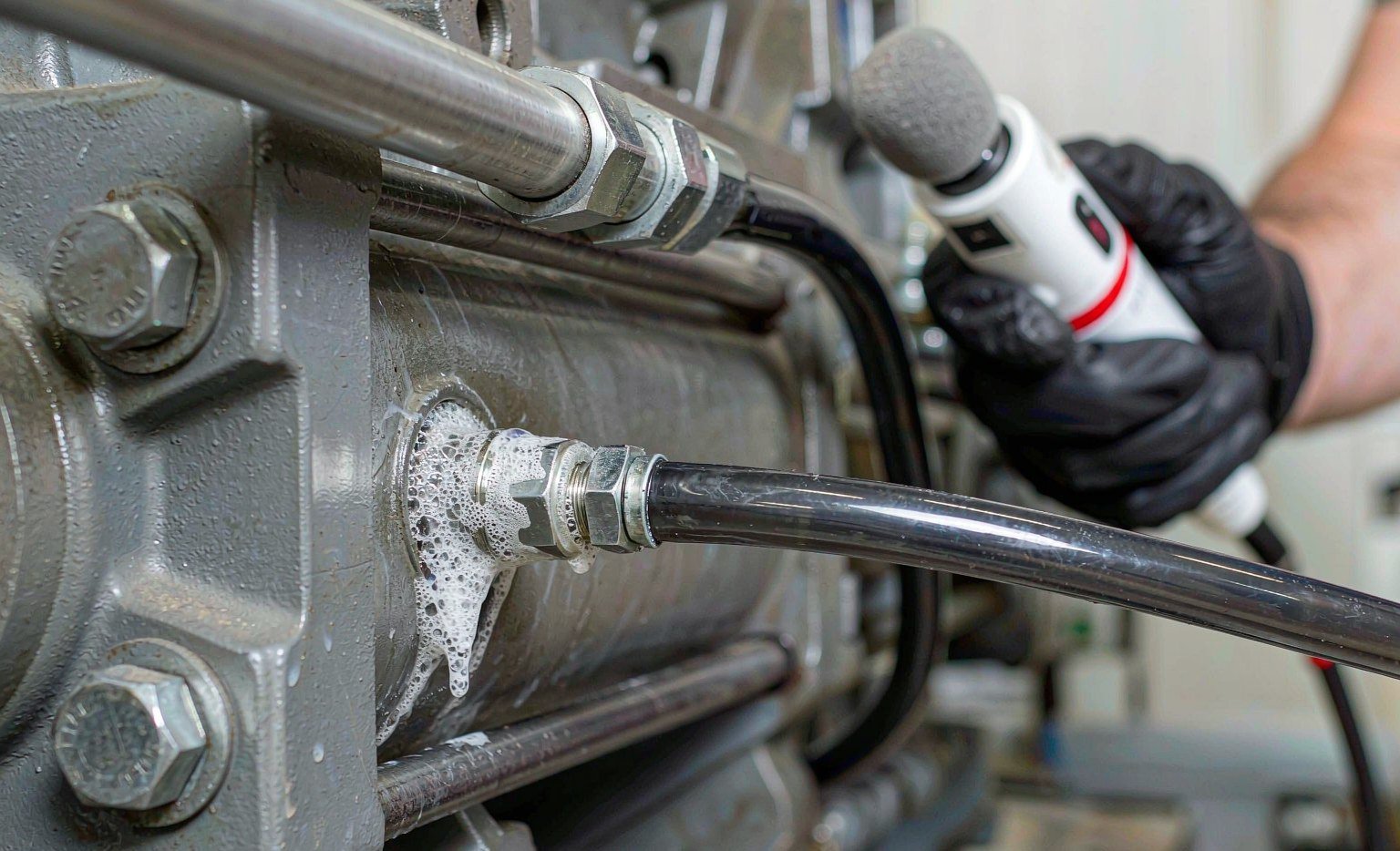
1. Using a Hydraulic Seal in a Pneumatic Cylinder
The most expensive mistake is also the easiest to make, because the two seals often share a groove size. A polyurethane U-cup designed for 200 bar of oil has a heavy lip preload that a 6 bar air system cannot overcome cleanly. The result is high breakaway force, stick-slip at low speed and a lip that wears on one side because the rod is never quite centred. Air then passes the worn arc continuously.
Pneumatic seals are designed around a different balance: just enough preload to seal at low pressure, low friction so the cylinder moves smoothly at 0.1 m/s, and a profile that lets pressure assist the lip as pressure rises. A hydraulic U-cup in air service typically doubles the friction and halves the life. If a cylinder is being resealed from a generic kit, check that the seals in it are pneumatic profiles and not hydraulic ones.
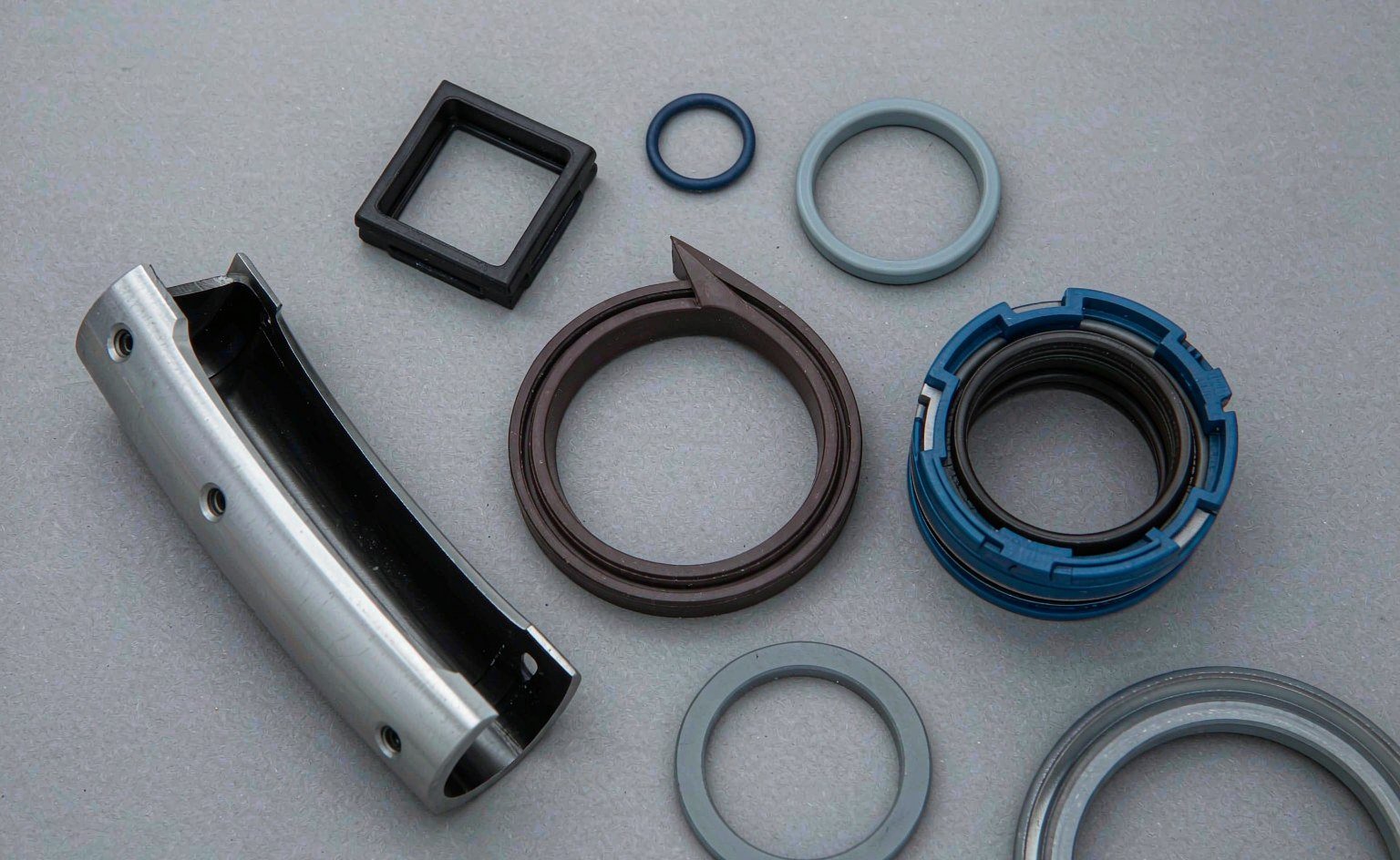
2. Specifying by Dimension and Ignoring the Housing Standard
Pneumatic cylinders follow a small number of housing standards — ISO 6432 for round-body cylinders, ISO 15552 (formerly VDMA 24562) for profile cylinders, ISO 21287 for compact cylinders. Cylinder makers that publish dimension drawings to those standards, SMC for instance, give you the groove width and depth to check against the seal drawing. A seal that fits the bore diameter but not the groove depth sits either too proud, which crushes the lip, or too deep, which leaves it with no squeeze at all. The second case is the dangerous one: the cylinder assembles, passes a static test at 2 bar, and leaks at 6 bar under load.
When ordering replacement seals, give the cylinder standard and the bore size, not just the measured groove. When designing a new cylinder, keep the groove dimensions from the standard rather than from the seal drawing, and check the seal’s radial space against the groove depth plus clearance. A 0.2 mm error in depth is enough to remove half the squeeze.
3. Getting the Squeeze Wrong in Either Direction
Squeeze is the percentage of the seal’s cross-section that is compressed when the gland is closed. Too little and the seal cannot follow the bore as it wears; too much and friction, heat and permanent set all rise together. Pneumatic duty wants less squeeze than hydraulic duty, because the pressure is low and friction matters more.
| Application | Typical squeeze | Failure if too low | Failure if too high |
|---|---|---|---|
| Static O-ring, end cap or flange | 20–30% | Weeps at pressure, seal walks in the groove | Cold flow, cracked ring on removal |
| Dynamic O-ring, piston or rod | 10–15% | Bypass at low pressure, slow drift | High breakaway, glazed and flattened ring |
| Low-friction pneumatic lip seal | 5–12% (profile dependent) | Leakage at 0.5–1 bar, poor repeatability | Stick-slip, seal rolls in the groove |
| Rod wiper (scraper) | Interference fit, not squeeze | Contamination passes to rod seal | Rod wear, wiper lip torn on assembly |
The numbers vary with profile and compound, so treat them as a check rather than a specification. What matters is that the drawing states a target and someone verifies it on the first article — because squeeze is the one variable that cannot be inspected after assembly.
4. One Compound for the Whole Plant
Pneumatic systems are not all the same chemically. Some run on lubricated air from a central lubricator; some run oil-free on a dry, clean supply; some see compressor oil carryover; some are washed down with caustic. The same NBR seal that works for years in a lubricated system hardens and shrinks in a genuinely oil-free one, because NBR’s plasticiser migrates out when there is nothing in the air to replace it.
| Air condition | Good choice | Acceptable | Avoid |
|---|---|---|---|
| Dry, oil-free air (ISO 8573-1 class 1 or 2 oil) | PU for lips, NBR for static, PTFE-filled for guides | EPDM for static positions | Standard NBR in long-life dynamic positions — hardens |
| Lubricated air with mineral oil | NBR | PU | EPDM — swells badly in mineral oil |
| Hot, humid air or steam-adjacent lines | FKM, PTFE | EPDM | Polyester PU — hydrolyses and goes soft |
| Washdown with caustic or detergent | EPDM, PTFE | FKM for intermittent contact | NBR, PU |
| Food and beverage contact zones | FDA-compliant EPDM or silicone | PTFE | Any compound without a certificate |
Mixing compounds within one cylinder is a related error. A hard FKM rod seal running against a soft NBR wiper in the same gland produces uneven wear and a lip that lifts. Keep one family per cylinder unless the duty genuinely differs, and write the compound on the cylinder tag so the next rebuild does not undo the decision.
5. Treating Air Quality as Someone Else’s Problem
ISO 8573-1 classes the cleanliness of compressed air by particles, water and oil. A system running at class 4 for water and class 3 for oil carries enough liquid to soften polyurethane, swell NBR and corrode the aluminium bore that the seal runs against. The seal then gets blamed for a failure that started in the dryer.
Two checks catch most of it. First, drain the receiver and the filter bowls at the start of a shift and look at what comes out — emulsion means the dryer is not working. Second, put a filter regulator within a few metres of the cylinders being protected, not only at the compressor room. Long distribution runs pick up condensate that a central dryer cannot remove.
6. Running Without a Wiper in a Dirty Plant
A pneumatic rod seal is a single lip doing two jobs in most compact cylinders: sealing air in and scraping dirt off. In a machining cell, a foundry or a woodworking shop, that lip loses the second job within weeks. Once contamination passes it, the seal abrades from the inside and air escapes past the rod on every stroke — quietly, at the rate of a small permanent leak.
Fit a separate wiper or a bellows where the environment is abrasive. Bellows cost more and add a maintenance item, but they remove the contamination path entirely, and on a cylinder that cycles every two seconds that trade is usually worth it. The wiper side of this problem is covered in more detail in the article on wiper seals and ISO 6195 housings.
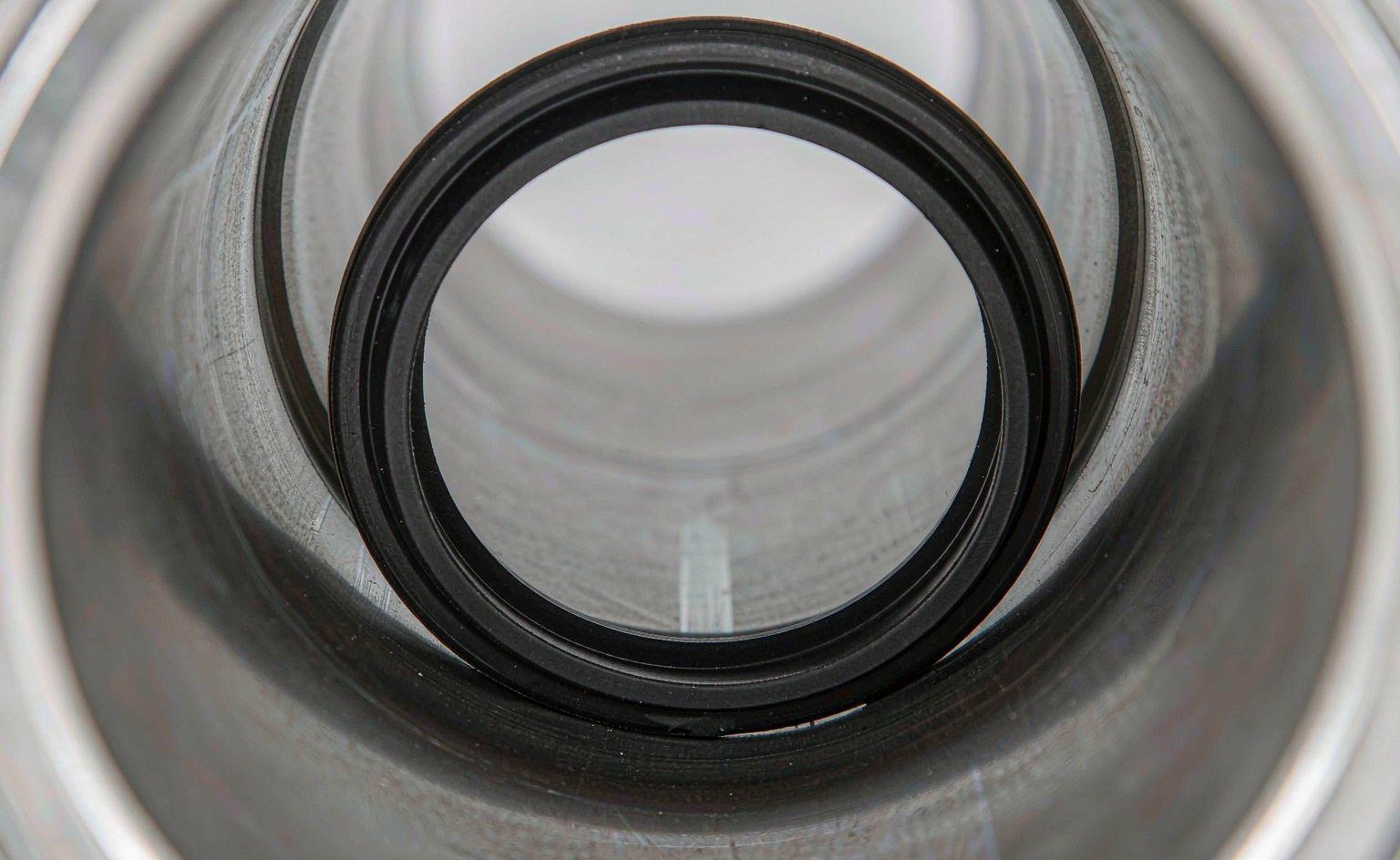
7. Over-Greasing at Assembly
Assembly grease is there to protect the seal during the first strokes, not to fill the groove. A groove packed solid with grease hydraulically locks, pushes the lip off its seat, and collects every particle that passes. Breakaway force climbs, the maintenance team raises the regulator to compensate, and the extra pressure pushes more air past the seal.
A thin film on the lip and the bore is enough. Use a grease that is compatible with the compound and with the air supply: silicone grease on EPDM, PFPE grease where oxygen or aggressive chemistry is present, and nothing at all in systems that must stay oil-free according to the air quality class.
8. Forgetting the Cushion and End-Cap Seals
Internal leakage is not only about the piston seal. Cushion needle seals, end-cap gaskets and the small O-rings around port fittings all bleed air into the same system, and none of them shows up as an external leak. A cylinder with a healthy piston seal and a worn cushion seal can lose more air than one with a moderately worn piston, because the cushion seat is a metal-to-metal gap with a tiny elastomer ring in it.
When a cylinder is opened for resealing, replace every elastomer in the kit, including the ones that look fine. The incremental cost is trivial next to the labour of opening it again, and the internal leaks are exactly the ones a leak survey cannot find.
9. Raising Pressure to Cover Leakage
When actuators get sluggish, the first response in most plants is to lift the regulator from 6 to 7 bar. That treats the symptom and worsens the cause. Leakage flow through a fixed orifice rises roughly in proportion to absolute pressure, so a 15% pressure increase produces a similar increase in leak rate. Meanwhile compressor power rises about 7% for every extra bar of discharge pressure.
The same logic applies to undersized tubing and fittings. A 6 mm tube feeding a 63 mm bore cylinder through a restrictive push-in fitting drops pressure at the cylinder, the regulator gets adjusted upward, and the whole line runs at a higher pressure than the work requires. Fix the restriction and the pressure setting comes back down on its own. For the arithmetic on air consumption and compressor power, the Engineering Toolbox air-flow pages are enough to size a line properly in a few minutes.
10. No Leak Survey, No Tags, No Owner
Leaks found and not recorded get found again next year. A workable programme is simple: an ultrasonic detector, a tag on every leak with a number and a date, a repair list sorted by cost of the leak rather than ease of access, and a re-check after repair. Doing it once a quarter is enough for most plants; the first survey is always the expensive one because it finds years of accumulated loss.
On the seal side, the survey should include a cylinder bypass test: disconnect the rod-end port, plug it, pressurise the cap end and watch for flow at the open port. That single test separates a leaking piston seal from a leaking fitting, and it takes two minutes per cylinder.
A 60-Minute Air Audit for One Machine
You do not need a full audit to start. Pick the machine that runs the most cycles per shift and work through this list in an hour:
- Minutes 0–10. Note the regulator setting, the cylinder bore and stroke, and the cycle rate. Calculate theoretical air consumption per cycle and compare it with the meter reading at the machine.
- Minutes 10–25. Bypass-test every cylinder at the rod end. Any continuous flow means the piston seal or the tube is at fault, not the fittings.
- Minutes 25–35. Ultrasonic-check the port fittings, cushion adjusters and end caps. Tag what you find, even if you cannot fix it today.
- Minutes 35–50. Drain the filter bowl and inspect the element. If the bowl holds emulsion, the dryer upstream is the real project.
- Minutes 50–60. Record the seal compound and profile on each cylinder tag. Anything unmarked gets marked, so the next rebuild does not repeat mistake number four.
If the bypass test shows a cylinder passing air, the seal specification is the place to look first. Our pneumatic seals and cylinder kits are supplied against ISO housing standards with the compound named on the label, which makes the audit result actionable rather than just recorded. Kit suppliers with a branch network, such as ERIKS, are worth using for the first rebuild while you standardise the specification. For cylinders where friction rather than leakage is the problem, the method in specifying low-friction pneumatic seals starts from a breakaway force budget instead of a catalogue number, and the wiper seal range covers the contamination side of the same machine. If the plant also runs hydraulic equipment, the same discipline applies to standard rubber seals in the hydraulic power unit, where a single weeping joint can cost more than a cylinder rebuild.
Pneumatic Seals Built Around Breakaway Force
Low-pressure air is less forgiving than hydraulics, and the seals we supply for it are chosen accordingly: NBR and PU piston and rod seals with the right preload, PTFE guide rings and wear bands, wipers for the contamination side, and the cushion and end-cap seals that a leakage survey usually finds last. Kits can be assembled per cylinder or per machine, tagged and bagged for the maintenance store.
The mistakes this article lists are mostly specification mistakes, so we quote against the four numbers that prevent them: bore, rod, stroke rate and air quality. Breakaway force is computed from seal preload and guide friction before a profile is proposed, because a seal that holds 10 bar while doubling the actuator’s minimum operating pressure has not solved the problem.
Send the cylinder data, the air preparation in use and the leak symptoms to sales@bosssealing.com, and we will come back with a seal list per position plus the two changes that usually pay for themselves first. Quotes and the engineering review are free, and replies usually arrive inside one working day — the contact form reaches the same desk.