
A quotation for PTFE wear rings or backup rings rarely lists a single price for “PTFE”. It lists three: virgin, a glass-filled grade, and something with bronze or carbon in it, and the price difference between them can run several times over. That spread exists because unfilled PTFE carries a defect every seal engineer learns early: it creeps under load and wears out fast in sliding contact. Fillers fix both problems — but each filler fixes them differently, and each one takes something away.
This guide compares the five filler families we compound and machine most often — glass fiber, carbon and graphite, bronze, molybdenum disulfide (MoS₂), and polyimide (PI) — with real datasheet numbers, the trade-offs that never make it onto the data sheet, and a selection table you can apply directly to seals, backup rings, guide elements and bearings.
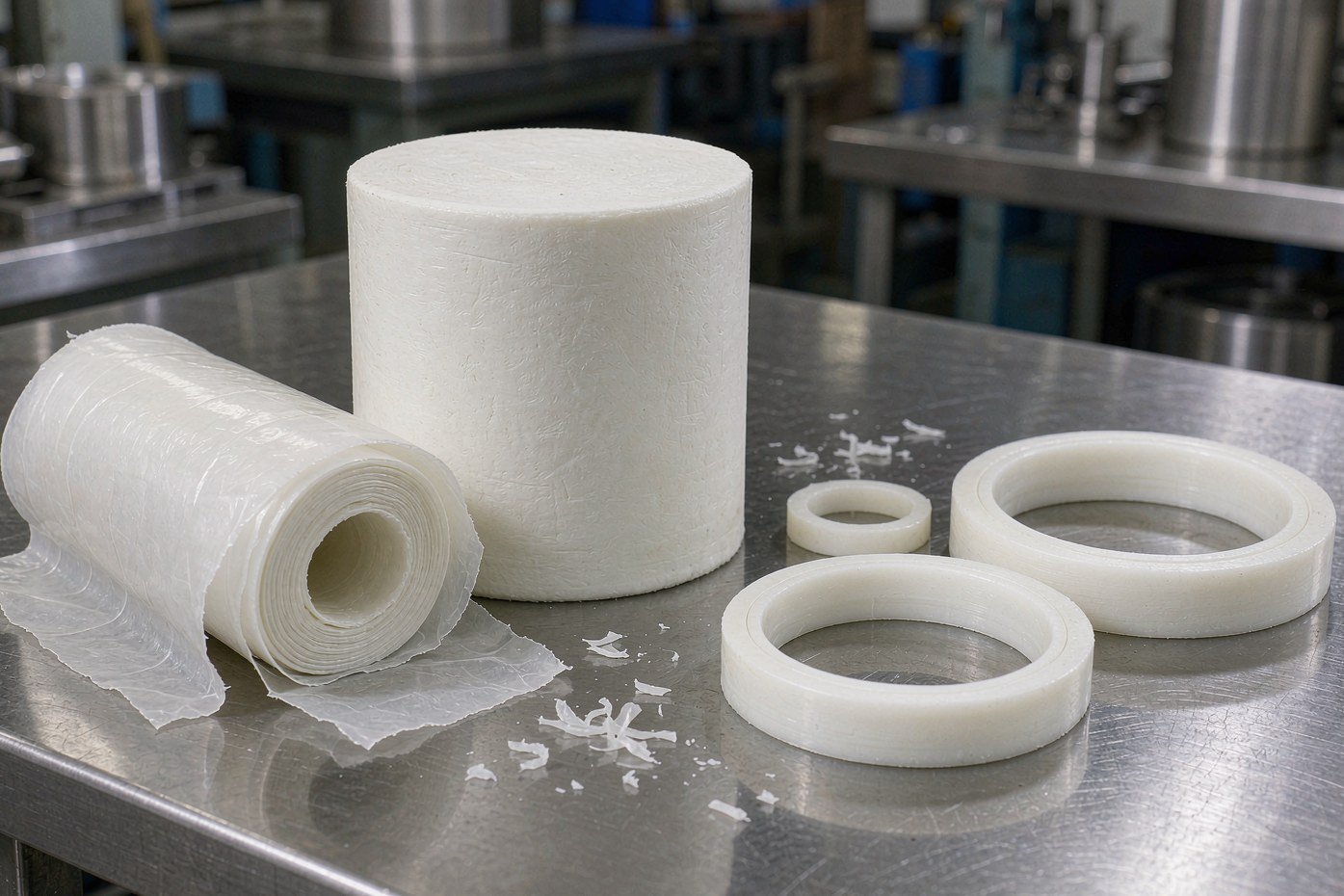
What a Filler Changes — and What It Costs You
Virgin PTFE has the lowest coefficient of friction of almost any solid polymer (typically 0.04–0.10 on steel, per published engineering property tables), outstanding chemical resistance against nearly everything short of molten alkali metals, and a service window from roughly -200 °C to +260 °C. It also has two weaknesses that matter in sealing work: severe cold flow (creep under sustained load) and poor wear resistance in dynamic contact. A virgin PTFE backup ring squeezed in a hot, high-pressure gland will slowly thin out and let the soft elastomer behind it extrude; a virgin PTFE bearing under side load will gouge and wear within weeks.
Fillers attack both weaknesses. They raise compressive strength, cut permanent deformation under load by factors of three to eight, and multiply wear life — published tribology work reports wear-rate reductions of several orders of magnitude when the right filler and percentage are selected (Wear journal study on filled PTFE composites). Thermal conductivity rises as well, which matters more than most buyers expect: a seal that moves frictional heat into the metal hardware runs cooler and lasts longer than one that traps heat at the sliding interface. The same creep problem, handled differently, is why some chemical services skip elastomers entirely and use a PTFE encapsulated O-ring — the jacket carries the chemistry while a steel spring carries the load.
The cost side is rarely discussed in buying meetings. Every filler lowers chemical resistance somewhere, most fillers make the compound electrically conductive, and several make it abrasive to soft counterfaces like aluminum or bronze. Filled PTFE also loses elongation — it is stiffer and harder, which changes how a machined ring takes up tolerance and how it should be installed. The trick is not “add filler”. It is matching the filler to the chemistry and the counterface.
Glass Fiber: The Default Choice, With Two Blind Spots
Glass fiber is the most common PTFE filler worldwide, typically compounded at 5–25 wt% with 15%, 20% and 25% grades as the standard offerings. It delivers the best value per point of improvement: compressive strength roughly doubles, creep under sustained load drops measurably, wear resistance climbs dramatically, and the compound keeps almost all of PTFE’s chemical inertness. For backup rings, valve seats, gaskets and guide elements in corrosive media, glass-filled PTFE is usually the first grade we quote.
Blind spot one: glass fiber does not lubricate. A glass-filled compound actually runs with a slightly higher dynamic friction coefficient than virgin PTFE — published data shows roughly 0.07 against 0.05 for virgin on steel — and at high sliding speeds glass-only compounds can lose their transfer film and wear badly. Tribology research on chopped-fiber PTFE composites has shown glass fiber alone performing poorly as an anti-wear addition at 3 m/s, while a hybrid compound combining glass with MoS₂ achieved the best overall result. If your part runs fast or dry, glass alone is not the answer — and where loads climb past what any PTFE compound carries, PEEK is the usual step up, which we cover in detail in our guide to PEEK 密封組件.
Blind spot two: chemistry. The glass itself is not chemically inert — it is attacked by strong alkalis and by hydrofluoric acid, and hot concentrated caustic will etch the fibers out of the matrix over time. For a valve seat in 98% sulfuric acid, glass-filled PTFE is superb; for a sealing element wetted by hot concentrated sodium hydroxide, it is the wrong choice and the fibers will eventually bloom at the surface.

Carbon and Graphite: Wear, Heat, and Static Control
Carbon-filled PTFE — carbon powder at roughly 15–35 wt%, often blended with 5–15% graphite — is the grade we reach for when a part must run wet, hot, or both. Carbon raises compressive strength more than glass does at equal loading in many datasheets, it is chemically inert (unlike glass), and it works especially well in water and water-based fluids where glass-filled compounds sometimes show higher wear. Thermal conductivity roughly triples versus virgin PTFE, pulling frictional heat out of the sliding interface and into the hardware.
Graphite deserves its own sentence: it is the friction reducer of the family. Carbon-graphite blends hold a dynamic friction coefficient around 0.06 while adding lubricity that glass cannot provide, which is why they dominate dry-running piston rings and compressor rings.
The trade-offs are electrical and cosmetic. Carbon and graphite make the compound conductive — a filled PTFE insulator is no longer an insulator, with volume resistivity dropping from beyond 10¹⁵ Ω·cm to around 10⁴–10⁹ depending on the blend. Anywhere the part must isolate, or where static dissipation is a hazard rather than a benefit, carbon is excluded. Carbon- and graphite-filled compounds can also polish or micro-abrade softer counterfaces, and graphite can leave gray marks on stainless hardware that some food and pharmaceutical customers refuse to accept. For those industries we quote glass instead.
Bronze: Maximum Load, Maximum Heat Removal
Bronze powder at 40–60 wt% is the heavyweight option. Datasheet numbers tell the story: compressive strength at 1% deformation reaches roughly 10–11 MPa against 4.5 MPa for virgin PTFE, permanent deformation under sustained load drops from about 8% to around 1%, and thermal conductivity rises above 0.7 W/m·K — roughly triple the glass-filled grades and close to the best you can buy in a PTFE family compound. Shore D hardness climbs to 66–68 and density rises to about 3.1–3.9 g/cm³ depending on bronze content, so a bronze-filled ring weighs nearly twice its glass-filled equivalent.
That combination — highest PV capability, best heat removal, lowest permanent set — makes bronze-filled PTFE the default for hydraulic guide rings and wear bands, high-load thrust washers, and sliding elements under sustained side load. In a hydraulic cylinder bore running 250 bar with an aggressive duty cycle, a bronze-filled guide ring simply outlives every polymer alternative we have tested.
The cost is chemical. Metal particles lose the inertness that justifies PTFE in the first place: bronze-filled compounds are attacked by acids and corrode in hot water, and electrolytic effects appear where the compound sits wetted between dissimilar metals. Bronze-filled parts also conduct, like carbon. Our rule of thumb: bronze for load, glass for chemistry, and never bronze where the media or the washdown can reach the metal.
MoS₂ and Polyimide: Small Percentages, Narrow Jobs
Molybdenum disulfide enters the compound at around 5 wt% and does one job: it lubricates dry contact. On its own, MoS₂ improves anti-wear behavior at low sliding speeds but can fail at 3 m/s — which is why it almost always travels with a structural filler. The classic pairings are 15% glass + 5% MoS₂ and 40% bronze + 3% MoS₂: the glass or bronze carries the load, the MoS₂ keeps the friction coefficient low and stabilizes the transfer film. Hybrid research compounds combining carbon fiber, glass and MoS₂ have reached PV limits of 9.5 MPa·m/s at 1 m/s and 15 MPa·m/s at 2 m/s — figures virgin PTFE cannot approach at any speed. One chemical caution: MoS₂ grades should stay away from hot concentrated sulfuric acid.
Polyimide-filled PTFE, typically near 15 wt%, is the premium organo-filled grade. It delivers the lowest wear rates in unlubricated running of any compound we machine, keeps the friction coefficient down, holds tensile strength higher than the inorganic-filled grades, and — uniquely among the anti-wear fillers — does not shed abrasive particles that score a soft counterface. That last point decides shaft finish life in long-running servo cylinders and compressor rings: a PI-filled bearing is gentler on the mating surface than glass or carbon over millions of cycles. The trade-off is price; PI-filled compounds cost several times more than glass-filled material, so we quote them where dry running or counterface protection justifies it.
The Numbers Side by Side
The table below compiles typical published datasheet values (in the style of the Foresight compounded-PTFE datasheet and its peers) for the four workhorse grades. Actual values vary with filler grade, particle size and processing, so treat them as design-guide magnitudes rather than guaranteed limits — sealing specialists such as Trelleborg and stock-shape converters like Professional Plastics publish their own grade tables, and numbers shift by 10–20% between them.
| 特性 | 純 PTFE | 25% Glass | 25% Carbon | 60% Bronze |
|---|---|---|---|---|
| Density (g/cm³) | 2.17 | 2.23 | 2.18 | 3.10 |
| Tensile strength (MPa) | 30 | 16 | 15 | 14 |
| Elongation at break (%) | 300 | 260 | 180 | 100 |
| Compressive strength, 1% def. (MPa) | 4.5 | 7.0 | 10.0 | 10.5 |
| Permanent deformation under 14 N/mm², 24 h (%) | 8.0 | 5.0 | 3.0 | 1.0 |
| Hardness (Shore D) | 55 | 63 | 65 | 66 |
| Dynamic friction coefficient vs steel | 0.05 | 0.07 | 0.06 | 0.06 |
| Thermal conductivity (W/m·K) | 0.23 | 0.43 | 0.64 | 0.74 |
| Linear thermal expansion 25–100 °C (×10⁻⁵/K) | 11.6 | 10.0 | 9.5 | 9.5 |
| Volume resistivity (Ω·cm) | >10¹⁵ | >10¹⁵ | ~10⁴ | ~10⁷ |
有兩行數據值得任何指定密封件的人再看一眼。永久變形是冷流指標,在高溫填料函中會令支撐環和彈簧加載護套失效——青銅級別的表現比純料好八倍。而導熱率則解釋了我們每個月都會見到的一種失效模式:相同的零件幾何形狀在碳或青銅填充下運行溫度明顯更低,從而減緩鄰近彈性體蓄能器中所有由熱驅動的降解模式。
PV 極限:填充 PTFE 的價值所在
壓力-速度(PV)極限是滑動磨損零件最有用的單一數值,也是填料選擇能立即回本的地方。同一化合物系列在鋼對偶面上的已公佈數值:
| 滑動速度 | 純 PTFE | 25% Glass | 25% Carbon | 60% Bronze |
|---|---|---|---|---|
| 0.05 m/s | 0.04 | 0.37 | 0.37 | 0.55 |
| 0.5 m/s | 0.07 | 0.48 | 0.46 | 0.68 |
| 5.0 m/s | 0.10 | 0.59 | 0.55 | 1.02 |
再看第一行:在低速下,玻璃和碳填充將安全 PV 提升至純 PTFE 的約九倍,青銅則接近十四倍。在 5 m/s 時,青銅級別達到未填充材料 PV 極限的十二倍。用密封的語言來說:一個在側向載荷下只能撐一小時的純 PTFE 導向環,換成青銅填充環後,能撐過機器的整個大修週期。
PV 極限也解釋了為何在高速設備中,填料的選擇更多取決於速度而非壓力。玻璃填充化合物在高速滑動時會失去優勢,因為玻璃會干擾 PTFE 轉移膜——這與摩擦學文獻中關於純玻璃化合物在 3 m/s 時所報告的效果相同。在乾運行或邊界潤滑運行中,速度高於約 1–2 m/s 時,我們會引導客戶選用碳-石墨或 PI 級別,並將玻璃保留給較慢、較高載荷的位置,例如支撐環和閥座。
更多級別的完整性能比較——25% 玻璃加 5% 石墨、35% 碳、40% 青銅加 3% MoS₂、30% 玻璃規格級別,甚至用於閥座的 50% 不鏽鋼填充 PTFE——已發佈於供應商數據表中,例如 ERIKS 填充 PTFE 數據表,上述數字均取自該系列數據。當客戶的 PV 計算落在兩個級別之間時,我們會同時報價兩者,並讓一次短期磨損試驗來決定;為期兩週的台架測試,成本低於一板錯誤的環。
重量百分比、體積百分比,以及為何同樣的「25%」表現不同
化合物規格以重量標示填料含量,但磨損和摩擦行為取決於體積——而兩者會因填料密度不同而大相逕庭。玻璃纖維密度為 2.5 g/cm³,僅略高於 PTFE 基體的 2.2,因此 25 wt% 玻璃約佔化合物體積的 23%:纖維確實貫穿大部分基體並相互交織。青銅密度約 8.8 g/cm³,是 PTFE 的四倍,因此即使是 60 wt% 青銅的化合物,按體積計也只有約 25% 青銅——青銅顆粒形成孤立的承載島嶼,而非連通的骨架。
這就是為何青銅填充 PTFE 保留的 PTFE 摩擦行為比其邵氏硬度所暗示的更多,也是為何將青銅含量從 40% 提高到 60%(按重量計)能提升承載能力,卻不會讓環變成金屬。這也是為何兩家供應商的「40% 青銅」化合物可能表現不同:粒徑分佈和青銅合金成分會改變這些島嶼的堆積密度。當我們收到跨供應商比較的請求時,我們會要求體積填充率和粒徑數據,而不僅僅是數據表首頁上的重量百分比。
對買家而言,實用的結論很簡單:比較化合物時應看實測性能——壓縮強度、載荷下的變形、PV 極限、摩擦——而非填料百分比。來自不同纖維供應商的兩種 25 wt% 玻璃化合物,其磨損係數通常相差 10–20%,而單憑數據表上的百分比無法揭示你拿到的是哪一種。
填料選擇對機加工、公差和交貨期的意義
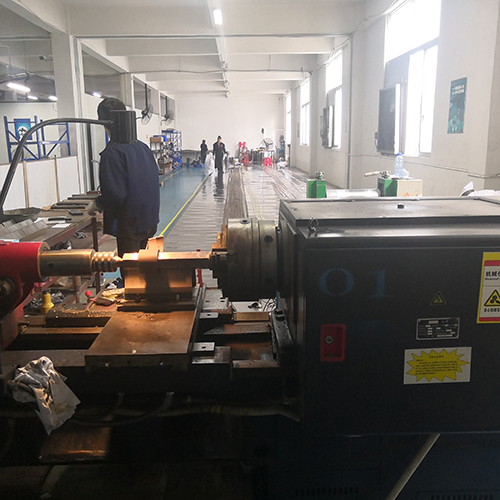
填充 PTFE 以壓縮燒結的坯料、管材或刨切片材形式到達機加工車間,填料會伴隨每一個步驟。玻璃纖維是磨蝕性的:它會明顯縮短刀具壽命,這在薄壁零件和深槽的加工成本中會體現出來。青銅和碳填料的切削較為溫和,但裝載方式不同——填充化合物比純 PTFE 更硬、熱膨脹更低,因此加工後能保持更緊的直徑且更圓。這在支撐環和填料函密封工作中是一項隱性優勢:按給定公差加工的填充 PTFE 環,在比純料環更寬的溫度範圍內都能保持該尺寸。
燒結和收縮也不同。填充化合物在燒結過程中收縮較小,冷卻時變形也較少,這提高了大直徑坯料的良率,並減少了導致長刨切薄膜報廢的翹曲。這些都不改變買家訂購的內容,但解釋了為何「相同」幾何形狀會有兩個報價:填充化合物即使原材料成本更高,其精加工成本也可能更低。
交貨期更多取決於化合物供應情況,而非機加工時間。標準填充量的玻璃、碳和青銅化合物在大多數加工商處都是現貨;PI 填充和特殊 MoS₂ 混合料則是按單生產,可能為首件增加數週時間。請相應規劃試訂單——特殊化合物的樣品比隨後的量產批次耗時更長。對於我們 工程塑膠系列, 的常規訂單,標準填充化合物的交貨時間與純 PTFE 庫存型材相同。
將化合物與零件匹配
下方的選型表概括了我們的報價方式。它假設零件由庫存管材和坯料機加工而成;大批量模壓零件遵循相同邏輯,只是以化合物供應情況作為額外限制。所有這些化合物均在我們其他 工程塑料產品.
| 應用 | 首選化合物 | 為何在此勝出 | 應避免 |
|---|---|---|---|
| 液壓導向環和耐磨帶 | 40% 青銅 + 3% MoS₂,或 15% 玻璃 + 5% MoS₂ | 最高 PV、最佳散熱、在珩磨孔上低摩擦 | 純 PTFE(蠕變);高桿速下的純玻璃 |
| 支撐環/抗擠出環 | 25% 玻璃,或介質為清潔油時用青銅 | 填料函中的壓縮強度和受控蠕變 | 熱水、酸性或鹼性工況中的青銅 |
| 乾運行活塞環和壓縮機環 | 25% 碳-石墨,或長壽命用 PI 填充 | 無油膜下的低摩擦;對缸壁溫和 | 純玻璃(高速下轉移膜破裂) |
| 化學閥座及腐蝕性介質中的閥座 | 15–25% 玻璃 | 除鹼/HF 外保持 PTFE 的化學惰性 | 青銅、不鏽鋼填充、碳(染色) |
| 磨損關鍵工況中的彈簧加載密封護套 | 按介質選 25% 玻璃或 25% 碳 | 護套唇口的受控蠕變;護套材料與彈簧級別配對——參見我們的 彈簧蓄能密封件系列 | 壓力循環頻繁時避免使用未填充護套 |
| Electrically sensitive positions (isolation, no static) | 15–25% glass only | Only mainstream filler family that stays insulating | Carbon, graphite, bronze — all conductive |
| Food and pharmaceutical contact | Compliant glass-filled grades | Inorganic, inert, no gray staining risk on hardware | Graphite blends (staining); unverified PI grades |
One more selection rule from the workshop: always pair the compound with the elastomer that energizes or backs it. A bronze-filled PTFE ring running hot in a 90 °C oil sump will conduct heat into an NBR O-ring energizer and age it faster; in that position an FKM energizer, or a carbon-filled ring with better heat routing, changes the failure mode entirely. Compound selection is a system decision, not a line item.
Questions Buyers Ask About Filled PTFE
Is filled PTFE still chemically inert? The PTFE matrix is; the filler is not. Glass loses alkali and HF resistance, bronze loses acid and hot-water resistance, carbon and graphite survive most media but conduct. We always screen the filler against the customer’s full chemical list, not just the headline media. Where the chemistry rules out every filler, unfilled PTFE designs — such as the encapsulated O-ring constructions — keep the inertness and solve wear mechanically.
Why does my filled ring cost more than I expected? Filled compounds are compression-sintered billets machined to size, and fillers raise tooling wear and cutting time — bronze above 50 wt% is notably hard on tooling. The price usually tracks machining difficulty more than raw material cost.
Can I substitute glass-filled for bronze-filled guide rings? At low rod speeds and moderate side load, yes. At high cycle rates the glass grade runs hotter and wears the bore faster; we would check PV first and usually recommend the glass + MoS₂ hybrid instead of a straight swap.
Which filler for a static backup ring behind a polyurethane rod seal? 25% glass in clean hydraulic oil, bronze only if the cylinder sees heavy shock loads and the oil stays clean and dry. Check the chemical list if the system runs water-glycol fluid — that excludes bronze.
Does filler content improve low-temperature performance? No — the glass transition behavior of PTFE stays the same, and filled compounds stay flexible to roughly -200 °C like virgin material. Fillers improve the hot end of the envelope (creep, deformation), not the cold end. For deep-cold service the deciding factors are spring energizer design and jacket material choice, not filler loading.
How do I verify what I actually received? Density is the fastest cross-check: every filler family has a distinctive density band, so a two-minute weight-and-volume measurement on a sampled ring catches a mislabeled compound before it enters production. Add a Shore D reading and you have a compound identity check that costs almost nothing per batch.