
Most first orders to a Chinese seal factory go wrong in the same place: the RFQ. Not the price, not the lead time, not the quality system — the request itself. A drawing with “NBR, 70 shore” and a diameter is not a specification, and a factory that quotes from it will either guess or pad the price to cover the guess.
The factories that quote well are the ones that receive a complete package: a drawing with a tolerance class, a material callout with a cure system, a quantity with a forecast, and a clear statement of what the part has to survive. That package takes an hour to assemble and saves four weeks of sample rounds.
We quote custom rubber and PTFE parts from Foshan every week, for buyers in North America, Germany, Italy, Vietnam, and Brazil. This is the checklist we use internally to decide whether a quote can be issued the same day, plus the traps we see on both sides of the transaction.
What the Factory Needs Before It Can Quote
A seal quote is a manufacturing decision, not a catalogue lookup. Someone in the factory has to answer four questions before a number is meaningful: which process, which mold, which compound, and which inspection level. Each answer depends on information only the buyer has.
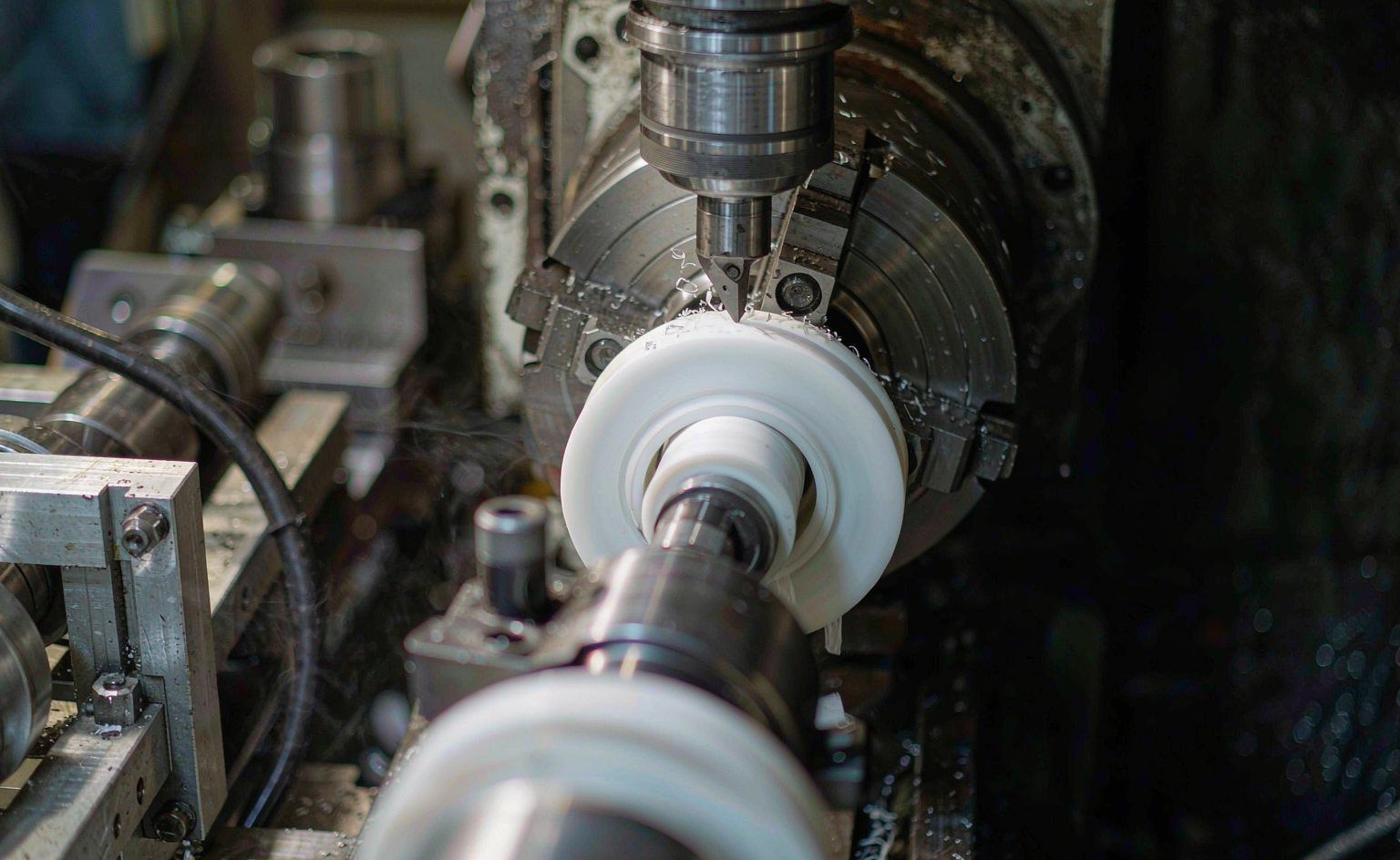
Process follows from geometry and volume. A 200 mm PTFE lip seal is machined from tube or billet. A 12 mm O-ring in 500,000 pieces per year is compression or injection molded. A 40 mm bonded gasket with an insert is transfer molded. Without a quantity, the factory cannot choose, so it quotes the safest (most expensive) route.
Compound follows from the fluid and temperature. “FKM” is a family with 66–70% fluorine grades, low-temperature grades, and different cure systems; a standard FKM and a GLT grade differ by a factor of two in price and by 30°C in low-temperature limit. If the RFQ says “Viton or equivalent”, the factory will pick the cheapest compound that passes a generic datasheet, which is rarely the one the application needs.
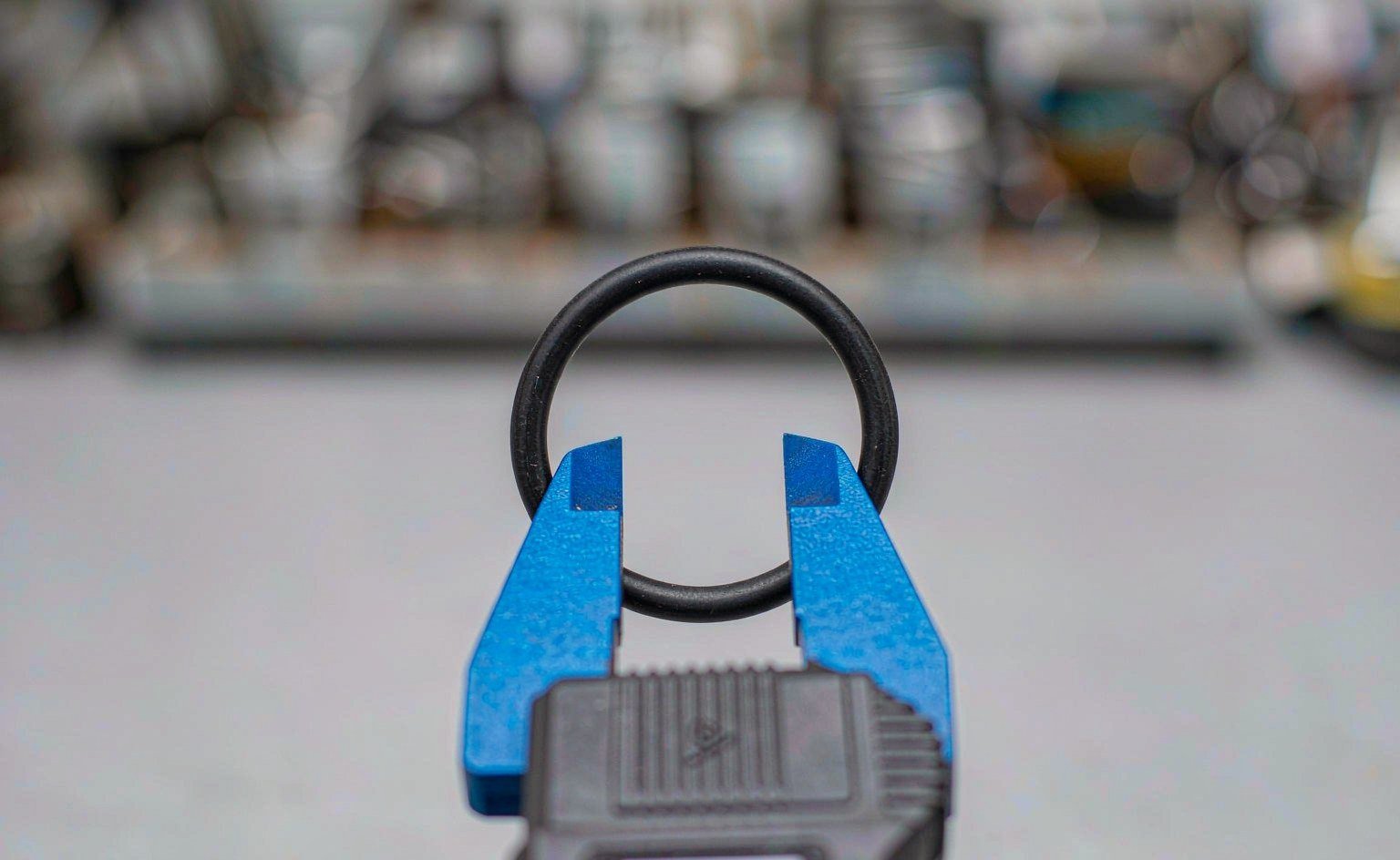
Inspection level follows from the tolerance class and the critical dimensions. A seal with a ±0.08 mm cross-section tolerance needs an optical comparator and a different inspection plan than one at ±0.25 mm.
| RFQ item | Why the factory needs it | What a weak version looks like |
|---|---|---|
| 2D drawing with dimensions and GD&T | Sets mold cavity, process, and inspection plan | A photo of a worn part, or a sketch with no tolerances |
| Material callout (family + compound + hardness) | Drives compound purchase, cure system, and price | “Rubber, black, 70 shore” |
| Tolerance standard and class | Decides mold quality, cavity count, and inspection cost | “As drawing” with no class marked |
| Annual quantity and first-order quantity | Chooses compression, transfer, or injection molding | “Trial order, quantity TBD” |
| Fluid, concentration, and temperature | Selects the compound and predicts swell | “Oil resistant” |
| Pressure and motion | Sets hardness, backup ring requirement, and profile | Pressure only, no dynamic/static distinction |
| Compliance documents required | Determines compound source and testing budget | “Food grade” with no standard cited |
| Destination and Incoterm | Sets packing, freight, and customs paperwork | “Ship it to our warehouse” |
The Drawing Decides the Price
Three features on a drawing move the quote more than anything else: the material callout, the tolerance class, and whether the critical dimensions cross a parting line.
The tolerance class, not the dimension
Molded rubber dimensions are governed by ISO 3302-1, which defines four classes: M1 (precision), M2 (high quality), M3 (good quality), and M4 (non-critical). It separates fixed dimensions — set by the tool, marked F — from closed dimensions, which cross the parting line or are affected by flash, marked C. Closed dimensions are typically 20–30% looser than fixed ones at the same class.
| Nominal size | M1 precision | M2 high quality | M3 good quality | M4 non-critical |
|---|---|---|---|---|
| 0–4.0 mm | ±0.08 mm | ±0.10 mm | ±0.25 mm | ±0.50 mm |
| 10–16 mm | ±0.15 mm | ±0.20 mm | ±0.40 mm | ±0.80 mm |
| 25–40 mm | ±0.20 mm | ±0.25 mm | ±0.50 mm | ±1.00 mm |
| 63–100 mm | ±0.35 mm | ±0.50 mm | ±1.00 mm | ±1.60 mm |
M3 is the default for industrial seals and covers most gaskets, O-rings, and custom molded profiles. M2 adds mold precision, better steel, and more frequent inspection, and in our experience lands 1.5–2× the baseline tooling cost. M1 requires single-cavity or tightly controlled multi-cavity tooling, optical measurement, and a process capability study — it is worth paying for on a 5 mm cross-section only when the function genuinely depends on it.
The commonest expensive mistake is specifying M1 across a whole drawing because the buyer wants “good quality”. The second commonest is leaving the class off entirely, which lets the factory quote M4 and the buyer reject on arrival.
The material callout, done properly
For rubber parts, the cleanest callout is an ASTM D2000 line. It encodes heat resistance, oil resistance, hardness, tensile strength, and the specific test suffixes in one string, so any qualified molder reads the same requirement. A typical line looks like this:
ASTM D2000 M4 BG 714 A14 B14 EO14
Read left to right: metric units, grade 4, type B (heat resistance) class G (oil resistance) — a nitrile base — 70 Shore A with 14 MPa minimum tensile, then A14 heat aging, B14 compression set, and EO14 fluid immersion in ASTM Oil No. 3. A molder who cannot parse that string is not set up for export work.
Where the buyer has a known compound instead, call it out by compound designation and cure system, not by brand: “FKM, 68% fluorine, bisphenol-cured, 75 Shore A” is quotable. “Viton” is a trademark owned by Chemours and is not a specification; a factory supplying an equivalent compound is not counterfeiting, but the buyer should know which one they are getting.
Quantity, Tooling, and Where the Cost Sits
Seal pricing has almost nothing to do with material cost at low volume and almost everything to do with tooling amortisation and cavitation. This is the part of the conversation where buyers and factories most often talk past each other.
| Annual volume | Process | Tooling (indicative) | Notes |
|---|---|---|---|
| 1–500 pcs | Machined from tube, rod, or sheet; or cut from cord | None | Highest unit price, no tooling risk, 7–15 days |
| 500–5,000 pcs | Compression molding, 1–4 cavities, aluminium or mild steel mold | USD 600–2,500 | Best balance for custom profiles; 20–30 day first article |
| 5,000–50,000 pcs | Compression or transfer molding, 8–24 cavities, hardened steel | USD 2,000–8,000 | Unit price falls sharply; mold maintenance plan needed |
| 50,000+ pcs | Injection molding, cold-runner or rubber injection press | USD 8,000–25,000 | Lowest unit price, tightest repeatability, longest lead time |
Those ranges are what we see in our own shop for parts between 15 mm and 120 mm; a 400 mm molded gasket or a multi-insert bonded part sits well above them. Treat them as a sanity check on a quote, not a price list.
Two commercial details belong in the RFQ, not in the negotiation afterwards. First, whether tooling is charged once and owned by the buyer, or amortised into the unit price — the second looks cheaper on the first invoice and is much more expensive if you change suppliers. Second, whether the tool is exclusive: a factory that keeps your mold and runs it for another customer is a real risk when your drawing is your IP.
Sample policy is the third. “Free sample” usually means a stock size, not a custom part. For custom work, expect to pay for tooling plus a sample lot, and expect the sample lot to be charged at a higher unit rate than production. A factory that offers free custom samples either has your geometry on the shelf or is not planning to make money on the tool.
What Should Ship With the Parts
The paperwork is part of the product. For a first shipment, ask for the certificate of conformance with the lot number and compound designation, the compound data sheet with the cure system, dimensional reports on the critical characteristics, and whichever material declarations your market requires. A shipment that arrives with only a packing list leaves the buyer unable to answer a customer audit six months later.
For a compound that carries a claim — FDA 21 CFR 177.2600, NSF/ANSI 51, WRAS, KTW-BWGL — ask for the document that names the compound, not the material family. Compliance belongs to the compound and the site that made it, and a certificate for “EPDM” tells you nothing about the specific batch in the box.
If your customer requires a management system certificate, verify it rather than filing the PDF. ISO 9001 and IATF 16949 certificates can be checked by number in the IAF CertSearch database; a certificate that does not appear there, or whose scope does not cover molded rubber parts, is not evidence of anything.
The Questions Buyers Forget to Ask
Four items are missing from most first RFQs, and each one causes a delay later.
Cleanliness and packaging. A seal for a medical or food application may need to be bagged in a clean area, double-bagged, or supplied without talc. Talc and mold-release agents are the usual reason a “silicone-free” part fails an incoming test.
Marking and traceability. Whether the part carries a compound code, a lot number, or nothing at all changes the mold and the inspection plan. Automotive and aerospace buyers usually need the lot traceable to a cure batch.
Storage and shelf life. Rubber has a shelf life, and the factory’s cure date is the start of it. If the parts will sit in your warehouse for a year before assembly, say so — a factory can ship a fresher batch and adjust the packaging to the ISO 2230 storage rules.
The failure mode you are trying to fix. This is the one that changes the answer. A buyer replacing a seal that hardened in service needs a different compound from one replacing a seal that swelled, even if the drawing is identical. Tell the factory what failed and it can propose a compound instead of copying the old one.
Reading the Quote
A quotation is a technical document. Five things in it tell you whether the factory understood the job.
The compound should be named with a designation and a hardness, not a family. The tolerance class should be stated explicitly, matching the drawing. The tooling line should separate one-time cost from unit price. The lead time should be split into tooling, first article, and production. And the validity should be short — 30 days is normal in a market where compound prices move.
Red flags are equally readable. A price 40% below the other three quotes usually means a different compound or a lower cavity count, and both show up in the first 500 parts. A quote that ignores the tolerance class is quoting a different part. A quote with no compound number cannot be compared to anything.
On payment terms, 30% deposit and 70% before shipment is standard for a first order; 100% against documents is not, and neither is no deposit on a custom tool. If you need open account terms, expect them after three or four clean shipments, not on the first one. Incoterms matter more than the number on the page: EXW leaves you arranging export clearance from Foshan, FOB puts the container on the ship, and DDP puts the customs risk on the supplier — price all three before comparing.
Action Checklist
- Send a 2D drawing with dimensions, tolerances, and the ISO 3302-1 class marked on every critical dimension.
- Add an ASTM D2000 line or a compound designation with hardness and cure system. Drop the brand name.
- State annual volume, first-order quantity, and whether a forecast exists. Volume changes the process and the price.
- List every fluid the part touches, with concentration and temperature, plus the cleaning chemistry.
- State pressure, motion (static, reciprocating, rotary), and stroke or speed.
- Name the compliance documents you need, by standard number, and whether they must ship with each lot.
- Ask for tooling cost, tool ownership, and exclusivity in writing before the first PO.
- Request a first article inspection report with the sample lot, not just a photo.
- Verify any management system certificate by number before you rely on it.
- Quote EXW, FOB, and DDP so the landed cost comparison is honest.
Send that package and a competent factory can quote in two working days and ship a first article in three weeks. Send half of it and you will spend those three weeks in email. Our customized products page lists the processes we run in-house, the rubber seals range covers standard profiles that can be modified rather than tooled from scratch, and the molded versus machined comparison explains when the cheaper route is the machined one. If the part is a cylinder rebuild kit rather than a single seal, start from the hydraulic seal kits and spare seals range instead.
For benchmark data on compound behaviour, Trelleborg’s sealing catalogue and PPE’s O-ring reference are both public and detailed enough to sanity-check a supplier’s claim. Marco Rubber’s material guides and Darcoid’s compound pages are useful for cross-checking a proposed compound against published swell data.
What We Need to Quote Well
The checklist in this article is close to the one we work from. To quote a custom seal properly we need the drawing or a sample, the compound and hardness, quantity with an annual forecast, the standard it has to meet, and the packaging and marking your incoming inspection expects. Given those, the quote states unit price at each quantity break, tooling or setup as a separate line, lead time from PO, and the tolerance band the part will actually be inspected to.
Custom work is what the shop is set up for: machined PEEK, PTFE, nylon and UHMWPE parts to drawing, molded and spliced elastomer seals in NBR, HNBR, FKM, FFKM, EPDM and silicone, and seal kits assembled against a bill of materials. Where a drawing is incomplete we mark up what is missing instead of pricing an assumption.
Send the RFQ with the drawing attached — sales@bosssealing.com or the contact form — and you will get a quotation with the cost drivers broken out, usually within 24 hours. If a cheaper route exists, whether a standard size, a different cut or stock material, we quote that alongside the drawing route.