
X 形環(四唇環)並非更好的 O 形環——它是針對特定失效模式的另一種解決方案:即往復及擺動工況下會螺旋、滾動並磨損的 O 形環。在靜態溝槽中,O 形環在成本與供應方面依然無可匹敵,再巧妙的截面設計也改變不了這一點。本文以數據說明 X 形截面在哪些方面真正帶來改善——摩擦力、壓縮量、抗扭轉能力——以及哪些方面只是推高價格,讓你能在值得支付 10–20% 溢價的工況中選用它,其餘場合則略過。
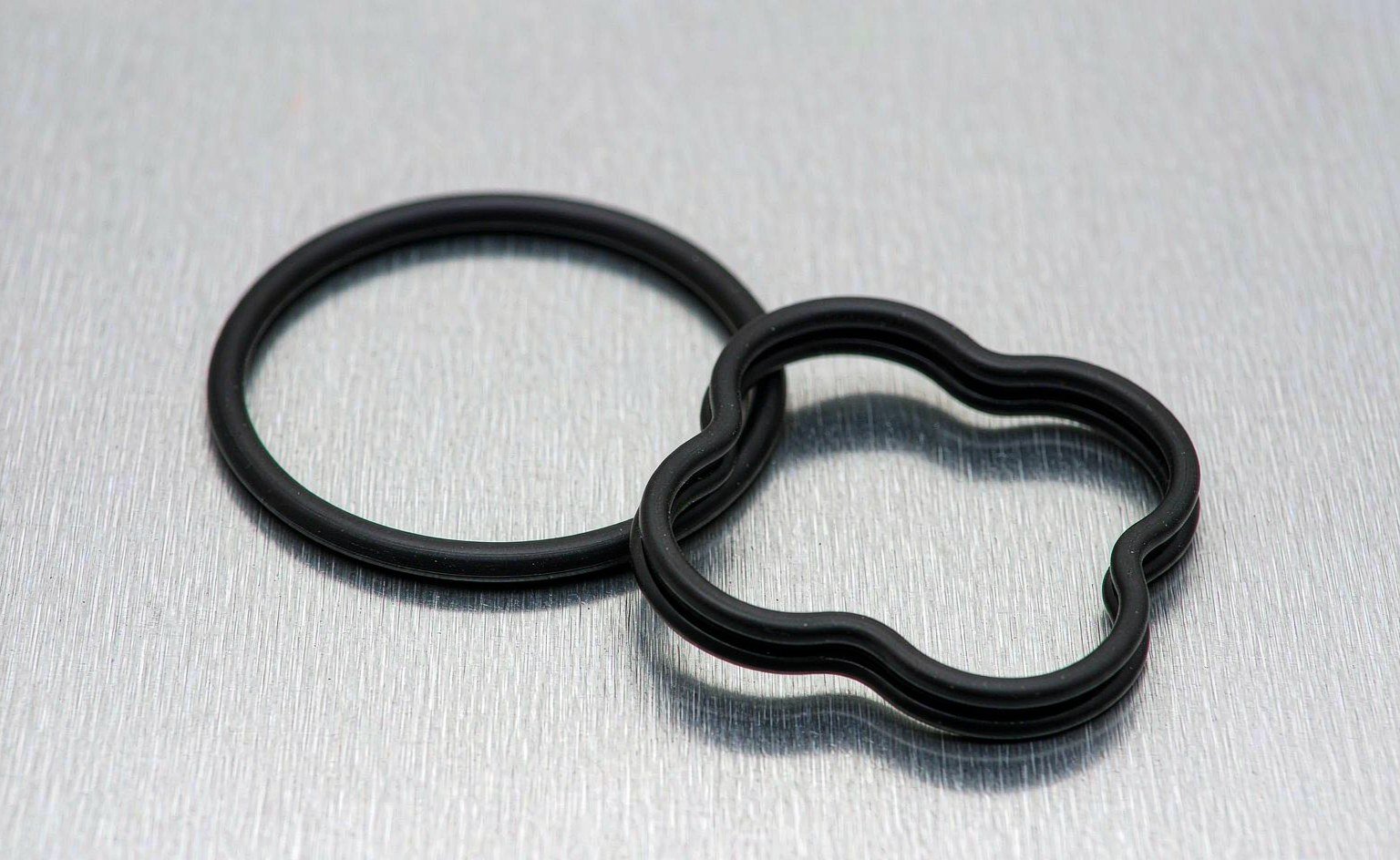
兩種截面,同一任務
O 形環之所以能密封,是因為徑向壓縮使其圓形截面在溝槽壁間變形,而系統壓力會增加而非抵消該接觸應力。幾何簡單,這正是它在各行各業主導靜態密封的原因。X 形環採用相同的密封原理,但將其分佈於四唇截面:每側兩條密封線,分模線與模具飛邊位於唇谷之間——遠離接觸帶。唇谷本身還有第二項作用:它們在密封界面處保留潤滑劑,這正是相同膠料的 X 形環比圓形截面更能承受乾啟動及氣缸內長期存放的原因。
由於兩種截面在相同類型的矩形溝槽中均以壓縮方式密封,X 形環大致可直接替換 O 形環溝槽——但動態溝槽深度有一項注意事項,我們將在下方說明。
數據真正改變之處:壓縮量、摩擦力與潤滑
各製造商公佈的數據均指向三項可量測的差異。第一,壓縮力:X 形環幾何結構達到有效密封所需的壓縮力比同等 O 形環低約 30–50%,直接降低起動摩擦力。第二,接觸面積:四條窄唇帶取代一條連續接觸弧,因此每次行程中與運動表面摩擦的橡膠更少。第三,潤滑:唇谷在界面處保留潤滑脂與潤滑油,減緩困擾低速氣動氣缸的黏滑行為。
| 特性 | O 形環 | X 形環 | 實際效果 |
|---|---|---|---|
| 密封線 | 每側 1 條 | 每側 2 條 | 冗餘接觸;低壓密封更穩定 |
| 等效密封所需壓縮力 | 基準 | 低約 30–50% | 起動摩擦力更低,發熱更少 |
| 抗扭轉/螺旋能力 | 往復工況下表現差 | 高——唇部鎖定截面 | 改用它的主要原因 |
| 界面潤滑 | 被擠出接觸區 | 保留於唇谷中 | 黏滑更少,乾啟動耐受更久 |
| 分模線位置 | 可能位於密封面上 | 位於唇間,遠離密封路徑 | 接觸帶上無飛邊洩漏路徑 |
| 單價 | 基準 | 高約 10–20% | 需按應用逐一證明合理的溢價 |
O 形環特有的失效:螺旋扭轉
螺旋失效是往復工況中 O 形環的典型死法:外行程時,摩擦力拖動部分環體沿溝槽壁移動,而密封側則抓住活塞桿;回程時,抓持方向翻轉。經過數千次循環,環體每次行程滾動零點幾度,逐漸扭成螺旋狀,在扭轉點產生表面裂紋並洩漏——在長行程氣缸上往往數週內即發生,即使該氣缸在其他各方面都製造正確。擋圈能阻止擠出,卻不能阻止扭轉;減小壓縮量有助於降低摩擦,卻會削弱密封。四唇截面直接針對該機制:唇部在幾何上抵抗滾動,因此環體在氣缸整個壽命期內保持正確取向。
若你的維修記錄顯示活塞桿密封處的 O 形環以短而不一致的間隔更換——且直徑方向約 45° 處有橫跨截面的裂紋——那就是螺旋失效,也正是 X 形截面在第一年就能回本的場合。
一個值得指名的現場模式:移動設備上的伸縮臂氣缸。長行程、部分伸出時承受側向載荷,且密封需拆下臂架才能維修——螺旋風險與檢修成本的最壞組合。我們供貨的一家氣缸維修廠追蹤了一支起重機車隊兩個季度的重新密封返修情況:二級與三級活塞桿密封處的標準 70 Shore A NBR O 形環在四至九個月內返修,幾乎全部帶有對角裂紋特徵。在相同溝槽中改用 NBR X 形環,並按 X 形環表格核實壓縮量後,重新密封間隔的中位數延長至兩年以上。氣缸並未變得更溫和;是截面阻止了原本決定使用壽命的扭轉機制。
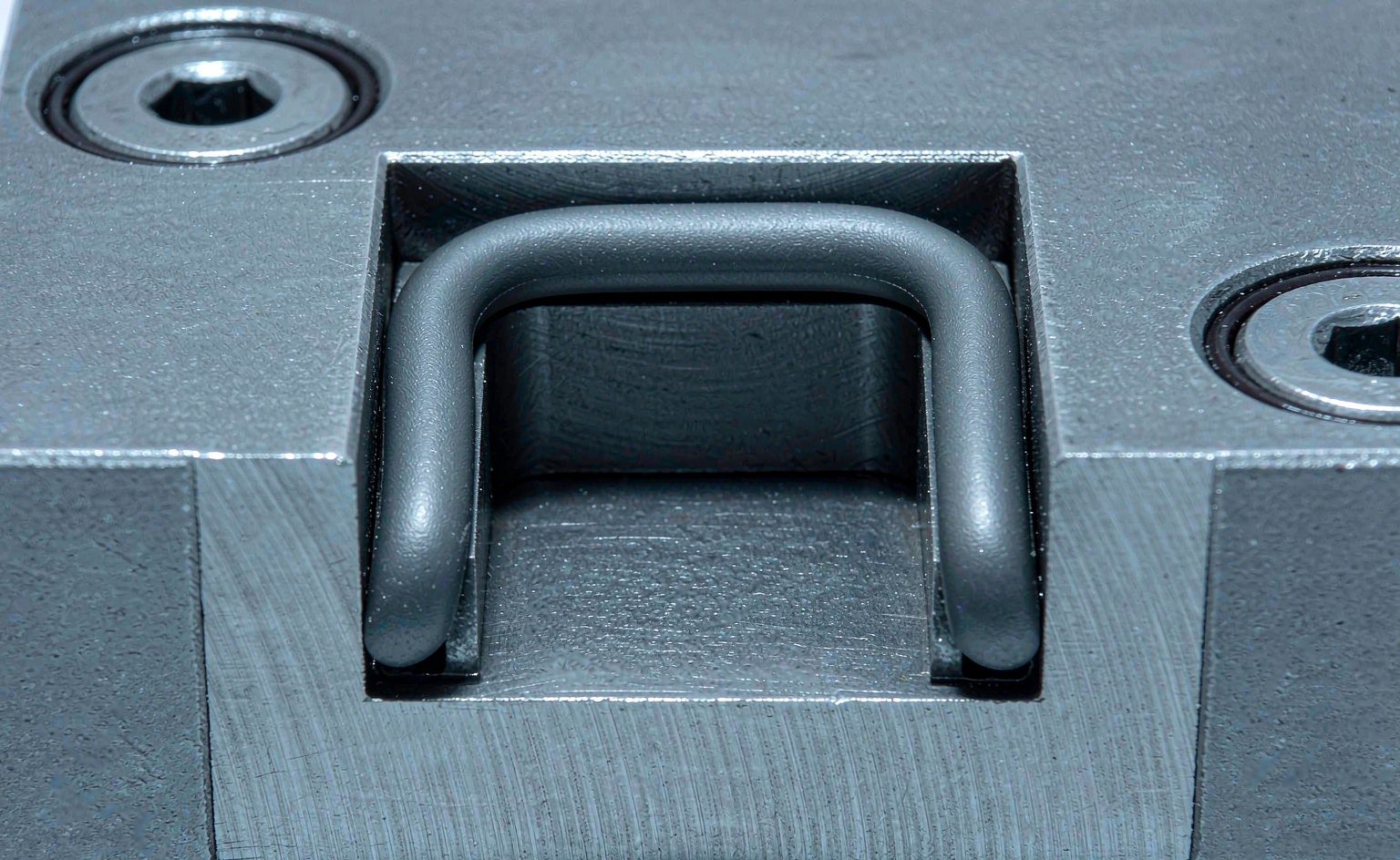
O 形環仍然勝出的場合
誠實地做反向審查。靜態法蘭、端蓋與接頭沒有往復運動,抗扭轉能力在那裡毫無價值——而 O 形環更便宜,在三大洲都有各種尺寸的庫存,且從 NBR 到 FFKM 各種膠料齊備。短行程的低壓氣動工況很少產生引發螺旋的摩擦模式。大批量 OEM 組裝講究分毫成本,數百萬件產品上 10–20% 的溢價需要一個失效案例來證明其合理性。供應情況比買家願意承認的更為重要:特殊膠料的 X 形環可能帶有工廠交期,而現貨 O 形環則沒有,僅此一項差異就足以在停機容忍度以小時計的 MRO 客戶中否決這項升級。
兩種截面的膠料化學完全相同——FKM X 形環處理的介質與 FKM O 形環相同,來自行業機構及彈性體供應商(如 Zeon )的材料數據原樣適用。選擇取決於幾何結構,而非材料。
庫存深度是靜態工況繼續使用 O 形環的第二項隱性優勢。三大洲的每家經銷商都備有五種常用膠料的完整 dash 編號範圍;特殊膠料——HNBR、低溫 FKM、過氧化物硫化 EPDM——的 X 形環覆蓋較薄,單一非庫存尺寸就可能把當日維修變成等待工廠訂貨。對於 MRO 客戶,將動態溝槽尺寸對應到 X 形環並有意備貨;把尺寸範圍中靜態的那部分留給 O 形環,這樣就沒有維修需要等待一個沒有靜態用途來證明其庫存合理性的四唇環。
將溝槽從 O 形改為 X 形
三項檢查能讓改裝平淡無奇而非節外生枝。第一,溝槽深度:對於動態溝槽,X 形環在較低壓縮量下即可可靠密封,因此按公差帶較深一端設計的 O 形環溝槽可能使 X 形環壓縮不足——許多製造商建議溝槽略深於 O 形環對應值,正是因為該截面運行時壓縮量較低;請對照 X 形環製造商的表格核實壓縮百分比,而不要假設 O 形環的數值可以照搬。第二,直徑配合:截面按標準 O 形環線徑尺寸出售,因此溝槽寬度通常無需改動。第三,安裝:X 形截面較硬,較難裝入,且唇部可能卡在尖銳螺紋與孔口邊緣上;與 O 形環相同的潤滑與安裝規範適用,但需稍多注意使環體保持正確取向,而非拖過邊緣。
關於價格,算一算真正重要的帳。如果一個標準 O 形環成本為一個單位,卻在一台需要耗費一個生產班次才能接近的機器上每年失效兩次,那麼一個能堅持三年、溢價 20% 的 X 形環根本算不上溢價。如果該密封件是潔淨工廠中組裝的一萬個靜態堵頭之一,那溢價就是純粹的成本。跨供應商目錄的採購比較——例如 Eriks 或 Seal Sales ——顯示價差穩定且很小;回報差異完全取決於應用。
| 情境 | 建議 | 推理 |
|---|---|---|
| Rod gland, long strokes, frequent cycling | Convert to X-ring | Spiral failure is the known killer here |
| Oscillating shafts, rotary valves | Convert to X-ring | Twist accumulates in partial rotations too |
| Static flange or fitting seal | Stay with O-ring | No motion, no benefit, lower cost |
| Short-stroke low-pressure pneumatic | O-ring unless stick-slip reported | Spiral risk low; friction benefit only matters if felt |
| Hydraulic piston groove with back-up rings | X-ring can delete the back-ups | Lobed section resists extrusion better at medium pressure |
For stockists and cylinder builders, both profiles ship from the same production line in our O 型環及 X 型環系列, and the rod and piston gland applications above map to our hydraulic rod and piston seal families. Where the X-ring upgrades a dynamic gland but the cylinder still needs a proper pressure-rated main seal, pair it with profiles from our 活塞油封系列 或 pneumatic seal kits — the X-ring frequently replaces only the O-ring in the gland, not the engineered seal that does the pressure work. References on elastomer selection and dynamic seal practice from Hallite 及 Bal Seal cover the surrounding design questions in depth.
常見問題
Can an X-ring replace an O-ring in the same groove without changes?
Usually yes, especially in static and mixed glands, but verify squeeze against the X-ring manufacturer’s groove table for dynamic duty — the section expects lower squeeze, and an O-ring groove at its deepest tolerance can under-compress an X-ring.
Do X-rings handle higher pressure than O-rings?
Modestly. The lobed section resists extrusion and rolling better, and at medium pressures an X-ring can sometimes eliminate a back-up ring. At genuinely high pressure, a back-up ring or an engineered anti-extrusion profile still outperforms either plain ring.
Why does my O-ring keep failing at an angle across its cross-section?
That crack pattern is spiral (twist) failure — the ring wound itself up under reciprocating friction. Shorten the diagnosis: it is a dynamic gland problem, and the X profile is the standard fix.
Is the X-ring worth it for static seals?
No. Static glands gain nothing from twist resistance or lubricant valleys, and the 10–20% price premium buys no additional leak-tightness at proper squeeze.
Which compounds are available as X-rings?
The same range as O-rings: NBR, HNBR, FKM, EPDM, silicone and others. Material compatibility data carries over unchanged; only the geometry differs.
X-Profiles in the Compounds You Already Use
X-rings are molded in the same compound families as our O-rings — NBR, HNBR, FKM, EPDM, silicone and FFKM — so a groove can be converted or left alone without reopening the material specification. Both profiles are held in common sizes and molded to drawing where the section is non-standard.
The conversion question in this article is a groove question: an X-ring wants a slightly different groove width and a scrub-free installation path, and it buys nothing in a static gland where squeeze already does the work. We check the groove against the profile before quoting, and we will say when the O-ring is the better purchase.
Send the sizes, the compound and the groove dimensions to sales@bosssealing.com, and we will quote both profiles side by side with the price premium visible. Usually within a working day; the engineering review costs nothing, and the 聯絡表格 亦同樣適用。