
A production line stops at 02:00 because a 240 mm O-ring on a filter housing split. Nobody stocks that ring. A maintenance tech who can cut cord, square the ends and glue a clean butt joint has the housing back in service before the shift meeting. That is the entire value proposition of an O-ring splice kit: it converts an unknown diameter into a known cross-section plus ten minutes of bench work.
We manufacture molded and machined seals, and we still keep cord stock in our own maintenance bay. Molded rings are the right answer for anything that repeats, anything dynamic, and anything that sees real pressure. Cord stock is the right answer for the awkward middle: one-off diameters, oversized gasket-style rings, prototype glands and emergency static repairs. This guide covers what kits contain, what the numbers actually mean, how strong a splice really is, and where a spliced ring will embarrass you.
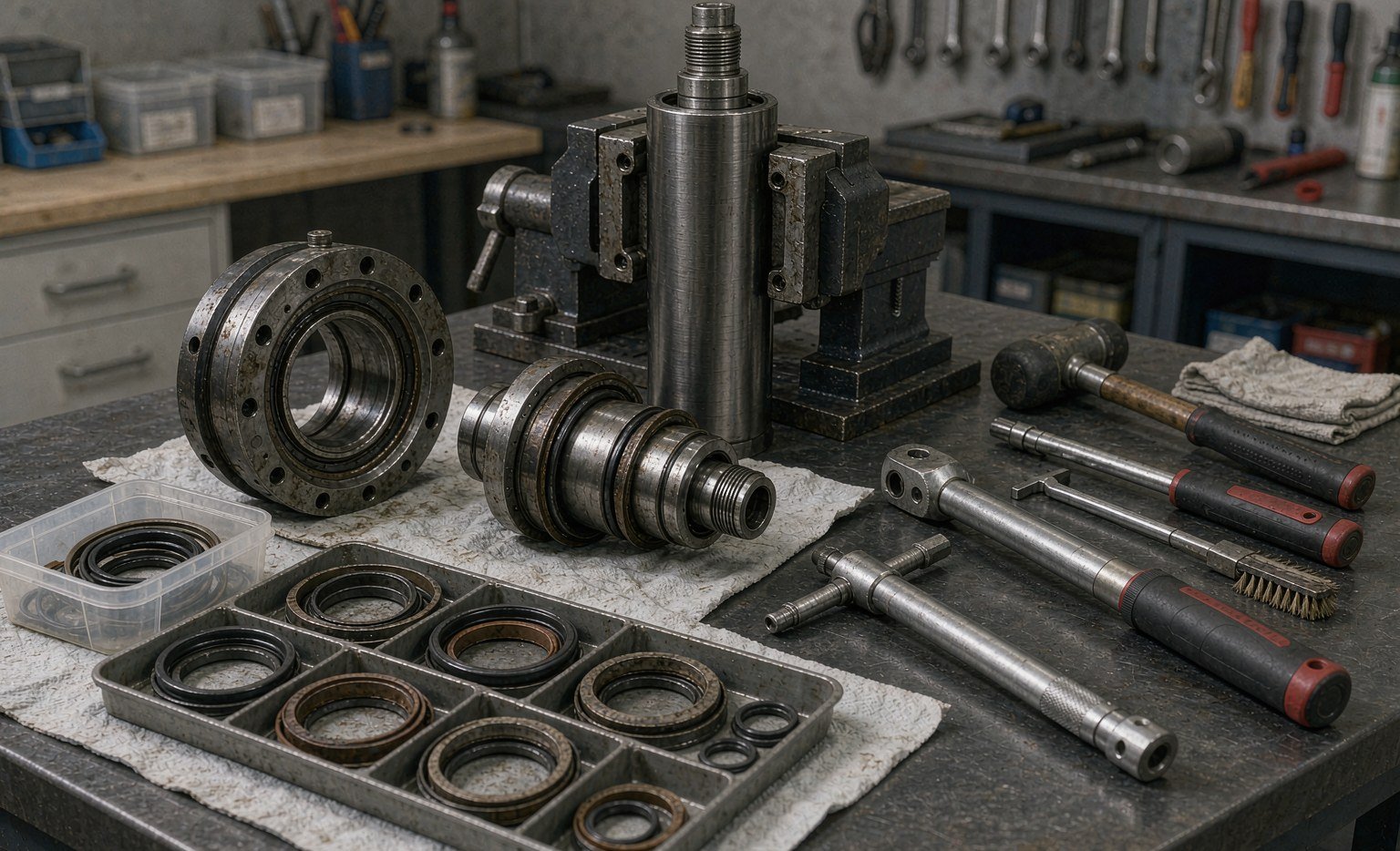
Cord Stock vs Molded O-Rings: The Honest Trade-Off
Cord stock is continuous round-section elastomer, usually supplied in 1-meter or 7-foot lengths, in the same cross-sections as standard O-rings. You cut it to circumference, join the ends, and you have a ring of any diameter with no tooling. A molded O-ring requires a mold sized for that exact inside diameter; a spliced ring requires a ruler and a blade.
What you gain:
- Any diameter, zero tooling. A 1,800 mm diameter ring for a manway cover costs the same cord as a 60 mm ring. No mold, no minimum order quantity, no four-week lead time.
- One kit covers hundreds of diameters. Five imperial cross-sections or nine metric ones multiply across every possible gland dimension in your plant.
- Immediate repair. A splice takes minutes. Freight on an emergency molded ring takes days, and customs can turn those days into weeks.
- Reasonable cost for one-offs. When you need three rings of an odd size per year, molding tooling makes no economic sense at all.
What you give up:
- Joint strength. Even the best joint is weaker than the parent cord. We quantify this below; the short version is that a cold bond holds roughly half the tensile strength of uncut cord.
- Consistency. Splice quality depends on the person holding the blade. Molded rings come out of a cavity; spliced rings come out of a hand.
- Dynamic service. A bump at the joint works hardens, then cracks, then leaks. Spliced rings are static-service parts, full stop.
A useful rule from our own shop: if the ring moves, mold it. If the ring sits still, holds moderate pressure, and its diameter is odd, cord is a legitimate engineering choice rather than a workaround.
What Is Inside a Splicing Kit
Commercial kits are remarkably consistent across suppliers. A typical kit contains:
- Cord lengths in several cross-sections, most often 70 Shore A NBR
- A cutting jig or splicing block with a U-groove that squares the ends
- A sharp blade (a razor works; a fresh blade works better)
- Fast-setting adhesive, usually a cyanoacrylate formulated for rubber
- Short instructions, which almost everyone ignores and then regrets
The jig matters more than it looks. A butt joint made freehand almost never mates the two ends in the same plane; the U-groove holds both ends at cut height so the adhesive line is thin and even. If your kit lacks a jig, a hard block with a sawn square groove is a five-minute fabrication.
Cross Sections: Imperial and Metric Kits Compared
Imperial kits stock the five AS568 cross-sections. Metric kits stock nine cords, which cover the AS568 set plus sizes that map to JIS B 2401 and larger gland sections. Cord is manufactured to the same tolerance discipline as molded rings, so a 3.53 mm cord drops into a gland designed for an AS568 -200-series ring.
| Kit type | Nominal cross section | Actual cord size | Length per cord |
|---|---|---|---|
| Imperial | 1/16 in | 0.070 in (1.78 mm) | 7 ft (2.1 m) |
| Imperial | 3/32 in | 0.103 in (2.62 mm) | 7 ft (2.1 m) |
| Imperial | 1/8 in | 0.139 in (3.53 mm) | 7 ft (2.1 m) |
| Imperial | 3/16 in | 0.210 in (5.33 mm) | 7 ft (2.1 m) |
| Imperial | 1/4 in | 0.275 in (6.99 mm) | 7 ft (2.1 m) |
| Metric | — | 1.5, 2.0, 2.5, 3.0, 3.5, 4.0, 5.0, 5.7, 8.4 mm | 1 m each |
The 5.7 and 8.4 mm metric cords are the reason serious maintenance departments buy the metric kit even in inch-land: those sections serve JIS-pattern glands and large static gaskets that no AS568 ring covers. Note that 1.5, 2.5, 3.5 and 4.0 mm cords sit between standard gland series; they are most useful for non-standard grooves and old equipment where the original ring was never standard anyway.
If you need to identify an unknown cord or ring before splicing, the same measurement discipline applies as for any O-ring: cross-section first, then inside diameter. Our guide on O-링을 올바르게 측정하는 방법 covers the technique without stretching the ring out of shape.
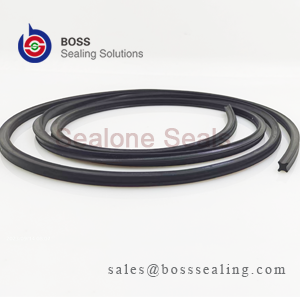
Cold Bond vs Vulcanized Splices: Joint Strength Is the Whole Story
There are two ways to join cord ends, and they are not equivalent.
Cold bonding uses the kit adhesive, typically a cyanoacrylate. Clean the ends, apply a thin film to one surface only, mate the ends in the jig, and hold for about 30 seconds. The joint is ready to handle in minutes. Published supplier data puts a well-made cold splice at roughly 50–60% of parent cord tensile strength. The adhesive line is a different material from the elastomer, and under tension the bond line is where stress concentrates.
Vulcanized splicing uses uncured compound and heat — a splicing press, a heated mold, or a hot-air vulcanizing gun depending on the compound. Done properly, a vulcanized joint reaches 80–90% of parent strength, and the joint Elastomer is the same compound as the cord, so elongation and compression behavior stay close to original. The cost is equipment and skill: you need the right uncured stock, temperature control, and pressure during the cure.
| 속성 | Cold bond (kit adhesive) | Vulcanized splice |
|---|---|---|
| Joint strength vs parent cord | ~50–60% | ~80–90% |
| Time to make | 2–5 minutes | 15–45 minutes with equipment |
| Equipment needed | Kit only | Press, heated mold or vulcanizing gun + uncured stock |
| Skill required | 낮음 | Moderate; compound-specific |
| Suitable service | Low-pressure static, temporary repairs | Static duty at higher loads, longer-term installs |
| Typical failure mode | Bond line peel under tension | Parent rubber tears beside the joint (near-full strength) |
Both figures assume a properly made joint. A cold bond made with excess adhesive, dirty ends, or a twisted cord can fail well below 50%. The kit instructions repeat one warning for a reason: more adhesive makes a worse bond. A film you can barely see is correct; a visible bead is a crack starter.
How to Make a Spliced Ring in the Field
The sequence below is the standard kit procedure, with the two mistakes we see most often called out.
- Establish the cut length. If the gland or original ring diameter is known, cut length = π × diameter. Wrap the cord around the actual sealing surface and mark it if the diameter is unknown. Add roughly 1/2 inch (12 mm) of allowance, then trim to final length in the jig — the jig removes the slop and leaves square ends.
- Inspect the cut ends. They must be square, dry and free of talc or release agent. Wipe with a clean cloth dampened with isopropyl alcohol and let it flash off.
- Apply adhesive to one end only. Pin-hole the tube tip, touch it to the cord end, and you are done. Do not coat both ends. Do not flood the joint.
- Mate the ends in the jig. Slide the untreated end forward against the treated one, hold firm contact for about 30 seconds. Check for twist before contact — a half-twist in the cord will not show up until the ring leaks.
- Let it cure before handling. The kit adhesive sets in under a minute but reaches useful strength in 10–20 minutes; follow the adhesive datasheet for full cure before pressurizing.
- Install with lubricant and standard technique. A spliced ring installs like any other — lubricated, eased over threads and ports, never rolled or stretched violently. Our guide to installing O-rings without twisting applies directly to spliced rings, with the extra note that the joint should sit away from a port or split line.
Two shop-floor details worth adopting: cut cord with a fresh blade in one confident stroke (sawing leaves a stepped end), and write the ring diameter on the housing or work order after splicing, because the next person will want to know whether the joint is at 12 o’clock or hidden.
Cord Materials: Match the Compound to the Service
Kits default to 70 Shore A NBR because it is the most common molded-ring material and covers general-purpose oil and hydraulic service. Cord stock is available in the same range of compounds as rings, though coverage thins out in the exotic end. Typical continuous service envelopes:
| 컴파운드 | Typical temp range | Best at | 주의할 점 |
|---|---|---|---|
| NBR (Buna-N), 70A | -55 to +125°C | Petroleum oils, fuels, hydraulic fluid, general static duty | Ozone, UV, weathering — poor outdoor choice |
| EPDM | -50 to +130°C | Water, steam (low-temp), glycol, weather-exposed gaskets | Petroleum oils and fuels — swells badly |
| VMQ (실리콘) | -60 to +200°C | Wide-temperature static gasketing, food-adjacent dry service | Low tear strength; poor in steam above atmospheric |
| FKM (fluorocarbon) | -20 to +200°C | Hot oils, fuels, many solvents, outdoor ozone exposure | Hot water/steam, amines, ketones |
| HNBR | -40 to +150°C | Oil service needing better heat and ozone resistance than NBR | Fewer cord suppliers than NBR/FKM |
Compound choice follows the same logic as molded rings — our 고무 O-링 및 X-링 제품군 lists the standard compounds, and cord can be supplied in most of them. Two notes from experience: FKM cord is noticeably stiffer at room temperature and needs slightly more care seating in shallow glands, and silicone cord joints need a silicone-specific adhesive — standard cyanoacrylates bond it poorly.
Also plan for the storeroom, not just the service. Cord on a kit that lives on a sunlit windowsill ages before it is ever cut; keep kits closed, dark and cool, and check date-of-purchase against the ISO 2230 shelf-life rules for stored rubber.

Where Spliced Rings Are Acceptable — and Where They Are Not
The gland decides. A spliced ring behaves like its parent cord everywhere except at the joint, so the question is always: what does the joint see?
Good territory:
- Large-diameter static face seals — manway covers, tank flanges, filter housings, oven doors. Diameters beyond molded-tooling economics are the natural home of cord.
- Low-pressure static radial sealing on non-standard bores, where squeeze is moderate and the joint does not cross a port.
- Prototype and pilot glands — cut a ring, test the gland, then order molded rings for production.
- Emergency substitution to keep a line running, followed by a molded replacement at the next planned stop.
Poor territory:
- Anything dynamic. Rod and piston movement fatigues the joint quickly; a cold splice on a reciprocating rod is a leak scheduled in advance.
- High-pressure service. Extrusion risk rises with pressure for any O-ring, and the joint is the weak link. Above roughly a few hundred psi static, treat a cold-bonded ring as temporary at best — and consider a molded ring plus proper anti-extrusion hardware for anything sustained.
- Safety-critical containment, vacuum below coarse levels, and any application where leak rate is a specification rather than an annoyance.
- Sizes inside standard ranges. If a molded ring exists on the shelf, the spliced ring has nothing to offer except a weaker joint.
Pressure capability is best expressed qualitatively here, because it depends on gland design, compound hardness, joint quality and cross-section all at once. What we can state cleanly: a cold splice is the weak point at roughly half parent tensile strength, so the safe envelope of a spliced ring is set by the joint, not the compound. If your application depends on the last 30% of material strength, do not put the joint in it.
Diameter Math: Getting the Cut Length Right
For a free-state ring, circumference = π × inside diameter. Two corrections matter in practice:
신장. Most static glands install the ring stretched a few percent over a mandrel or bore edge. If you cut the ring at gland-bore circumference, installed tension changes the effective cross-section slightly. For typical static installs with stretch under 5%, the π×d rule with a small allowance is adequate — err on the side of a slightly longer cord, then square-trim in the jig to exact length.
Splice allowance. The butt joint consumes a little length in the mating faces and adhesive film. Kit instructions suggest roughly 1/2 inch (12 mm) of extra cord before final trim; with a good jig this allowance trims away cleanly, and without one it is what saves you from a short ring.
A practical check before gluing: dry-fit the trimmed cord around the gland. The ends should meet with light finger pressure and no visible gap or overlap. If you can see daylight at the joint, recut — adhesive is a gap-filler for micrometers, not millimeters.
Building a Kit That Actually Gets Used
Kits fail in practice for organizational reasons, not technical ones. Three things separate the departments where splicing works from the ones where the kit gathers dust:
- Compound coverage. One NBR kit covers the oil side of the plant; add an EPDM or FKM kit where water/steam or hot fuel service dominates.
- Adhesive freshness. Cyanoacrylate in an opened tube is dead in months. Date the tube when opened and keep two spares sealed.
- A known owner. Whoever splices the first ring will splice the tenth. Train two people, laminate the procedure, and store the jig with the cord rather than in a toolbox drawer.
For departments that discover half their odd-size ring demand is actually recurring, the halfway solution is factory-spliced rings: cord vulcanized into a specific diameter under controlled conditions, supplied as a finished ring. That keeps most of the no-tooling advantage and recovers the joint-strength loss. When volume justifies it, moving to molded — including the large-diameter molded options covered in our seal kits and spare seals range — closes the loop entirely.
Reading a Failed Splice: Four Patterns and Their Causes
When a spliced ring comes out of a housing, the joint tells you what went wrong if you look before you throw it away. Four patterns cover most field failures:
1. Clean peel at the bond line. The adhesive released and the two ends separate with shiny adhesive film on one side. Causes: excess adhesive, oily or talc-covered ends, or not enough hold time during mating. The fix is procedural, not material: degrease the ends, use less glue, count the 30 seconds.
2. Torn rubber just beside the joint. The bond held but the cord ripped a millimeter away from it. This is what a decent splice looks like when the ring was overloaded or over-stretched during install — the joint is now stronger than the parent material locally stiffened by the adhesive. If you see this pattern, the splice recipe was fine; the application is too aggressive for cord.
3. Crack across the joint after weeks in service. A joint that survived install but failed later usually means dynamic movement or pressure cycling fatigued the bond line. Cold bonds tolerate static compression very well and cyclic tension very poorly. This is the classic signature of a spliced ring that wandered into dynamic or high-pressure service where it never belonged.
4. Leaks with the joint intact. If the ring leaks but the joint is sound, the problem is the gland, not the splice: insufficient squeeze, surface damage at the port the joint sits next to, or a cross-section mismatch in the gland. Measure, do not guess — and treat the leak as gland design feedback rather than splice failure.
Logging which pattern appears, and on which service, turns the kit from an emergency crutch into a source of application data. After a season of that, most departments can predict exactly which housings will eventually get molded rings.
Kit Strategy: What a Well-Stocked Storeroom Carries
A minimal, rational kit lineup for a typical industrial plant looks like this:
- One 70A NBR metric kit (nine cords) for the general oil-side inventory. The metric kit’s wider cross-section coverage makes it more useful than the imperial kit even in inch-based plants.
- One 70A NBR imperial kit where the installed base is genuinely inch-dominated, so 1.78/2.62/3.53/5.33/6.99 mm cords can be used without temptation to force a 3.5 mm metric cord into an AS568 gland.
- One EPDM kit for water, glycol and steam-adjacent services — and a written rule that NBR never goes into those systems.
- FKM cord on the shelf in the two or three cross-sections your hot services actually use, rather than a full FKM kit that mostly ages in the box.
- Three sealed spare adhesive tubes, dated on receipt. Dead adhesive is the most common reason a splice kit disappoints.
Storage discipline follows the same rules as any elastomer inventory: cool, dark, uncompressed, away from ozone sources such as running motors. Kits in their closed case on a shaded shelf age slowly; loose cord coils on a radiator age fast. When in doubt, cut a test joint and check the bond before trusting aged cord in a critical housing — and review the supplier’s date markings against standard shelf-life guidance for stored rubber goods.
One final stocking decision: if the plant’s odd-size ring demand turns out to be less odd than assumed — the same 620 mm manway ring repaired three times is not an emergency, it is a part number — convert those sizes to factory-spliced or molded rings and shrink the kit to true emergency duty. The kit exists for the diameters you cannot predict. Everything predictable deserves a part number.
핵심 요약
An O-ring splice kit is not a substitute for a molded ring; it is insurance against the diameters no one molds. Five imperial or nine metric cords at 70 Shore A cover the vast majority of static gland sections in service today, and a disciplined ten-minute splice — square ends, thin adhesive film, no twist, joint located away from ports — holds 50–60% of parent strength, enough for low-pressure static duty. Vulcanized splices recover most of that strength if you have the equipment. Use cord for the odd diameters and the emergencies; use molded rings for everything that moves, everything that sees sustained pressure, and everything you will buy twice. The maintenance department that keeps both options ready spends its downtime on the equipment that deserves it.