
Every wetted seal in a pharmaceutical or biotech line carries two jobs at once: contain the process fluid, and prove — on paper, to an auditor — that it will not harm the product. Most seal suppliers can do the first. The second is where quotes go wrong, because the paperwork attached to an elastomer compound is just as decisive as its temperature rating. This guide walks through what USP Class VI actually measures, how it stacks against FDA 21 CFR 177 and ASME BPE, which materials survive CIP caustic and SIP steam, and what documentation to demand before a purchase order is signed.
One point worth settling at the start: USP Class VI is a biological test, not a cleanliness certificate. A compound can pass all three animal tests and still shed extractables into a buffer solution, or fail mechanically after forty steam cycles. The certifications answer different questions, and buyers who read them as interchangeable end up with compliant parts that leak — or leaking parts that are perfectly documented.
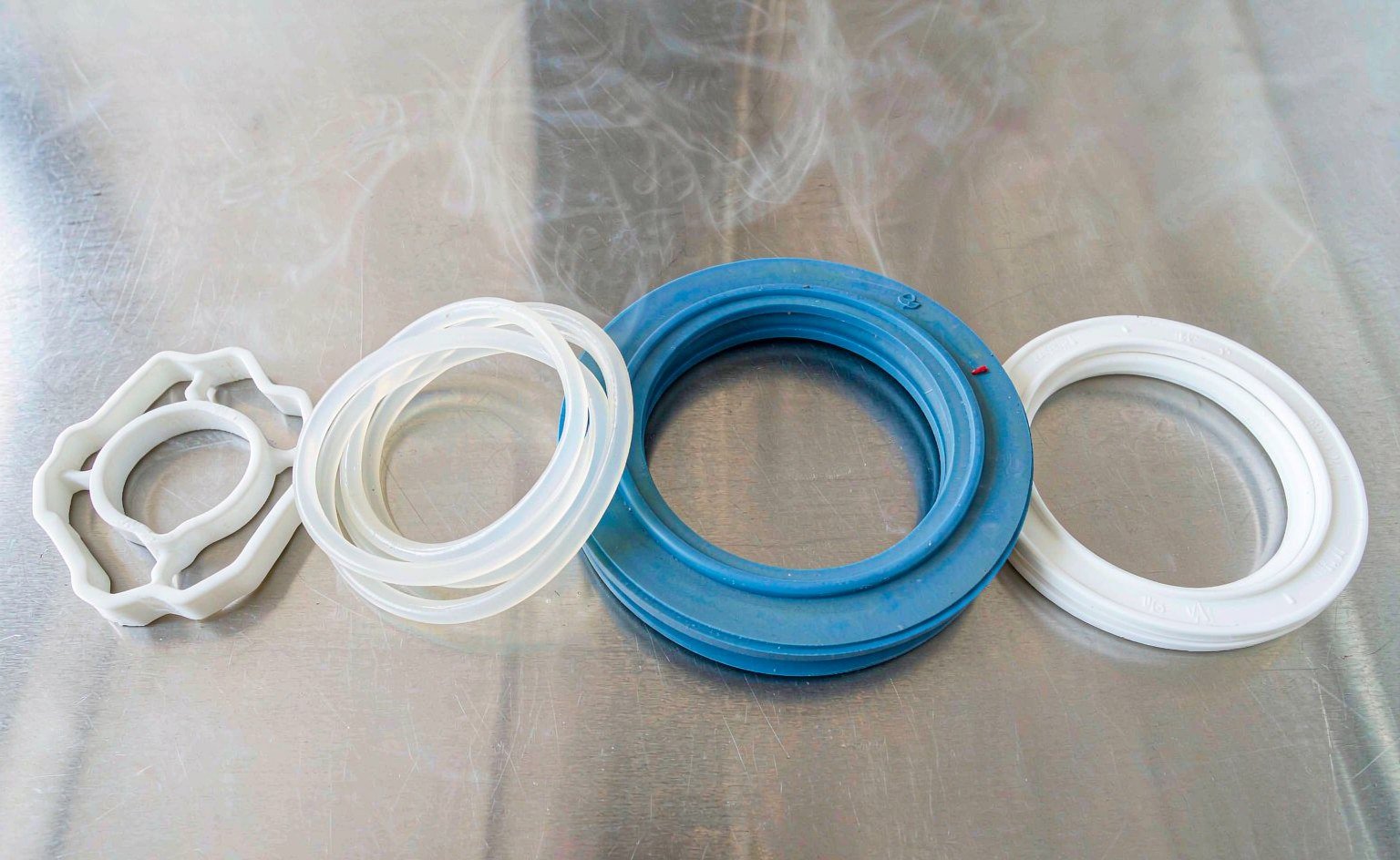
What USP Class VI Actually Tests
USP General Chapter <88>, Biological Reactivity Tests, In Vivo, classifies plastics and elastomers into Classes I through VI based on which animal tests the material passes. Class VI, the strictest, requires all three:
- Systemic Injection Test — material extracts injected into mice, observed for 72 hours for acute systemic toxicity.
- Intracutaneous Reactivity Test — extracts injected intradermally into rabbits; skin sites scored for erythema and edema at 24, 48 and 72 hours against vehicle-control sites.
- Implantation Test — strips of the actual material implanted into rabbit paraspinal muscle, examined histologically at 7 days and 90 days for tissue reaction relative to a USP reference material.
The extracts are prepared in four vehicles — sodium chloride injection, alcohol in saline, polyethylene glycol 400 and vegetable oil — because different chemistry pulls different leachables out of the compound. Extraction can be run at 50 °C, 70 °C or 121 °C, and the temperature becomes part of the rating: a material certified at the 121 °C condition is written as “Class VI-121”. Reputable elastomer suppliers test at 121 °C precisely so the rating covers steam-sterilized service. If a datasheet says “USP Class VI” without a temperature condition, ask which condition was used — a Class VI-50 rating does not automatically describe a seal going through SIP cycles.
Chapter <87> sits one level below as the in vitro screen: mammalian cell cultures exposed to material extracts, watched for cytotoxicity. It is faster and cheaper, and many buyers use it as a first filter before committing to the full in vivo package. For process-contact seals in biotech, the usual expectation is both chapters — <87> as the sensitivity screen and <88> Class VI as the formal classification.
Two limits matter for anyone writing a purchase specification. First, Class VI is granted to a compound, not a finished part. A molder who changes the cure system, the filler lot or the release agent can invalidate the rating without changing the part number. Second, Class VI says nothing about extractables quantity — it is a pass/fail biological response, not an analytical profile of what migrates into your product.
The Certification Stack: Class VI, 21 CFR 177 and ASME BPE
Datasheets list these together, but they certify different things. Keeping them straight avoids the most common sourcing mistake — assuming one covers another.
| Framework | What it actually covers | How compliance is shown |
|---|---|---|
| USP <87> / <88> Class VI | Biological reactivity of the compound (cytotoxicity screen; in vivo systemic, intracutaneous, implantation tests) | Test report from the testing laboratory for the specific compound, with extraction condition stated |
| FDA 21 CFR 177.2600 | List of permitted ingredients for rubber articles intended for repeated food contact, plus water and n-hexane extraction limits — read the regulation text | Formula-level declaration: every ingredient listed in, and total extractables within, CFR limits — no animal testing involved |
| FDA 21 CFR 177.1550 | Perfluorocarbon resins such as PTFE, with extraction limits | Same formula-level declaration against the PTFE subsection |
| ASME BPE Part SG / PM | ASME BPE (Bioprocessing Equipment) seal design for hygienic clamp unions (intrusion/recess classification, thermal-cycling performance) and polymeric material requirements, which point back to USP <88> or ISO 10993 | Design conformance and material declarations against the BPE parts |
A pharmaceutical wetted seal typically carries all three: Class VI for biocompatibility, 177.2600 (or 177.1550 for PTFE) for food-contact-grade formulation, and BPE conformance where the equipment standard demands it. A dairy gasket under 3-A and food-grade material rules may need only the CFR side. Asking for all three on a duty that needs one wastes supplier time; asking for one on a duty that needs three creates an audit finding.
Material Matrix for Wetted Process Seals
Five material families cover nearly every hygienic sealing position. The ranges below are typical continuous-service figures for well-compounded grades; the specific compound datasheet governs, and steam and caustic exposure narrow them further.
| 재질 | Typical continuous range | CIP caustic / acid | SIP steam | Best fit |
|---|---|---|---|---|
| EPDM, 과산화물 경화 | −40 to +150 °C | Excellent in both — the CIP default | Good, with cycle-count aging | WFI, purified water, buffers, CIP loops, most process lines |
| PTFE, virgin or modified | −200 ~ +260 °C | 거의 모든 화학물질에 대해 불활성 | 우수하지만 지속적인 클램프 하중에서 크리프 발생 | 모든 엘라스토머를 공격하는 용매, 산화제, 화학물질 |
| 실리콘, 백금 경화 | −60 ~ +200 °C | 강알칼리에 취약; 묽은 산에는 보통 | 제한적 — 반복적인 습증기에서 가수분해됨 | 튜빙, 일회용 인터페이스, 건열 조건 |
| FKM | −20 ~ +200°C | 산에는 양호; 표준 등급은 고온 알칼리에서 약화됨 | 표준 등급은 생증기에 취약 | 지방, 오일, 향료, 강한 산 |
| NBR | −30 ~ +100°C | 묽은 알칼리에는 보통; 산화제에는 취약 | 부적합 | 오일 및 지방 함유 제품 라인 전용 |
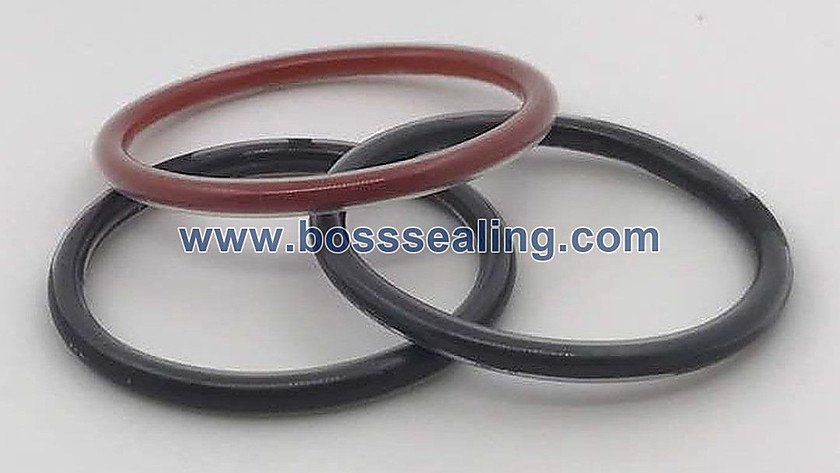
EPDM이 제약 접액 서비스의 주력 소재인 데에는 간단한 이유가 있습니다. 과산화물 경화 등급은 실리콘의 수명을 단축시키는 가수분해 없이 고온 알칼리 CIP와 반복적인 121 °C 증기를 견딥니다. 화학물질이 어떤 엘라스토머의 범위를 넘어설 때 — 강한 용매, 산화제, 공격적인 중간체 — PTFE 캡슐화 O-링은 탄성 코어 주위에 화학적으로 불활성인 재킷을 씌우며, 이것이 이 제품이 공격적인 매체 조건에서 우위를 점하는 이유입니다. 호환성 판단 로직은 다음 자료에서 자세히 다룹니다: PTFE 캡슐화 O-링 화학적 호환성 가이드, 그리고 저희 캡슐화 씰 제품군 에서는 표준 FEP 및 PFA 재킷 구조를 다룹니다. PTFE 재킷의 틈새조차 허용되지 않는 조건 — 무균 배리어 및 다이어프램 위치 — 에서는 Trelleborg 와 같은 주요 씰 제조사가 바이오파마 접액 서비스용으로 특별히 개발한 컴파운드 제품군을 공개하며, 이들의 소재 가이드는 견적을 비교할 때 유용한 기준이 됩니다.
FKM은 제품 자체가 지방질이거나 오일성일 때, 또는 배치 간에 고온 산성 세정제가 사용될 때 그 가치를 발휘합니다. 제약 서비스에서 FKM의 두 가지 전형적인 함정에 유의하십시오. 표준 등급은 고온 알칼리(EPDM이 문제없이 견디는 동일한 화학물질)와 생증기에서 성능이 저하됩니다. FKM의 범위를 넘어서는 공격적인 화학물질과 열이 결합된 조건에서는 고온 및 저온 씰 옵션 과 저희 200 °C 초과 씰 가이드 에서 다루는 FFKM 등급이 일반적인 상향 대안 경로입니다 — 다만 배치별로 정당화되어야 하는 비용이 따릅니다.
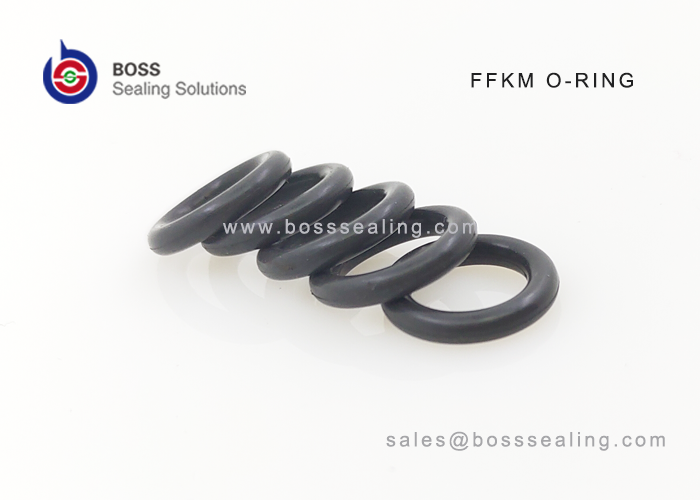
FFKM은 가격 때문에 그 가치를 입증하는 위치에만 제한적으로 사용되지만, 이 범주에서 별도로 언급할 가치가 있습니다. 과불소화 엘라스토머는 PTFE에 가까운 화학적 특성과 엘라스토머의 탄성을 결합하여, 지속적인 열과 공격적인 세정제, 그리고 다른 모든 소재를 공격하는 제품 화학물질(특정 API 중간체, 강한 산화성 세정제, 고온 아민)이 결합된 조건에서 유일한 탄성 옵션이 됩니다. Bal Seal 와 같은 전문 업체의 스프링 가압식 PTFE 및 FFKM 구조는 일반 O-링이 고온에서 접촉력을 유지할 수 없는 위치로 동일한 논리를 확장합니다. 규율 있는 접근 방식은 FFKM 가격을 공장 단위가 아닌 위치 단위로 산정합니다. 월간 분해를 막아주는 중요한 펌프 씰의 O-링 하나는 그 비용을 정당화하지만, 건물 내 모든 클램프 개스킷에 동일한 컴파운드를 적용하는 것은 그렇지 않습니다. 제약 서비스용으로 인증된 FFKM 컴파운드는 다른 제품군과 동일한 Class VI 및 177.2600 문서 체계를 갖추며, 동일한 컴파운드 변경 관리가 적용됩니다.
실리콘의 역할은 데이터시트상의 범위가 시사하는 것보다 좁습니다. 두 가지 진정한 장점 — 엘라스토머 중 가장 넓은 온도 범위와 백금 경화 등급의 극도의 청정성 — 은 튜빙, 일회용 어셈블리 및 건열 위치에 적합합니다. 두 가지 진정한 약점 — 강알칼리 내성 부족과 반복적인 습증기에서의 가수분해 — 은 대부분의 CIP 비중이 높은 배관에서 실리콘을 부적합하게 만듭니다. “깨끗해 보인다”는 이유로 모든 곳에 실리콘을 표준화하는 공장은 EPDM을 사용하는 이웃 공장보다 훨씬 짧은 주기로 클램프 개스킷을 교체하게 됩니다.
제약 공장에서 씰이 위치하는 곳
소재를 선택하기 전에 접액 씰이 실제로 어디에 위치하는지 파악하는 것이 도움이 됩니다. 위치에 따라 조건, 따라서 문서 부담이 크게 달라지기 때문입니다.
위생 클램프 조인트 는 수량이 가장 많은 위치입니다. 공정 배관의 트라이클램프 개스킷으로, 일반적으로 1/2인치에서 12인치이며 고장이 아닌 사이클 횟수 기준으로 교체됩니다. 이 씰은 매 사이클마다 완전한 CIP 및 SIP 노출을 받으며, 고장 시 보통 충전 중 페룰 라인에서 누액으로 나타납니다. 저렴하고 수량이 많기 때문에 클램프 개스킷은 컴파운드 대체가 몰래 이루어지는 곳이기도 합니다. 외관상 동일해 보이지만 인증되지 않은 컴파운드 로트로 성형된 개스킷은 이 범주의 공급업체 감사에서 가장 흔한 지적 사항 중 하나입니다.
다이어프램 밸브 위어 는 압축된 개스킷 대신 유연한 다이어프램으로 동일한 매체 조건을 감당합니다. 피로 굽힘이 압축 영구 변형과 함께 노화 메커니즘에 포함되며, EPDM이 클램프 조인트를 지배하는 것과 동일한 화학적 이유로 이곳에서도 우위를 점합니다. 다이어프램 수명은 보통 작동 횟수로 계산되며, 위어에서의 조기 누액선 균열은 설치 오류가 아닌 컴파운드의 피로 굽힘 특성입니다.
펌프 및 기계적 씰의 보조 씰 (O-링, 웨지, 벨로우즈 용접부)은 회전 인접 조건을 겪습니다. 더 높은 온도, 더 많은 진동, 때로는 펌프가 프라임을 잃을 때의 드라이런 상황이 발생합니다. FKM 및 PTFE 재킷 구조가 보조 씰 역할에서 우위를 점합니다. 형상은 전혀 다르지만 인증서 관련 논의는 클램프 개스킷과 동일합니다. 이것이 이 글 뒷부분의 문서 섹션이 배관뿐 아니라 모든 위치에서 중요한 이유입니다.
일회용 커넥터 및 무균 배리어 는 소재 논의를 실리콘 및 방사선 안정성 컴파운드 쪽으로 전환시킵니다. 감마선 멸균은 엘라스토머를 추가로 가교시키지만 여러 번의 선량을 거치면서 취성화시키기도 합니다. 일회용 어셈블리용으로 지정된 실리콘 씰은 Class VI 보고서와 함께 방사선 선량 관련 자료가 필요합니다. 이 위치에서는 형상보다 컴파운드 데이터가 더 중요합니다. 고장 모드인 조립 중 취성 균열은 선량 조사 후에만 나타나며, 벤치에서는 결코 나타나지 않기 때문입니다.
주사기, 클로저 및 충전 라인 씰 은 환자와 가장 가까이 위치하며 가장 엄격한 추출물 검토를 받습니다. 여기서 침출물 논의는 의약품 팀의 몫이며, 씰 공급업체의 역할은 침출물 연구에 활용되는 제형 및 추출 데이터를 제공하는 것입니다. 경화 시스템과 성분 목록을 제시할 수 없는 공급업체는 해당 연구를 지원할 수 없으며, 이는 샘플 발송 전에 공급업체를 선별하는 조용하지만 효과적인 방법입니다.
CIP 및 SIP 화학물질: 실제로 씰을 노화시키는 요인
인증된 온도 등급은 공기 또는 시험 유체에서 측정됩니다. 제약 공장에서의 실제 노화는 세정 주기에서 비롯되며, 세정 주기는 제품보다 더 가혹합니다. 일반적인 CIP 순서는 씰에 고온 알칼리 세제, 그다음 산, 그다음 린스수를 번갈아 접촉시키고, 무균 배리어가 필요한 경우 약 121 °C의 포화 증기를 접촉시킵니다. 각 단계는 컴파운드 내의 서로 다른 결합을 공격합니다:
- 고온 알칼리 는 에스터형 첨가제를 가수분해하고 일부 과산화물 경화 시스템을 공격합니다. 적절한 경화 패키지를 갖춘 EPDM은 이를 견디지만, 표준 FKM과 대부분의 NBR 컴파운드는 그렇지 않습니다.
- 산 단계 (흔히 질산 또는 인산 기반)는 대부분의 엘라스토머에 더 온화하지만, 이미 알칼리 노출로 약화된 컴파운드의 열화를 가속합니다.
- 포화 증기 는 121 °C에서 압축 영구 변형을 유발합니다. 모든 SIP 사이클은 냉각 기간 없이 완전한 압축 상태로 씰을 고온에 유지합니다. 가교 결합이 서서히 영구 변형을 일으키고 접촉 응력이 떨어지며 조인트가 누액되기 시작합니다. 보통 클램프 조인트에서 먼저 발생하는데, 클램프 개스킷이 이를 보상할 자유 체적이 가장 작기 때문입니다.
- 열 사이클링 증기와 냉수 린스 사이의 전환은 매번 큰 변형 폭으로 씰을 굽힙니다. 이것이 ASME BPE Part SG 열 사이클링 시험이 순위를 매기도록 설계된 메커니즘입니다.
위생 클램프 실무에서 나온 한 가지 실질적인 결과: 첫 SIP 사이클 후 클램프를 재토크하십시오. PTFE 기반 클램프 개스킷은 하중 하에서 냉간 유동하며, 엘라스토머 조인트도 개스킷이 첫 열 변형을 받으면서 이완됩니다. 재토크를 생략하는 공장은 몇 달 동안 유령 누액을 쫓아다니게 됩니다.
사이클 카운팅은 아무도 사용하지 않는 가장 저렴한 신뢰성 도구입니다. 개스킷 위치별로 SIP 사이클을 기록하고, 눈에 보이는 고장이 아닌 횟수 기준으로 교체하십시오. 충전 중 WFI가 누액되는 클램프 개스킷은 수십 년치 개스킷보다 더 비싼 배치를 오염시킵니다.
위생 성능을 결정하는 설계 세부 사항
소재 선택이 주목을 받지만, 형상이 소재가 제 역할을 할 수 있는지를 조용히 결정합니다. 현장 고장에서 반복적으로 나타나는 네 가지 세부 사항이 있습니다:
Crevice volume. Any gap where product or cleaning fluid can stagnate is a microbial risk. ASME BPE classifies how far a seal intrudes into or recesses from the flow bore, and sanitary clamp ferrules have a machined gasket seat for this reason — the seal should sit flush with the bore, not bulge into the stream or hide behind a ferrule lip. Oversized or non-standard gaskets that “almost fit” create exactly the dead leg the standard exists to prevent.
Gland fill and squeeze. The same O-ring gland arithmetic used in industrial sealing applies, with one twist: high gland fill plus steam aging is a bad combination, because a seal that starts at 90% gland fill has no room to grow as it swells in caustic or takes set. Design glands for hydraulic-style fill limits and verify with the actual compound’s swelling data, not generic values.
Clamp load versus PTFE creep. Solid PTFE gaskets seal brilliantly and creep relentlessly. Where a full-PTFE joint is required for chemistry reasons, supported constructions — PTFE jacket over an elastomer or metal-reinforced core — hold clamp load far better than a homogeneous ring, at the cost of slightly less chemical envelope at the jacket seams.
상대면의 표면 조도. Rougher is not safer. Over-polished bores under about 0.4 µm Ra starve elastomer lips of lubricant film and increase wear; over-rough surfaces abrade the seal and trap soil. Follow the equipment standard’s finish specification rather than chasing mirror polish, and inspect the ferrule seat itself — a scratched seat destroys an EPDM gasket no matter how good its Class VI paperwork is.
Common Failure Patterns in Pharma Service
Field experience in sanitary sealing collapses into a handful of repeating patterns, and each has a tell-tale signature:
The weeping clamp joint after a few weeks of SIP. The gasket took compression set from steam cycles and the clamp, torqued once at install and never re-checked, lost seating force. The fix is procedural, not material: re-torque after the first steam cycle, then replace gaskets on a logged cycle count. Upgrading the compound only postpones the same outcome if no one counts cycles.
The gasket that swells and blocks the bore. A compound not rated for the cleaning chemistry swells in hot caustic — a silicone gasket in a caustic CIP line is the textbook case. Swell in a confined ferrule seat has nowhere to go but inward, into the product stream, turning a sealing problem into a cleanability problem. The cure is chemistry matching, which the material matrix above settles in one row.
Premium material, premature failure anyway. An FFKM O-ring that failed in steam service at a fraction of its rated life almost always met standard-grade FFKM chemistry rather than a steam-rated compound. Perfluoroelastomer families differ enormously in steam and caustic behavior between grades; the family name is not a specification. Demand the compound-level steam data before substituting “up”.
Certificate matches, material does not. Dimensional drift between lots — gaskets slightly over-height, O-rings off on cross-section — produces joints that seat unevenly and leak at the same position on every opening. This is a supplier quality-system question, and it is exactly why the certifications table earlier in this article lists dimensional standards as part of the paperwork, not as a separate nicety. Established gasket manufacturers such as Margo Rubber publish the ferrule standard on every product page for a reason: a gasket made to the wrong ferrule standard seats proud or short no matter how good the compound is.
The sudden contamination excursion with no visible leak. The creepiest failure in this category: a recessed or intruding seal sheds particles or harbors soil in the crevice it creates, and the batch contamination shows up in bioburden results with no drip anywhere. Geometry, as covered in the design section, is the usual root cause — which is why BPE intrusion classification exists.
Extractables, Leachables and the Compound Change Problem
Regulatory reviewers and process owners care about one question beyond biocompatibility: what does this seal put into my product? Extractables are the compounds that can be pulled out under aggressive conditions; leachables are what actually appear in the product under normal contact. Class VI does not measure either. It only confirms that whatever comes out does not provoke an acute biological response.
For a buffer or WFI line, the practical answer is to choose inherently low-extractable constructions: platinum-cured silicone and peroxide-cured EPDM formulated for pharma duty, PTFE where chemistry allows, FFKM where it does not. Peroxide-cured systems beat sulfur-cured ones on extractables because no sulfur donor packages migrate; platinum-cured silicone avoids the benzoic acid by-products that peroxide silicone leaves behind.
The compound-change problem deserves its own paragraph in your supplier agreement. Class VI certificates are issued for a named compound. If the supplier reformulates — a new cure package, a different antioxidant, a change of filler supplier — the old certificate describes a material that no longer exists. Sound practice: require notification of any formulation change, and re-run biological testing on the new compound before it ships into validated lines. This costs the supplier something, which is exactly why the suppliers who agree to it are worth finding.
What to Send With the RFQ
Most quotation delays in this category are documentation delays, not price negotiations. The following table is what a procurement team should attach or request, and the red flags worth walking away from.
| 품목 | What it proves | Red flag |
|---|---|---|
| USP Class VI test report with extraction condition (e.g. VI-121) and compound designation | The exact compound shipped passed the full in vivo suite at a condition matching your SIP duty | “Class VI compliant” wording with no test report or no temperature condition |
| 21 CFR 177.2600 (or 177.1550) ingredient declaration with extraction limits | Formulation is built entirely from listed substances within limits | A compliance statement that will not name the compound it applies to |
| Formulation-change notification clause | Certificate stays attached to the material over time | “Formulations are subject to change without notice” |
| Compound datasheet: cure system, hardness, compression set, temp range | Engineering can size the gland and predict steam aging | Datasheet with temperature range only — no cure system, no set data |
| Dimensional standard named (ASME BPE, DIN 32676, ISO 2852) on the drawing | Gasket seats correctly on the mating ferrule | Quote for “1.5 in tri-clamp gasket” with no standard referenced — the three standards do not interchange |
None of this is exotic. It is the same discipline that separates a validated sealing supply from a lucky one: the right compound family for the chemistry, the right geometry for the joint, and paperwork that stays true to the material for as long as the line runs. Suppliers who can produce all five items without prompting are the ones worth auditing in person.
A short closing checklist for the team assembling the RFQ package:
- Define the duty in one table: product chemistry, CIP agents and concentrations, SIP temperature and frequency, minimum and maximum contact temperature, and which positions are product-contact versus utility-contact.
- Specify materials per position, not one material per plant — the matrix in this article is a starting map, and the compound datasheet is the tie-breaker.
- 추출 조건이 명시된 Class VI 보고서, CFR 성분 선언, 그리고 처방 변경 조항을 “있으면 좋은” 항목이 아니라 합격/불합격 RFQ 항목으로 요구하십시오.
- 모든 도면에 치수 표준을 명기하고, 이를 무시한 견적은 거부하십시오.
- 구매 시점에 사이클 카운트 기반 교체 주기를 합의하여, 유지보수가 논쟁이 아닌 계획을 물려받도록 하십시오.
이런 방식으로 소싱을 진행하면 감사 대화의 성격이 완전히 달라집니다. 인증서를 변호하는 대신, 팀은 의무, 재료, 형상, 서류, 교체 주기로 이어지는 문서화된 의사결정 체인을 감사자에게 설명하게 됩니다. 이 체인이야말로 규제 검토자가 실제로 보고자 하는 것이며, 나중에 지적 사항 압박 속에서 재구성하는 것보다 RFQ 시점에 구축하는 편이 더 저렴합니다.