
PEEK is doing jobs that used to be specified in stainless steel, bronze and aluminum — backup rings behind hydraulic seals, wear bands in cylinders, valve seats, compressor rings, bearing cages and guide elements. The switch is not fashion. It is arithmetic: PEEK matches metal on the properties that matter in sealing hardware, and it beats metal on the three properties that most often end a metal part’s life in a wet, pressurized system. This article lays out the numbers, the filled grades that changed the argument, and the cases where metal still wins.
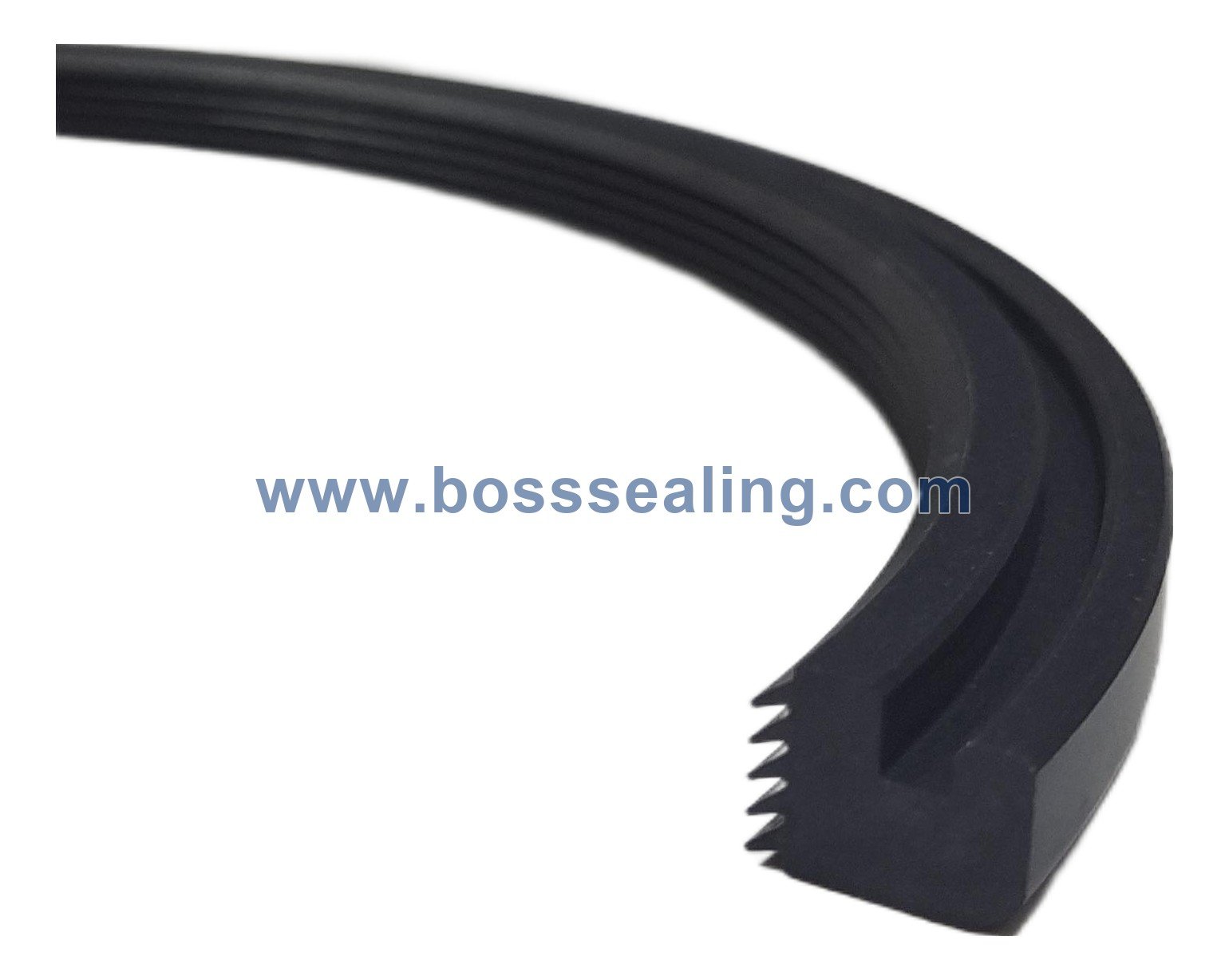
The Job Metal Was Doing
Look at what the metal parts in a sealing system actually have to do. A backup ring has to sit in a clearance gap and block an elastomer from extruding through it under pressure — stiffness, not resilience. A wear band has to carry side loads on a cylinder bore with a controlled friction coefficient — dimensional stability and tribology. A valve seat has to hold a sealing surface through thermal cycling and chemical contact. None of these parts needs to conduct electricity, survive a hammer blow or carry a structural beam. They need strength at temperature, dimensional stability, wear resistance and chemical indifference — and on those axes, polyetheretherketone competes directly with the metals traditionally specified.
What PEEK Matches, on the Numbers
Unfilled PEEK is a semi-crystalline thermoplastic with a continuous service temperature of 260 °C, short-term exposure tolerance around 310 °C, a glass transition at 143 °C and a melting point of 343 °C. Tensile strength runs 90–100 MPa in virgin grades; carbon-fiber reinforcement pushes past 200 MPa with a flexural modulus above 15 GPa — territory that overlaps aluminum alloys while weighing roughly 70% less. Chemical resistance is close to PTFE: essentially insoluble in all common solvents, acids and alkalis except hot concentrated sulfuric acid, and hydrolysis-stable in steam and hot water where many engineering plastics degrade. It is inherently flame resistant to UL 94 V-0 without halogen additives, and immune to galvanic corrosion by definition.
For a seal shop, the property that matters most does not appear on resin datasheets: dimensional stability under load. PEEK keeps its geometry at temperatures where nylon creeps, acetal softens and thermosets lose temper. In a gland, geometry is the seal. That single property is why PEEK backup rings and T-seal anti-extrusion rings took over the high-pressure hydraulic market.
Three Places PEEK Beats Metal
Corrosion. Metal sealing components fail on chemistry long before they fail on mechanics — pitting in chlorides, galvanic couples in wet assemblies, stress corrosion in downhole environments. PEEK does not corrode, and filled grades inherit that immunity. In chemical pump and valve hardware, in oilfield tools exposed to brines and H₂S, in water-hydraulic equipment, the corrosion column alone closes the argument.
Weight and inertia. At roughly 1.3 g/cm³ against aluminum’s 2.7 and steel’s 7.8, a converted part loses half to four-fifths of its mass. In reciprocating and rotating assemblies — compressor valve plates, swash-plate slippers, quick-response actuator internals — the reduced moving mass shows up as lower breakaway force and less wear on everything it rubs against. Aerospace hydraulic hardware converts for this reason first.
Friction and wear. Against steel counterfaces, PEEK runs a friction coefficient around 0.2–0.3 unfilled, and PTFE/graphite-filled grades drop to 0.10–0.20 with dry-running capability. It forms a thin transfer film on the mating metal that stabilizes the interface — the same solid-lubrication mechanism bronze bushings rely on, without the lubrication feed.
| Proprietà | Unfilled PEEK | Carbon-fiber PEEK (30%) | Typical metal counterpart (316 SS) |
|---|---|---|---|
| Continuous service temperature | 260 °C | 260 °C | Defined by corrosion, not strength |
| Resistenza alla trazione | 90–100 MPa | 200+ MPa | ≈485 MPa annealed |
| Density | 1.32 g/cm³ | ≈1.44 g/cm³ | 8.0 g/cm³ |
| Friction coefficient vs steel | 0.2–0.3 | 0.15–0.25 | Galling risk without lubrication |
| Attacco chimico | Only hot conc. H₂SO₄ | Only hot conc. H₂SO₄ | Chlorides, acids, galvanic |
| Machined tolerance capability | ±0.01 mm | ±0.01 mm | ±0.01 mm |
Suppliers such as Victrex e Ensinger Plastics publish full grade datasheets; the numbers above are the family-level figures engineers use for first-pass decisions, and the grade datasheet governs once a part is specified.
Filled Grades Change the Argument
The base resin is only the start of the story. Filled PEEK compounds tailor the material to specific wear and load conditions, and most production sealing components are filled grades for exactly this reason.
| Grado | Filler | What it buys | Typical sealing use |
|---|---|---|---|
| PEEK (unfilled) | Nessuna | Cleanest, best toughness, food-contact grades available | Seats, sanitary components |
| PEEK GL | 30% glass fiber | Stiffness, creep resistance | Structural guides, housings |
| PEEK CA | 30% carbon fiber | Highest strength and modulus, low thermal expansion | Backup rings, high-pressure wear rings |
| PEEK HPV / bearing grade | PTFE + graphite + carbon fiber | Friction 0.10–0.20, dry-running, low wear | Piston rings, guide bands, dry bearings |
| PEEK + PTFE | PTFE fill | Lowest friction, with a modest strength penalty | Low-speed seals, slide surfaces |
The practical consequence: where a metal part needed hardening, coating or lubrication to survive a sliding duty, a bearing-grade PEEK often needs none of it. That removes the coating line, the lubrication point and the maintenance schedule in one specification change.
Where Metal Still Wins
Honest engineering requires the reverse column. Metal still wins on impact toughness — PEEK is notch-sensitive and a sharp-edged metal part under impact load stays metal. It wins on sustained load at the top of the temperature range: above roughly 260 °C, creep becomes the governing limit and metal retains stiffness where PEEK does not. It wins where electromagnetic or grounding function is required, and where a part must be brazed, welded or carry threads into metal housings. Cost is a mixed column: at small volumes, a machined PEEK part can cost several times its stainless equivalent, while at production volumes, molded PEEK closes the gap and the total-cost argument flips on weight and maintenance.
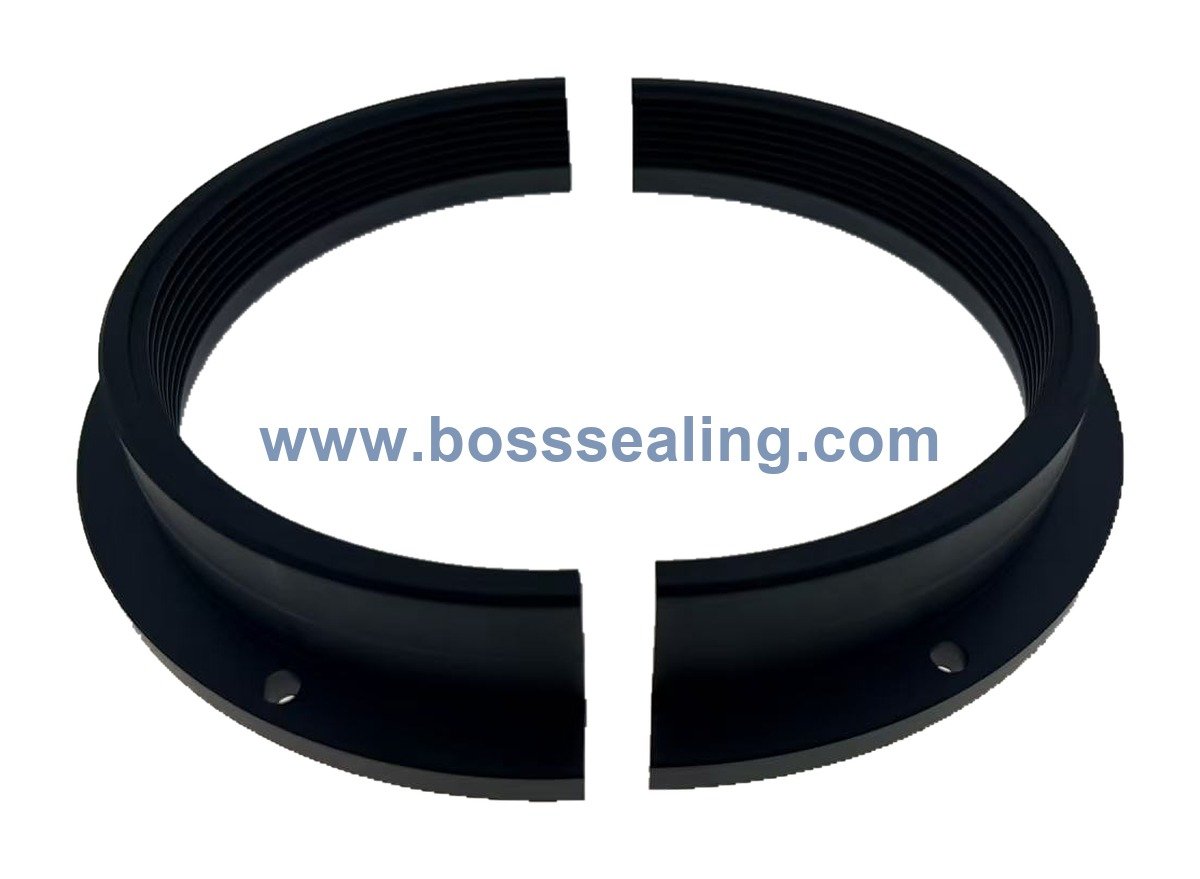
Design Cautions for the Conversion
Three cautions prevent most conversion failures. First, cold flow: under sustained compressive load at temperature, PEEK creeps like any thermoplastic. Backup rings and T-seal anti-extrusion rings handle this because pressure loads them intermittently and the elastomer pushes them back; a flange bolted permanently onto a PEEK gasket needs design attention. Second, thermal expansion: PEEK expands roughly three times more than steel per degree, so interference fits and clearance gaps need to be checked at both ends of the service temperature, not room temperature only. Third, counterface finish: PEEK wear surfaces want a hard, smooth counterface — Ra 0.2–0.4 µm on a honed or hardened bore — and will abrade against rough or soft housings faster than bronze would.
These are manageable constraints, and machinists experienced with the material — Drake Plastics among them — publish design guides that put numbers on all three. Our own conversion experience runs through hydraulic and pneumatic components: backup rings, guide elements and valve seats converted from metal or from lesser plastics, most often after a field failure that metal did not solve.
Two field cases show the pattern. The first: a hydraulic breaker manufacturer kept losing bronze wear bands on excavator cylinders working in quarry dust. The metal bands scored the honed bore when side loads peaked, and scoring fed back into rod seal wear. A carbon-fiber PEEK band with a specified counterface finish cut the bore scoring to nothing across a season of machines — the material change did the job, but the counterface specification change did half the work. The second: a chemical pump builder replaced 316 stainless valve seats that pitted in chloride service within months. PEEK seats in the same geometry ran past two years, and the pump gained a side benefit the engineering team did not plan: the plastic seat’s slight compliance stopped the metallic clicking noise that customers had been reporting as a defect. Neither case started with “PEEK is better” — both started with a named failure mechanism the metal could not escape.
A Conversion Decision Tree for the Bench
When a metal sealing-adjacent part generates repeat failures, work the decision in this order. If the failure mode is corrosion, chemistry or galvanic attack, PEEK removes the mechanism entirely — convert. If the failure mode is wear against a moving counterface, pick a bearing-grade filled PEEK and verify the counterface finish — convert with a finish spec. If the failure mode is extrusion of a soft seal under pressure spikes, convert the backup ring to PEEK CA and keep the elastomer. If the failure mode is impact, over-torque or sustained load above 250 °C, stay with metal and fix the load case instead. This ordering, applied honestly, converts the parts that benefit and leaves the rest alone.
For buyers sourcing converted components, our engineering plastics range covers PEEK, PTFE and nylon parts machined to drawing, and our elementi di guida e gamma di anelli di supporto include the filled-PEEK grades in the table above as standard items. Machined tube and rod stock in PEEK profiles is available through our tube, rod and sheet line for prototypes and short runs. Third-party comparison material is available from PEEK molding suppliers who document grade-by-grade properties for injection-molded volumes.
Punti chiave
PEEK matches metal where sealing hardware needs it: strength at temperature (260 °C continuous), dimensional stability, chemical indifference and machinable precision.
It beats metal on corrosion, weight (≈70% lighter than steel) and dry friction — the three failure drivers in wet, pressurized, reciprocating assemblies.
Filled grades do the work: carbon fiber for stiffness and extrusion resistance, PTFE/graphite for friction and dry running. Specify the grade, not the resin name.
Metal keeps the advantage in impact, sustained load above ~250 °C, and threaded or welded interfaces. Convert where the failure mechanism is chemical or tribological, not structural.
The conversion decision is an engineering review, not a substitution: check cold flow, thermal expansion and counterface finish before committing a drawing change.
Send Us the Drawing or the Sample
BOSS Sealing designs and machines PEEK sealing components in-house — material grade selection, drawing and tolerance review, machining and final inspection under one roof. That closed loop is what makes a conversion practical: the team that reads your drawing also cuts the part, so a tolerance that cannot be held, or a geometry that will not survive installation, is flagged before the first chip rather than after the first field failure.
The parts we build most often are the ones this article argues for: carbon-filled PEEK backup rings and anti-extrusion rings, wear bands and guide elements, labyrinth seals, valve seats, piston rings and custom profiles machined to drawing. Years of work in hydraulic, pneumatic, chemical and oilfield hardware have taught us where PEEK parts actually fail — fiber orientation in filled grades, clearance for thermal expansion, the counterface finish a wear ring needs, and the chamfer and lead-in detail that keeps a split ring from cracking at installation. Those lessons go into every drawing review, not just the machining program.
Send a drawing, a 3D model or a worn sample to sales@bosssealing.com, or use our modulo di contatto. Where no drawing exists we reverse-engineer from the sample, recommend the grade that matches the duty, and come back with price, lead time and a sample proposal — usually within 24 hours, and the engineering review costs nothing. Tell us the failure mode and the service conditions; that is the only brief we need to start.