
Every wetted seal in a pharmaceutical or biotech line carries two jobs at once: contain the process fluid, and prove — on paper, to an auditor — that it will not harm the product. Most seal suppliers can do the first. The second is where quotes go wrong, because the paperwork attached to an elastomer compound is just as decisive as its temperature rating. This guide walks through what USP Class VI actually measures, how it stacks against FDA 21 CFR 177 and ASME BPE, which materials survive CIP caustic and SIP steam, and what documentation to demand before a purchase order is signed.
One point worth settling at the start: USP Class VI is a biological test, not a cleanliness certificate. A compound can pass all three animal tests and still shed extractables into a buffer solution, or fail mechanically after forty steam cycles. The certifications answer different questions, and buyers who read them as interchangeable end up with compliant parts that leak — or leaking parts that are perfectly documented.
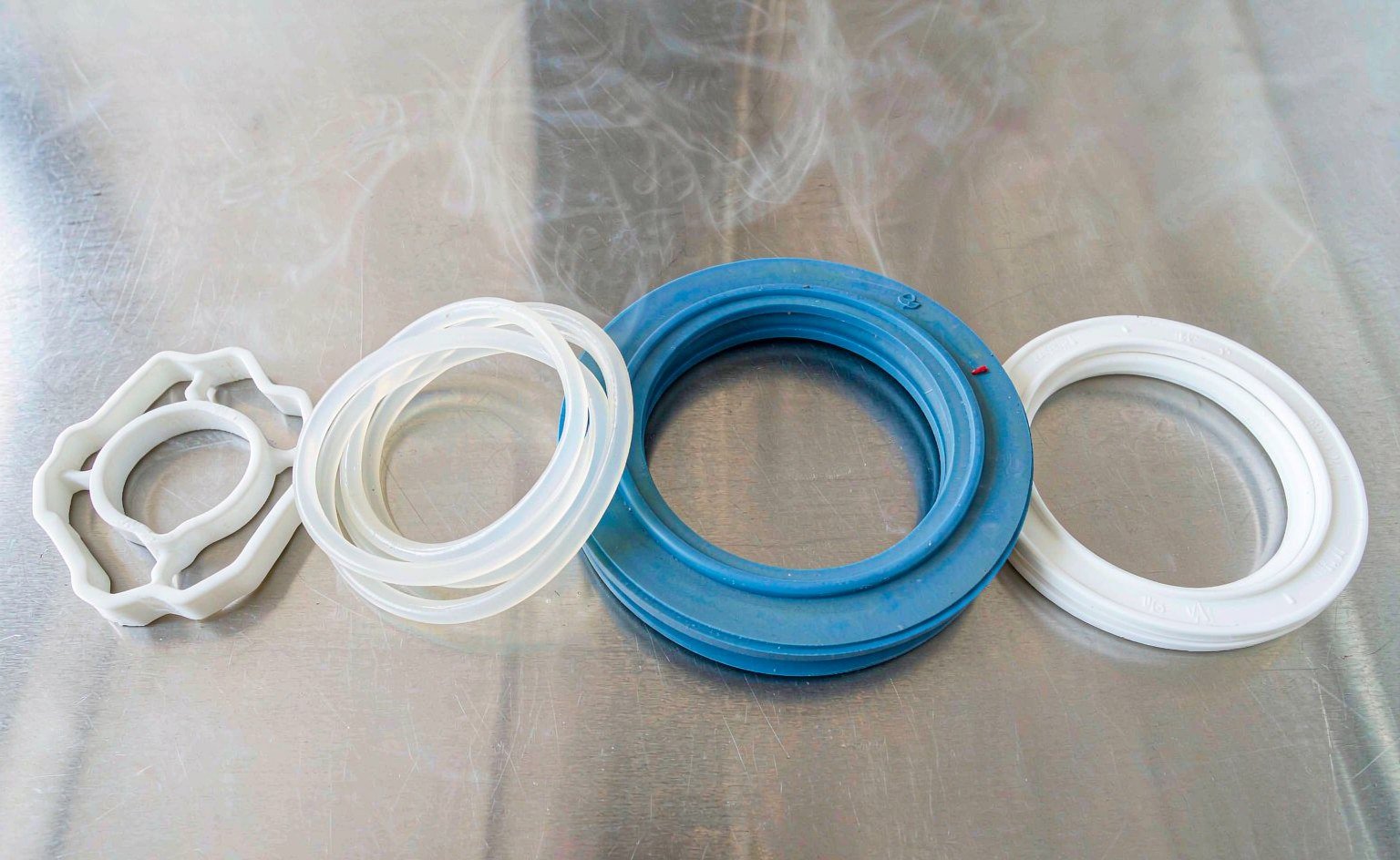
What USP Class VI Actually Tests
USP General Chapter <88>, Biological Reactivity Tests, In Vivo, classifies plastics and elastomers into Classes I through VI based on which animal tests the material passes. Class VI, the strictest, requires all three:
- Systemic Injection Test — material extracts injected into mice, observed for 72 hours for acute systemic toxicity.
- Intracutaneous Reactivity Test — extracts injected intradermally into rabbits; skin sites scored for erythema and edema at 24, 48 and 72 hours against vehicle-control sites.
- Implantation Test — strips of the actual material implanted into rabbit paraspinal muscle, examined histologically at 7 days and 90 days for tissue reaction relative to a USP reference material.
The extracts are prepared in four vehicles — sodium chloride injection, alcohol in saline, polyethylene glycol 400 and vegetable oil — because different chemistry pulls different leachables out of the compound. Extraction can be run at 50 °C, 70 °C or 121 °C, and the temperature becomes part of the rating: a material certified at the 121 °C condition is written as “Class VI-121”. Reputable elastomer suppliers test at 121 °C precisely so the rating covers steam-sterilized service. If a datasheet says “USP Class VI” without a temperature condition, ask which condition was used — a Class VI-50 rating does not automatically describe a seal going through SIP cycles.
Chapter <87> sits one level below as the in vitro screen: mammalian cell cultures exposed to material extracts, watched for cytotoxicity. It is faster and cheaper, and many buyers use it as a first filter before committing to the full in vivo package. For process-contact seals in biotech, the usual expectation is both chapters — <87> as the sensitivity screen and <88> Class VI as the formal classification.
Two limits matter for anyone writing a purchase specification. First, Class VI is granted to a compound, not a finished part. A molder who changes the cure system, the filler lot or the release agent can invalidate the rating without changing the part number. Second, Class VI says nothing about extractables quantity — it is a pass/fail biological response, not an analytical profile of what migrates into your product.
The Certification Stack: Class VI, 21 CFR 177 and ASME BPE
Datasheets list these together, but they certify different things. Keeping them straight avoids the most common sourcing mistake — assuming one covers another.
| Framework | What it actually covers | How compliance is shown |
|---|---|---|
| USP <87> / <88> Class VI | Biological reactivity of the compound (cytotoxicity screen; in vivo systemic, intracutaneous, implantation tests) | Test report from the testing laboratory for the specific compound, with extraction condition stated |
| FDA 21 CFR 177.2600 | List of permitted ingredients for rubber articles intended for repeated food contact, plus water and n-hexane extraction limits — read the regulation text | Formula-level declaration: every ingredient listed in, and total extractables within, CFR limits — no animal testing involved |
| FDA 21 CFR 177.1550 | Perfluorocarbon resins such as PTFE, with extraction limits | Same formula-level declaration against the PTFE subsection |
| ASME BPE Part SG / PM | ASME BPE (Bioprocessing Equipment) seal design for hygienic clamp unions (intrusion/recess classification, thermal-cycling performance) and polymeric material requirements, which point back to USP <88> or ISO 10993 | Design conformance and material declarations against the BPE parts |
A pharmaceutical wetted seal typically carries all three: Class VI for biocompatibility, 177.2600 (or 177.1550 for PTFE) for food-contact-grade formulation, and BPE conformance where the equipment standard demands it. A dairy gasket under 3-A and food-grade material rules may need only the CFR side. Asking for all three on a duty that needs one wastes supplier time; asking for one on a duty that needs three creates an audit finding.
Material Matrix for Wetted Process Seals
Five material families cover nearly every hygienic sealing position. The ranges below are typical continuous-service figures for well-compounded grades; the specific compound datasheet governs, and steam and caustic exposure narrow them further.
| Material | Typical continuous range | CIP caustic / acid | SIP steam | Best fit |
|---|---|---|---|---|
| EPDM, peroxide-cured | −40 to +150 °C | Excellent in both — the CIP default | Good, with cycle-count aging | WFI, purified water, buffers, CIP loops, most process lines |
| PTFE, virgin or modified | −200 to +260 °C | Inert to almost all chemistry | Excellent, but creeps under sustained clamp load | Solvents, oxidizers, chemistries that attack every elastomer |
| Silicone, platinum-cured | −60 to +200 °C | Poor in strong caustic; fair in dilute acid | Limited — hydrolyzes with repeated wet steam | Tubing, single-use interfaces, dry-heat duty |
| FKM | −20 to +200 °C | Good in acids; standard grades weaken in hot caustic | Poor for standard grades in live steam | Fats, oils, flavors, aggressive acids |
| NBR | −30 to +100 °C | Fair in dilute caustic; poor in oxidizers | Not suitable | Oil- and fat-bearing product lines only |
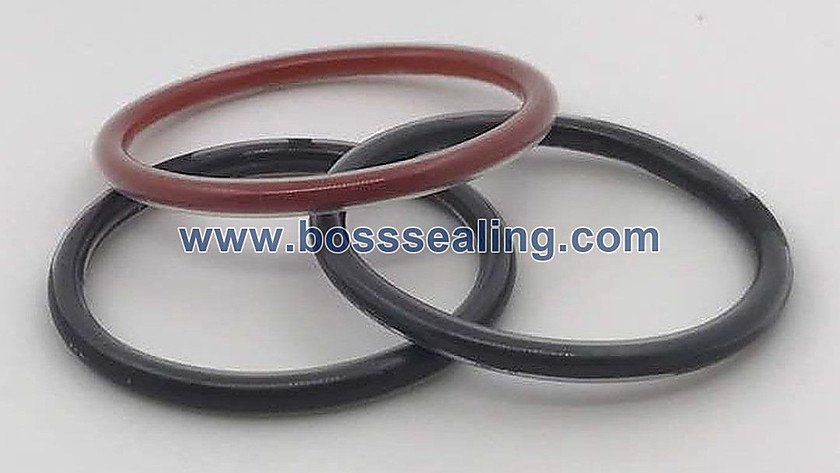
EPDM is the workhorse of pharmaceutical wetted service for a simple reason: peroxide-cured grades hold up in hot caustic CIP and repeated 121 °C steam without the hydrolysis that shortens silicone life. Where the chemistry goes beyond any elastomer — strong solvents, oxidizers, aggressive intermediates — PTFE encapsulated O-rings put a chemically inert jacket around an elastic core, which is why they dominate aggressive-media duties. We cover the compatibility logic in detail in our PTFE encapsulated O-ring chemical compatibility guide, and our encapsulated seal range covers the standard FEP and PFA jacket constructions. For duties where even a PTFE jacket’s crevices are unwelcome — sterile barrier and diaphragm positions — major seal makers such as Trelleborg publish compound families developed specifically for biopharma wetted service, and their material guides are useful benchmarks when comparing quotes.
FKM earns its place where the product itself is fatty or oily, or where hot acid cleaners run between batches. Note the two classic FKM traps in pharma service: standard grades lose ground in hot caustic (the same chemistry EPDM shrugs off) and in live steam. For duties that combine heat with aggressive chemistry beyond FKM, the high- and low-temperature seal options and the FFKM grades discussed in our seals above 200 °C guide are the usual escalation path — at a cost that has to be justified batch by batch.
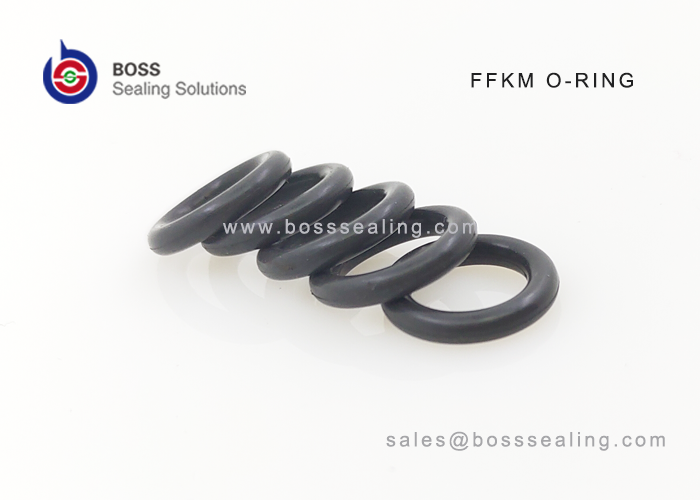
FFKM deserves its own note in this category even though the price restricts it to positions that earn their keep. Perfluoroelastomers combine near-PTFE chemistry with elastomer elasticity, which makes them the only elastic option where a duty combines sustained heat, aggressive cleaners and product chemistry that attacks everything else — certain API intermediates, strong oxidizing cleaners, hot amines. Spring-energized PTFE and FFKM constructions from specialists such as Bal Seal extend the same logic into positions where a plain O-ring cannot hold contact force at temperature. A disciplined approach prices FFKM per position rather than per plant: one O-ring in a critical pump seal that stops a monthly teardown pays for itself; the same compound on every clamp gasket in the building does not. FFKM compounds certified for pharma service carry the same Class VI plus 177.2600 documentation stack as any other family, and the same compound-change controls apply.
Silicone’s role is narrower than its datasheet range suggests. Its two genuine advantages — the widest temperature envelope among elastomers and extreme cleanliness in platinum-cured grades — fit tubing, single-use assemblies and dry-heat positions. Its two genuine weaknesses — poor strong-caustic resistance and hydrolysis in repeated wet steam — disqualify it from most CIP-heavy pipework. Plants that standardize on silicone everywhere because it “looks clean” end up replacing clamp gaskets on a much shorter cycle than their EPDM neighbors.
Where Seals Live in a Pharmaceutical Plant
Before choosing materials, it helps to map where wetted seals actually sit, because the duty — and therefore the paperwork burden — differs sharply by position.
Hygienic clamp joints are the highest-count position: tri-clamp gaskets on process piping, typically 1/2 in to 12 in, replaced on cycle count rather than on failure. These seals see full CIP and SIP exposure every cycle, and a failed one usually announces itself as a weep at the ferrule line during filling. Because they are cheap and numerous, clamp gaskets are also where compound substitutions sneak in — a gasket that looks identical but was molded from an uncertified compound lot is one of the most common audit findings in supplier audits of this category.
Diaphragm valve weirs carry the same media duty with a flexing diaphragm instead of a compressed gasket. Flex fatigue joins compression set in the aging mechanism, and EPDM dominates here for the same chemistry reasons it dominates clamp joints. Diaphragm life is usually counted in actuations, and premature weep-line cracking at the weir is a compound-flex-fatigue signature, not an installation error.
Pump and mechanical seal secondary seals (O-rings, wedges, bellows welds) see rotation-adjacent duty: more temperature, more vibration, occasionally dry-running excursions when a pump loses prime. FKM and PTFE-jacketed constructions dominate the secondary seal role. The certificate conversation is identical to clamp gaskets even though the geometry is nothing alike — which is why the documentation section later in this article matters for every position, not just the piping.
Single-use connectors and sterile barriers shift the materials conversation toward silicone and irradiation-stable compounds. Gamma sterilization crosslinks elastomers further but also embrittles them over multiple doses; a silicone seal specified for single-use assembly needs a radiation-dose statement alongside its Class VI report. This is a position where the compound data matters more than the shape, because the failure mode — brittle cracking during assembly — appears only after the dose, never on the bench.
Syringe, closure and filling-line seals sit closest to the patient and inherit the strictest extractables scrutiny. Here the leachables conversation belongs to the drug product team, and the seal supplier’s job is to provide the formulation and extraction data that feeds a leachables study. Suppliers who cannot state their cure system and ingredient list cannot support that study — which is a quiet but effective way to screen vendors before any sample shipment.
CIP and SIP Chemistry: What Actually Ages the Seal
Certified temperature ratings are measured in air or in the test fluid. Real aging in a pharma plant comes from the cleaning cycle, and the cleaning cycle is nastier than the product. A typical CIP sequence hits the seal alternately with hot alkaline detergent, then acid, then rinse water, then — where sterile barriers are required — saturated steam at roughly 121 °C. Each stage attacks a different bond in the compound:
- Hot caustic hydrolyzes ester-type additives and attacks some peroxide cure systems. EPDM with the right cure package resists it; standard FKM and most NBR compounds do not.
- Acid stages (often nitric or phosphoric based) are milder for most elastomers but accelerate degradation in compounds already weakened by caustic exposure.
- Saturated steam at 121 °C drives compression set. Every SIP cycle holds the seal at high temperature under full squeeze with no cooling period; the crosslinks slowly take a permanent set, contact stress drops, and the joint starts weeping — usually at a clamp joint first, because clamp gaskets have the smallest free volume to compensate.
- Thermal cycling between steam and cold rinse flexes the seal through a large strain swing each time. This is the mechanism ASME BPE Part SG thermal-cycling tests are built to rank.
One practical consequence from sanitary clamp practice: after the first SIP cycle, re-torque the clamp. PTFE-based clamp gaskets cold-flow under load, and even elastomer joints relax as the gasket takes its first thermal set. Plants that skip the re-torque chase phantom leaks for months.
Cycle counting is the cheapest reliability tool nobody uses. Log SIP cycles per gasket position, and replace on count rather than on visible failure — a clamp gasket that weeps WFI during filling contaminates a batch worth more than a decade of gaskets.
Design Details That Decide Sanitary Performance
Material choice gets the attention; geometry quietly decides whether the material gets to do its job. Four details come up repeatedly in field failures:
Crevice volume. Any gap where product or cleaning fluid can stagnate is a microbial risk. ASME BPE classifies how far a seal intrudes into or recesses from the flow bore, and sanitary clamp ferrules have a machined gasket seat for this reason — the seal should sit flush with the bore, not bulge into the stream or hide behind a ferrule lip. Oversized or non-standard gaskets that “almost fit” create exactly the dead leg the standard exists to prevent.
Gland fill and squeeze. The same O-ring gland arithmetic used in industrial sealing applies, with one twist: high gland fill plus steam aging is a bad combination, because a seal that starts at 90% gland fill has no room to grow as it swells in caustic or takes set. Design glands for hydraulic-style fill limits and verify with the actual compound’s swelling data, not generic values.
Clamp load versus PTFE creep. Solid PTFE gaskets seal brilliantly and creep relentlessly. Where a full-PTFE joint is required for chemistry reasons, supported constructions — PTFE jacket over an elastomer or metal-reinforced core — hold clamp load far better than a homogeneous ring, at the cost of slightly less chemical envelope at the jacket seams.
Surface finish of the counterface. Rougher is not safer. Over-polished bores under about 0.4 µm Ra starve elastomer lips of lubricant film and increase wear; over-rough surfaces abrade the seal and trap soil. Follow the equipment standard’s finish specification rather than chasing mirror polish, and inspect the ferrule seat itself — a scratched seat destroys an EPDM gasket no matter how good its Class VI paperwork is.
Common Failure Patterns in Pharma Service
Field experience in sanitary sealing collapses into a handful of repeating patterns, and each has a tell-tale signature:
The weeping clamp joint after a few weeks of SIP. The gasket took compression set from steam cycles and the clamp, torqued once at install and never re-checked, lost seating force. The fix is procedural, not material: re-torque after the first steam cycle, then replace gaskets on a logged cycle count. Upgrading the compound only postpones the same outcome if no one counts cycles.
The gasket that swells and blocks the bore. A compound not rated for the cleaning chemistry swells in hot caustic — a silicone gasket in a caustic CIP line is the textbook case. Swell in a confined ferrule seat has nowhere to go but inward, into the product stream, turning a sealing problem into a cleanability problem. The cure is chemistry matching, which the material matrix above settles in one row.
Premium material, premature failure anyway. An FFKM O-ring that failed in steam service at a fraction of its rated life almost always met standard-grade FFKM chemistry rather than a steam-rated compound. Perfluoroelastomer families differ enormously in steam and caustic behavior between grades; the family name is not a specification. Demand the compound-level steam data before substituting “up”.
Certificate matches, material does not. Dimensional drift between lots — gaskets slightly over-height, O-rings off on cross-section — produces joints that seat unevenly and leak at the same position on every opening. This is a supplier quality-system question, and it is exactly why the certifications table earlier in this article lists dimensional standards as part of the paperwork, not as a separate nicety. Established gasket manufacturers such as Margo Rubber publish the ferrule standard on every product page for a reason: a gasket made to the wrong ferrule standard seats proud or short no matter how good the compound is.
The sudden contamination excursion with no visible leak. The creepiest failure in this category: a recessed or intruding seal sheds particles or harbors soil in the crevice it creates, and the batch contamination shows up in bioburden results with no drip anywhere. Geometry, as covered in the design section, is the usual root cause — which is why BPE intrusion classification exists.
Extractables, Leachables and the Compound Change Problem
Regulatory reviewers and process owners care about one question beyond biocompatibility: what does this seal put into my product? Extractables are the compounds that can be pulled out under aggressive conditions; leachables are what actually appear in the product under normal contact. Class VI does not measure either. It only confirms that whatever comes out does not provoke an acute biological response.
For a buffer or WFI line, the practical answer is to choose inherently low-extractable constructions: platinum-cured silicone and peroxide-cured EPDM formulated for pharma duty, PTFE where chemistry allows, FFKM where it does not. Peroxide-cured systems beat sulfur-cured ones on extractables because no sulfur donor packages migrate; platinum-cured silicone avoids the benzoic acid by-products that peroxide silicone leaves behind.
The compound-change problem deserves its own paragraph in your supplier agreement. Class VI certificates are issued for a named compound. If the supplier reformulates — a new cure package, a different antioxidant, a change of filler supplier — the old certificate describes a material that no longer exists. Sound practice: require notification of any formulation change, and re-run biological testing on the new compound before it ships into validated lines. This costs the supplier something, which is exactly why the suppliers who agree to it are worth finding.
What to Send With the RFQ
Most quotation delays in this category are documentation delays, not price negotiations. The following table is what a procurement team should attach or request, and the red flags worth walking away from.
| Item | What it proves | Red flag |
|---|---|---|
| USP Class VI test report with extraction condition (e.g. VI-121) and compound designation | The exact compound shipped passed the full in vivo suite at a condition matching your SIP duty | “Class VI compliant” wording with no test report or no temperature condition |
| 21 CFR 177.2600 (or 177.1550) ingredient declaration with extraction limits | Formulation is built entirely from listed substances within limits | A compliance statement that will not name the compound it applies to |
| Formulation-change notification clause | Certificate stays attached to the material over time | “Formulations are subject to change without notice” |
| Compound datasheet: cure system, hardness, compression set, temp range | Engineering can size the gland and predict steam aging | Datasheet with temperature range only — no cure system, no set data |
| Dimensional standard named (ASME BPE, DIN 32676, ISO 2852) on the drawing | Gasket seats correctly on the mating ferrule | Quote for “1.5 in tri-clamp gasket” with no standard referenced — the three standards do not interchange |
None of this is exotic. It is the same discipline that separates a validated sealing supply from a lucky one: the right compound family for the chemistry, the right geometry for the joint, and paperwork that stays true to the material for as long as the line runs. Suppliers who can produce all five items without prompting are the ones worth auditing in person.
A short closing checklist for the team assembling the RFQ package:
- Define the duty in one table: product chemistry, CIP agents and concentrations, SIP temperature and frequency, minimum and maximum contact temperature, and which positions are product-contact versus utility-contact.
- Specify materials per position, not one material per plant — the matrix in this article is a starting map, and the compound datasheet is the tie-breaker.
- Require the Class VI report with extraction condition, the CFR ingredient declaration, and the formulation-change clause as pass/fail RFQ items rather than “nice to have”.
- Name the dimensional standard on every drawing, and reject quotes that ignore it.
- Agree cycle-count-based replacement intervals at purchase time, so maintenance inherits a plan instead of an argument.
Run sourcing this way and the audit conversation changes character entirely: instead of defending a certificate, the team is walking an auditor through a documented decision chain — duty, material, geometry, paperwork, replacement interval. That chain is what regulatory reviewers actually want to see, and it is cheaper to build at RFQ time than to reconstruct under finding pressure later.