
Spring-energized seals solve problems that conventional elastomer O-rings cannot: cryogenic temperatures below -200°C, dry vacuum, aggressive chemical media, and pressures above 1,000 bar. If you have ever specified an O-ring for liquid nitrogen service or a PTFE seal for a hot oil application and watched it fail, this guide walks through how spring-energized seals work, how to choose the right spring and jacket material, and the gland design details that determine whether the seal survives its first thermal cycle.
We manufacture these seals daily at our facility in Foshan, China, and ship them to semiconductor equipment builders, cryogenic pump makers, and oilfield tool companies across North America and Europe. The selection logic below reflects the questions our engineers answer on real RFQs every week, not catalog theory.
What Is a Spring-Energized Seal?
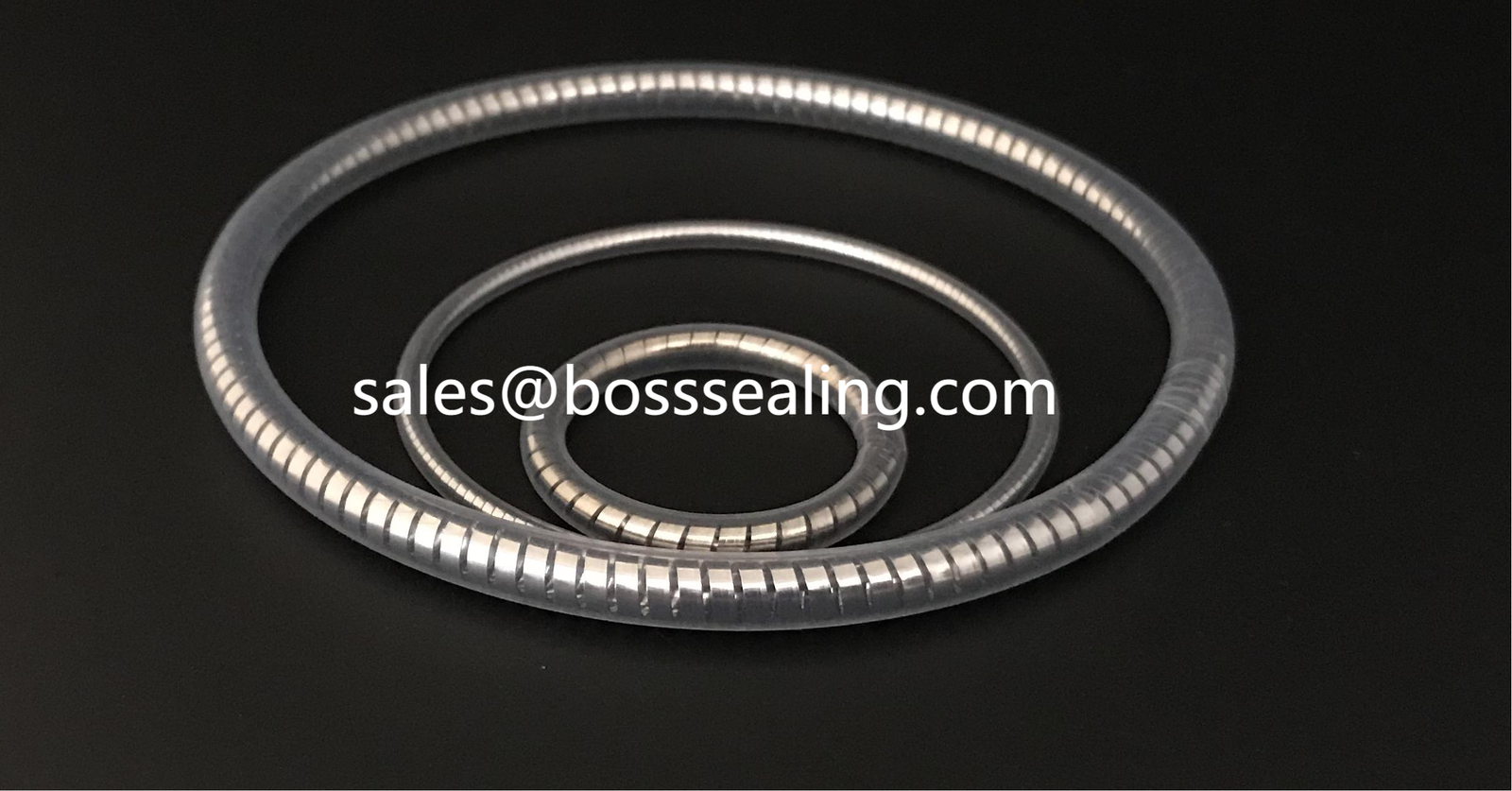
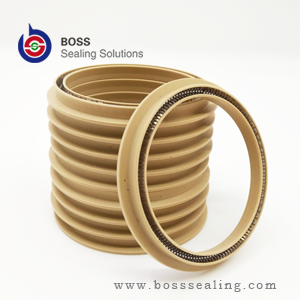
A spring-energized seal is a sealing device built from two components: a U-shaped (or rectangular) polymer jacket and a metal spring fitted into the jacket’s open side. The jacket provides chemical resistance and low friction. The spring pushes the seal’s lip against the gland wall and sealing surface, providing a continuous, positive contact force.
Why does that matter? An elastomer O-ring relies on its own elasticity to maintain sealing contact. When temperature drops, the elastomer stiffens and loses its sealing force. When temperature rises beyond its limit, it degrades. When exposed to aggressive chemicals, it swells or cracks. A PTFE jacket does none of these things, but PTFE itself has no memory and poor elasticity — it will not push back against the sealing surface on its own. The spring replaces the elasticity the polymer lacks.
This is the core design idea: pair a chemically inert, wide-temperature polymer jacket with a spring that supplies the mechanical energy. Trelleborg and other major manufacturers describe the same operating principle in their spring-energized seal literature, and the concept applies whether the jacket is machined PTFE or molded UHMWPE.
The construction also explains the cost profile. A spring-energized seal typically costs several times more than an elastomer O-ring because each jacket is precision-machined and each spring is manufactured from specialized alloys. That cost is justified only where elastomers genuinely fail — and recognizing that boundary is the first step in selection.
The Three Spring Types and When Each One Wins
The spring is not an accessory; it defines the seal’s personality. There are three standard spring geometries, and each changes the seal’s compression characteristics, friction, and pressure behavior.
| Spring Type | Load Characteristic | Best For | Weakness |
|---|---|---|---|
| Canted coil | Nearly flat load curve over compression range | Low friction, dynamic sealing, fragile mating parts, vacuum | Moderate pressure capacity alone |
| Cantilever (V-spring) | High, concentrated load on one lip | Low-pressure, slow or static gas sealing; one-directional | Load drops off quickly; direction-sensitive |
| Helical (coil) | Progressive, highest overall load | High-pressure and static sealing; small cross-sections | High friction; poor for dynamic use |
Canted Coil
The canted coil spring consists of flat wire coils tilted relative to the seal axis. As the lip wears or the hardware moves, each coil independently deflects, which keeps the contact load nearly constant across a wide compression range. This forgiving load curve makes canted coil seals the default choice for dynamic reciprocating and rotary applications, and for sealing against non-rigid members such as thin-walled housings, glass, or ceramic. In vacuum and semiconductor applications, the canted coil design dominates because it delivers stable sealing at low compression and low particle generation. Bal Seal, the company that pioneered the canted coil spring, built an entire product line around this geometry.
Cantilever (V-Spring)
A cantilever spring is a V-shaped piece of flat or round wire welded into a loop. It presses one lip harder than the other, which suits low-pressure, one-directional sealing — gas service in particular. Cantilever designs respond quickly at very low pressures because the spring load is concentrated on a single narrow contact band. The trade-offs: the load falls off rapidly as the lip wears, and the seal only works well in the direction the spring faces.
Helical (Coil)
The helical spring is a tightly wound wire coil formed into a ring, similar to a small extension spring. It delivers the highest and stiffest load of the three, which makes it effective for high-pressure static sealing and for very small cross-sections where a canted coil cannot be manufactured. Friction is the price: helical-energized seals generate more drag and wear faster in dynamic service, so they are rarely the right answer for reciprocating rods or rotating shafts.
Jacket Material Selection: The Decision That Matters Most
The jacket determines chemical compatibility, temperature limits, and wear behavior. Get this right and the spring choice becomes secondary refinement. These are the jacket materials we machine most often:
| Jacket Material | Continuous Temp Range | Key Strengths | Typical Applications |
|---|---|---|---|
| Virgin PTFE | -200°C to +260°C | Broadest chemical resistance, lowest friction | General chemical service, vacuum |
| 15–25% Glass-filled PTFE | -200°C to +260°C | Better wear resistance and dimensional stability | Hydraulics, general industrial |
| Carbon/graphite-filled PTFE | -200°C to +260°C | Low wear, good for dynamic rotary | Rotary shafts, high cycling |
| Bronze-filled PTFE | -150°C to +230°C | Highest pressure capacity, excellent extrusion resistance | High-pressure hydraulic |
| Ekonol (PESTW) filled PTFE | -200°C to +260°C | Excellent wear with low abrasion to mating surfaces | Aerospace bearings and seals |
| PEEK | -70°C to +260°C | High strength, outstanding extrusion resistance | Oilfield tools, high pressure |
| UHMWPE | -200°C to +80°C | Extreme abrasion resistance, great for water-based fluids | Water hydraulics, abrasive media |
| FFKM (molded jacket) | -20°C to +320°C | Elastomeric memory plus near-universal chemical resistance | Semiconductor, chemical processing |
A few practical notes from our shop floor. Virgin PTFE cold-flows under sustained load, so we recommend filled grades for anything above modest pressures. Glass-filled PTFE is abrasive to softer mating surfaces; pair it with a hardened or coated shaft. Carbon-filled PTFE is our default recommendation for rotary dynamics because its wear rate stays predictable. PEEK jackets outperform everything at extreme pressure — downhole tool companies specify them routinely — but PEEK’s higher stiffness requires more precise gland machining.
For chemical processing, FFKM jacketed spring seals occupy a special niche: they behave like an elastomer (conforming, forgiving) while resisting the solvent spectrum that destroys conventional rubber. Precision Polymer Engineering’s FFKM range illustrates how far this material family extends into aggressive media like amines, ketones, and hot steam.
Where Spring-Energized Seals Outperform Elastomers
Knowing when to upgrade starts with knowing the failure mode you are escaping.
Cryogenic service. Below -100°C, most elastomers lose their elasticity entirely — NBR, FKM, even silicone reach glass transition and become hard plastic. Spring-energized PTFE seals keep working to -200°C and beyond because the spring, not the material’s elasticity, supplies the contact force. We supply these for liquid nitrogen, liquid oxygen, and LNG equipment. Our cryogenic seal product line covers the common configurations, and the jacket-and-spring concept works identically whether the medium is -196°C nitrogen or -253°C liquid hydrogen.
Vacuum and semiconductor processing. Elastomers outgas volatiles and trap moisture, which contaminates vacuum chambers. PTFE jackets with low outgassing and a canted coil spring provide stable low-leak sealing for rotary feedthroughs, clamp rings, and wafer handling equipment. This is one of the largest application bases for spring-energized seals globally, and our spring energized seal for vacuum applications product page shows a typical configuration.
Chemical attack. FKM fails in ketones, esters, and amines. EPDM fails in hydrocarbons. No affordable elastomer covers the full solvent spectrum. PTFE is effectively inert to process chemicals across nearly all industrial media, which is why chemical pump and valve manufacturers standardize on spring-energized PTFE for their critical joints.
Dry running and low lubrication. PTFE’s friction coefficient stays low without lubrication films. Where an elastomer lip seal would stick-slip and wear out in hours, a PTFE jacket survives dry cycling — a common requirement in food machinery washdown cycles, dosing equipment, and medical devices.
High pressure with hardware gaps. At high pressure, the failure mode shifts from material to extrusion. Elastomers and soft plastics extrude into clearance gaps. A bronze-filled PTFE or PEEK jacket, often combined with anti-extrusion backup rings, resists extrusion far beyond typical elastomer limits. High-pressure water jet equipment and hydraulic intensifier manufacturers rely on this combination at pressures above 1,000 bar.
Step-by-Step Selection Procedure
Here is the sequence our application engineers follow when a customer RFQ arrives. You can replicate it for any sealing problem.
Step 1: Define the media. Write down every fluid the seal contacts, including cleaning agents and flushing fluids. A seal that resists the process chemical but fails in a CIP caustic wash is still a failed seal.
Step 2: Establish true temperature extremes. Use the actual operating range plus excursions — sterilization cycles, cold starts, dry-run heat spikes. Jacket data sheets list continuous ranges; short excursions above them are sometimes acceptable, but confirm with the manufacturer.
Step 3: Characterize the motion. Static? Reciprocating? Rotating? Oscillating at small angles? Static service opens the door to stiffer, higher-load springs and cheaper helical designs. Rotary and reciprocating service demands canted coil geometry and wear-optimized jacket fillers.
Step 4: Set the pressure boundary. Note continuous and peak pressures plus pressure direction. Above roughly 350 bar, expect to add backup rings or select extrusion-resistant jackets. Above 700 bar, PEEK jackets with engineered clearances become the norm.
Step 5: Measure the hardware. Bore diameter, rod or shaft diameter, gland depth, groove corner radii, and surface finish. Surface finish targets matter: sealing surfaces for PTFE jackets typically need Ra 0.2–0.4 µm, smoother than many elastomer applications.
Step 6: Match spring type to the duty. Apply the table from the previous section. When in doubt between canted coil and helical, friction decides: dynamic service gets canted coil, static high pressure gets helical.
Step 7: Verify special requirements. Vacuum bake-out, FDA/USP compliance, cleanroom packaging, low particle generation, electrical conductivity (carbon-filled jackets can ground static). These constraints often eliminate certain material combinations, so check them before finalizing geometry.
Gland Design Fundamentals
Spring-energized seals tolerate a range of gland conditions, but a few numbers separate long service life from early failure.
Compression. Unlike elastomer O-rings that need 20–30% squeeze, spring-energized seals seal with low compression — commonly 8–15% radial interference for the jacket lip, with the spring supplying the rest of the contact force. Over-compression causes friction, heat, and accelerated lip wear; under-compression causes leaks at low pressure. Follow the manufacturer’s gland tables for the specific cross-section.
Gland fill. Keep total gland fill below roughly 85% at maximum thermal expansion. PTFE’s thermal expansion rate is several times that of steel, so a seal comfortable at room temperature can be dangerously tight at +200°C. We calculate fill at both temperature extremes for every custom gland.
Extrusion gaps. Limit radial clearance according to pressure and jacket material. At 350 bar, a bronze-filled PTFE jacket tolerates roughly 0.15 mm diametral clearance; PEEK tolerances can be wider. If the hardware gap cannot be reduced, add a backup ring made from filled PTFE or PEEK on the low-pressure side.
Surface finish. Dynamic sealing surfaces perform best between Ra 0.2 and 0.4 µm with a slight lead-free honing pattern. Too smooth and the PTFE transfer film cannot establish itself; too rough and the lip wears like sandpaper. Static surfaces tolerate Ra up to 0.8 µm.
Port location and pressure direction. The seal’s open side must face the pressure. A U-jacket pressurized from the closed side collapses instead of sealing — a surprisingly common assembly error we see in returned samples.
Spring-Energized Seals vs PTFE Encapsulated O-Rings
Buyers often ask whether an encapsulated O-ring can do the same job as a spring-energized seal, since both wrap elastomeric or spring functionality in PTFE. The two designs overlap in chemical service but diverge under pressure, temperature extremes, and precision demands.
An encapsulated O-ring is a standard elastomer core (usually FKM or silicone) covered by a seamless FEP or PFA jacket. The jacket handles the chemical; the core provides the resilience. It is an economical solution for static, low-to-medium pressure chemical exposure — flange joints in chemical processing, battery caps, and valve bodies. Its limits are the core’s limits at temperature extremes and the thin jacket’s vulnerability to cuts.
A spring-energized seal costs more but handles duties the encapsulated design cannot: dynamic motion, cryogenic temperatures where even the core elastomer freezes, deep vacuum, and pressures that would indent the thin jacket. The table below summarizes the boundary.
| Factor | PTFE Encapsulated O-Ring | Spring-Energized Seal |
|---|---|---|
| Relative cost | Low | Medium to high |
| Best duty | Static chemical sealing | Dynamic, extreme temperature, vacuum |
| Max practical pressure | ~200 bar static | 1,000+ bar with backup rings |
| Cryogenic capability | Limited by core elastomer | To -200°C and below |
| Resilience after compression set | Core dependent | Spring driven — consistent |
| Repair/replace economics | Cheap consumable | Engineered component |
Use the encapsulated ring where it works — it is the better economic choice for static chemical duty. Move to a spring-energized design when motion, temperature extremes, or pressure enter the picture. If you are weighing the two, send both applications to the manufacturer and ask for the failure mode analysis; a good supplier will tell you when the cheaper part is the right part.
Application Snapshots
Downhole and oilfield tools. Drilling motors, MWD packages, and safety valves combine shock, vibration, 150°C+ media, and pressures that cycle from atmospheric to hundreds of bar within seconds. PEEK-jacketed helical-energized seals with backup rings are the standard answer.
Cryogenic pumps and valves. LNG and industrial gas equipment runs PTFE jackets with canted coil springs. The jacket never embrittles, and the spring maintains contact through thermal contraction of the hardware.
Semiconductor equipment. Vacuum robots, electrostatic chucks, and plasma chambers use carbon-filled PTFE jackets for low particle generation, often with FDA or SEMI-compliant materials and cleanroom packaging.
Aerospace actuation. Flight controls and landing gear hydraulics combine wide temperature with high pressure. Glass-filled PTFE jackets with canted coil springs and PEEK backup rings cover both ends of the envelope.
Medical and analytical devices. Dosing pumps and lab equipment need low friction, chemical resistance to aggressive reagents, and often compliance documentation. UHMWPE and virgin PTFE jackets dominate.
Installation and Handling Notes
Spring-energized seals tolerate careful installation well but punish rough handling. The jacket is the vulnerable component: PTFE scratches easily, and a deep score across the sealing lip becomes a leak path that no spring can close. Follow four practices on the bench.
First, never stretch a PTFE or PEEK jacket over sharp corners the way you would snap on an elastomer O-ring. Use installation tools with lead-in chamfers, and keep the chamfer radii specified on the gland drawing — typically 0.2–0.5 mm on the pressure-side corner and smoother on the entry side. Second, warm PTFE jackets gently before installation in cold shops; PTFE above roughly 20°C is measurably more forgiving, and a hot water bath is enough — never a torch. Third, lubricate with a grease compatible with the process media; silicone grease is a safe default unless the application prohibits silicone contamination, as in some semiconductor and coating processes. Fourth, verify spring orientation before closing the gland: the spring side faces pressure, and on cantilever designs the loaded lip faces the process side.
Finally, inspect spare seals for spring damage before installation. A jacket that survived shipping may hide a dislodged spring; compressing the seal lightly in your fingers and feeling for even resistance catches most transport damage in seconds.
Common Specification Mistakes
Choosing virgin PTFE for high pressure to save cost, then fighting extrusion and cold flow failures. Using a helical spring in a rotating application and discovering friction heating ruins the jacket within weeks. Copying an elastomer O-ring gland without adjusting compression — the resulting seal either drags or leaks. Ignoring the mating surface finish because the elastomer seal previously “worked fine.” Each of these arrives at our shop as a rework request, and each is preventable with the checks in the selection procedure above.
Quality Checks Before Ordering from a Manufacturer
Spring-energized seal quality concentrates in three areas. First, jacket dimensional accuracy: the lip geometry is what makes the seal work, and machining tolerance directly maps to contact load scatter. Ask for the actual inspection report on ID, OD, and lip width. Second, spring joint integrity: the welded joint on a canted coil or cantilever spring must not catch or open during compression cycling; a compression test report tells you more than a photo. Third, material traceability: request certification showing the actual polymer grade and filler percentage, not just “PTFE.”
If you are evaluating suppliers, send the same RFQ package to each: gland drawing with tolerances, full media list, temperature and pressure extremes, and motion parameters. Compare the answers you get, not just the prices — a supplier who asks clarifying questions about pressure cycling is usually one who manufactures to spec rather than to catalog. Sites like Seal Sales show typical catalog configurations for reference, and distributor networks such as ERIKS can be useful for spot-buying standard sizes, but for custom glands and repeat programs, working directly with a manufacturer shortens the loop when something needs adjustment.
Key Takeaways
- A spring-energized seal replaces elastomer elasticity with a metal spring and elastomer chemistry with a polymer jacket — that is the entire concept, and every selection decision flows from it.
- Canted coil for dynamics and fragile hardware, cantilever for low-pressure unidirectional gas, helical for high-pressure static duty.
- Jacket choice drives compatibility: virgin and filled PTFE for most services, PEEK for extreme pressure, UHMWPE for abrasive water-based media, FFKM when elastomeric conformability is needed in aggressive chemicals.
- Seal with 8–15% compression, keep gland fill under 85%, control extrusion gaps, and machine sealing surfaces to Ra 0.2–0.4 µm.
- The spring must face the pressure — pressurize the open side of the U-jacket.
If you have a sealing problem involving temperature extremes, aggressive chemicals, or pressures beyond elastomer capability, send us the gland drawing and duty conditions. Our engineers will review the application and quote a matching configuration, typically with prototypes from our CNC line within days rather than weeks. You can also browse our spring-energized seal category for standard configurations, our encapsulated seal range for corrosive media duty, or read our comparison of rubber, PTFE encapsulated and FFKM O-rings if you are still deciding between sealing concepts.